Theopolis Logo

Writing

Explore our collection of theological essays, biblical studies, and reflections on faith and culture.

See all
screenshot-2024-06-06-at-8-49-49-am
Biblical Theology

Incarnation, Church, & the New Heart

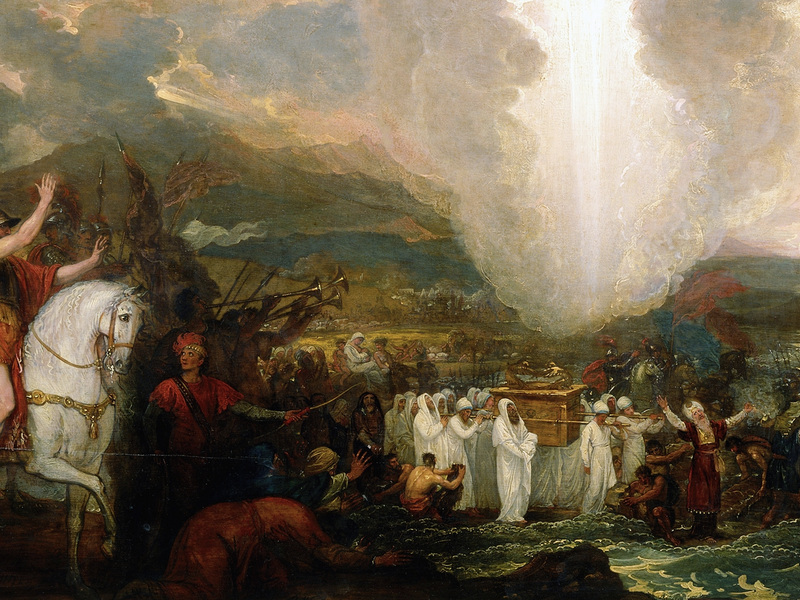
“And it shall be in those days when you are multiplied and increased in the land,” declares the Lord, “they shall say no more, ‘The Ark of the Covenant of the Lord.’ And it shall not come to mind, nor shall they remember it, nor shall they miss it, nor…

by Mark HorneJune 6, 2004
e99a4713
Grace

Grace & Justice in Unexpected Places

Elsewhere, I have argued that there is grace in the so-called covenant of works (see, e.g., my colloquium essay, “A Response to ‘The Biblical Plan of Salvation,’” in The Auburn Avenue Theology: Pros and Cons , edited by Calvin Beisner (pages 118-148). It may be equally surprising to find justice…

by Rich LuskJune 6, 2004
amjd-rdwan-erymmvvsy1y-unsplash-1
Theologia

Trust & Obey

Years ago, as a layman, I had the privilege of attending a Bible study led by a gifted teacher. His story was interesting: back when he was a student he had been severely sanctioned for affirming that one must repent in order to be saved, that one must trust Jesus…

by Mark HorneJune 5, 2004
daniel-born-yw_qx-i8ln4-unsplash
Theologia

The World is Built on Faith

Believing that God really exists Defining “faith” is sometimes made too complicated. The theologian, Louis Berkhof, for example, distinguishes “faith in general” from “faith in the religious sense and particularly saving faith.” Berkhof’s core definition of saving faith is not so bad. He says that it is “a certain conviction,…

by Mark HorneJune 5, 2004
ben-white-qdy9ahp0mto-unsplash
Apostasy

The Children of Christians Are Christians

It is generally acknowledged that when Paul wrote letters to churches, he expected his letters to be read in the worship service to the congregation. It is interesting, then, that when Paul wrote letters to a congregation he could feel free to address children and tell them to obey their…

by Mark HorneJune 5, 2004
24542-cropped-john-calvin
Ecclesiology

Calvin on the Pastor and Community

Book 4 of Calvin’s Institutes of the Christian Religion is a classic work of ecclesiology. This book is the longest section of the Institutes , showing Calvin’s deep interest in and love for the church. Among its many salutary features is a full scale exposition of those ecclesiastical leaders Calvin…

by Rich LuskJune 5, 2004

Showing page 224 of 309

See all
See all
History

Counter-culture and post-modern

Kumar notes that the 1960s counter-culture set itself against everything in modernism: “Pop art and pop music, the ‘new wave’ in cinema and the ‘new novel’ in literature, thne elision of the boundaries between ‘art’ and ‘life,’ the cultivation of sensibility through sex and drugs rather than aesthetic contemplation of…

February 24, 2006
History

Early McLaren?

In a 1965 essay, Leslie Fiedler celebrated the new movements of the 1960s as post-modern, post-Freudian, post-Humanist, post-Protestant, post-white, post-male.

February 24, 2006
History

Postmodernism/ity

Kumar suggests that there is no useful distinction to be made between postmodernity as a socio-political concept and postmodernism as a cultural concept. All the instincts of postmodernists are against such a differentiation of spheres. For postmodernists, it is no longer useful to distinguish subsystems within the social world -…

February 24, 2006
History

Two modernisms

Kumar defines modernism as an intellectual, cultural and artistic revolt against modernity. Yet modernism itself, especially as expressed in architecture, was complex and racked with internal contradictions: “It could denounce the ‘inauthentic’ present in the name of the future, as in Futurism and Constructivism; and it could with equal force…

February 24, 2006
History

Two modernities?

At least two: The modernity of science and technology, the factory system and city planning, of bureacracy and management. And on the other hand the modernity of sensibility, literature, hedonism, the lust for ever-new experience. On the one hand, Industrialization; on the other, the Romanticism that challenged it. On the…

February 24, 2006
History

Liquid modernity

“Constant revolutionizing of production, uninterrupted disturbance of all social conditions, everlasting uncertainty and agitation . . . All fixed, fast-frozen relationships . . . are swept away, all new-formed ones become antiquated before they can ossify.” Zygmunt Bauman? No: Marx and Engels, in the Communist Manifesto .

February 24, 2006

Showing page 1877 of 2212

Browse by Category

In Medias Res

Your weekly digest for all things Theopolis.

Donate

Theopolis is nearly 100% donor-supported. Consider joining us on our mission.