Theopolis Logo

Writing

Explore our collection of theological essays, biblical studies, and reflections on faith and culture.

See all
tanner-mardis-xuxghzhibn4-unsplash-1-2
Biblical Studies

Tweets-turned-Notes on the Bible’s Chronology

Summary In what follows, I will consider the “year-stamps” employed in Scripture, i.e., statements of the form, “Such-and-such an event took place in the Xth year of Y.” In the process, I will suggest some ways in which the Biblical narrative might relate to events in the extra-Biblical world, though…

by James BejonJuly 16, 2019
durer-prodigal-son-2
Luke

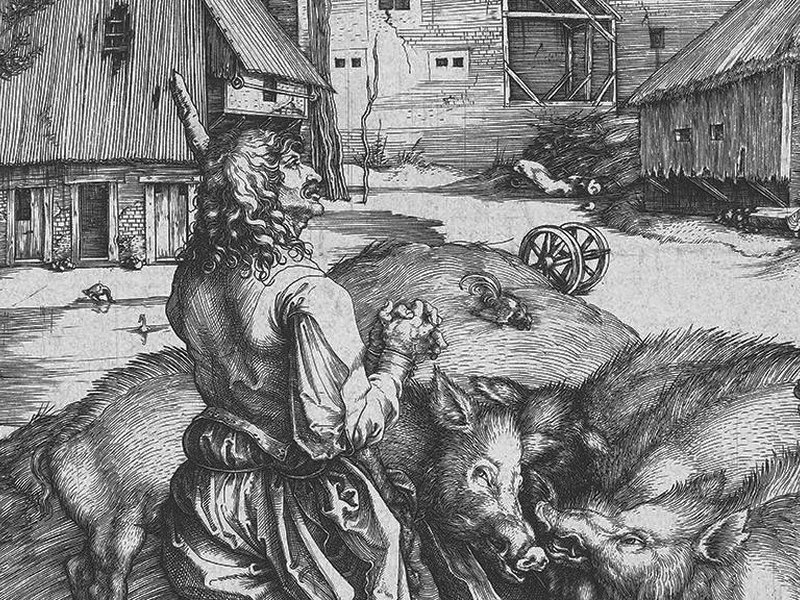
Perspectives on the Prodigal, (Part 2)

In the first essay on the parable of the Prodigal Son, I suggested that the problems commentators and others encounter in interpreting Jesus three-part parable are not accidental. These are not just problems in our ignorance of cultural background. They are intentional features of the stories —stories designed to poke…

by Ralph Allan SmithJuly 11, 2019
durer-prodigal-son-2
Luke

Perspectives on the Prodigal, (Part 1)

The story of the Prodigal Son is perhaps the most well-known story in the Bible. As others have observed, it may also be one of the most misunderstood. In two short essays, I will point out features of this story that are commonly neglected, aspects of Jesus’ parable that might…

by Ralph Allan SmithJuly 9, 2019
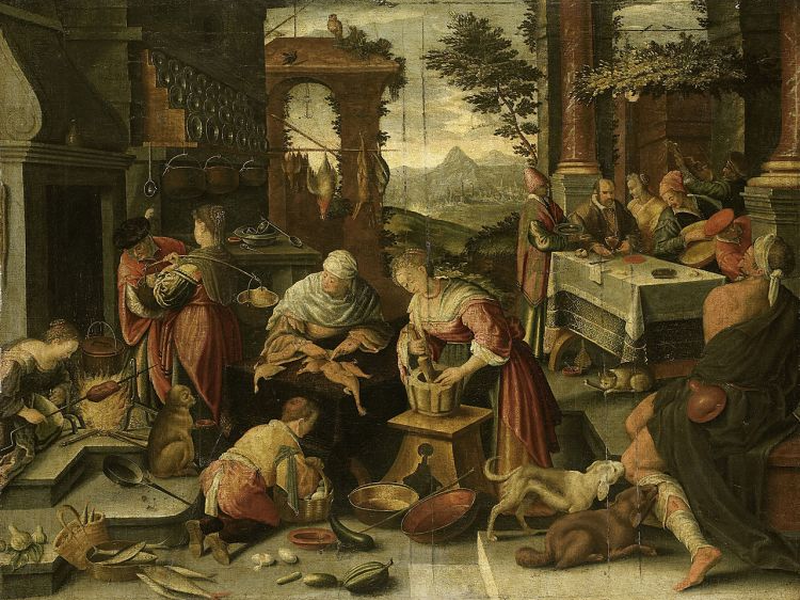
de-rijke-man-en-de-arme-lazarus-by-jacopo-da-ponte-16th-century
Luke

Lazarus and the Rich Man

The parable of Lazarus and the nameless rich man is not an independent story. It is part of a long context that begins in Luke 15:1, where Jesus is eating with tax collectors and sinners and the scribes and Pharisees grumble. In response to their hardheartedness, Jesus tells a three-part…

by Ralph Allan SmithJuly 4, 2019
aaron-burden-uynrnfdkjwg-unsplash
Luke

Everybody has Dropsy - Luke 14:1-24

The Bible is written so that even when a reader cannot pick up on what might be deeper or more detailed aspects of a text, there is virtually always a message to be heard. In the ancient world, where the “reader” of Scripture would likely be a church official facing…

by Ralph Allan SmithJuly 2, 2019
communion
Biblical Theology

Fruit Trees and Grain Plants

The distinction between garden (or vineyard) and field begins in Genesis 2. This relates to the ordering of the formless world. Plants of the field are contrasted with the garden planted by God in Genesis 2:5&8. Later on, under the Old Covenant the Israelites will be required to keep their…

by James B. JordanJune 27, 2019

Showing page 77 of 309

See all
See all
Philosophy

Against Foundationalism

Calvin O. Schrag has this helpful critique of what he calls the “foundationalist paradigm”: It “profeers a theoretical construct of mind that is designed to determine in advance the criteria for what counts as knowledge, both knowledge of oneself and knowledge of the world. It is as though one were…

December 4, 2005

Magi, the true Israel

The magi come searching for Jesus from the east, from Persia, moving west toward the promised land, as Israel did following the Babylonian exile. As they travel, they follow a star, as Israel followed the pillar of cloud and fire from Egypt. They bring gold, frankincense, and myrrh to worship…

December 4, 2005

Joseph, son of Yahweh

The Israel that the Son of God entered in the incarnation was not some pristine, sinless Israel. God took on a genealogy that included harlots, adulterers, murderers, and idolaters. God did not keep his distance from his bride, but came near to rescue her. Though initially intending to put Mary…

December 4, 2005

Eucharistic meditation, Second Advent

Matthew 1:24-2:1: And Joseph arose from his sleep, and did as the angel of the Lord commanded him, and took her as his wife, and kept her a virgin until she gave birth to a Son; and he called his name Jesus. Now . . . Jesus was born in…

December 4, 2005

Exhortation, Second Advent

Joseph is often a neglected character in the Christmas story. In paintings and crèches, he politely stands to the side so that the Madonna and child can be at the focal point. In medieval mystery plays, he was often a comic character, a doddering old man more marginal even than…

December 4, 2005

Myself In the Gaze of Another

This is not a paper, and that is not an ironic self-referential comment like Magritte’s Ceci n’est pas une pipe . This really is not a paper. It is a gesture toward a paper, a collection of fragments and notes. There is a goal here, a telos and trajectory: These…

December 4, 2005

Showing page 1917 of 2212

Browse by Category

In Medias Res

Your weekly digest for all things Theopolis.

Donate

Theopolis is nearly 100% donor-supported. Consider joining us on our mission.