Theopolis Logo

Writing

Explore our collection of theological essays, biblical studies, and reflections on faith and culture.

See all
giammarco-zeh-ljawhtg-unsplash
Biblical Horizons

OPEN BOOK: Views and Reviews

Isaac E. Mozeson, The Word: The Dictionary that Reveals the Hebrew Sources of English (Northvale, NJ: Jacob Aaronson Inc., 1995), 310 pp. Reviewed by James B. Jordan. Once there was only one language in the world, the language God spoke to Adam. At the Tower of Babel, there came to…

by James B. JordanJune 28, 1996
tim-wildsmith-j6jv-mkdzqs-unsplash
Esther

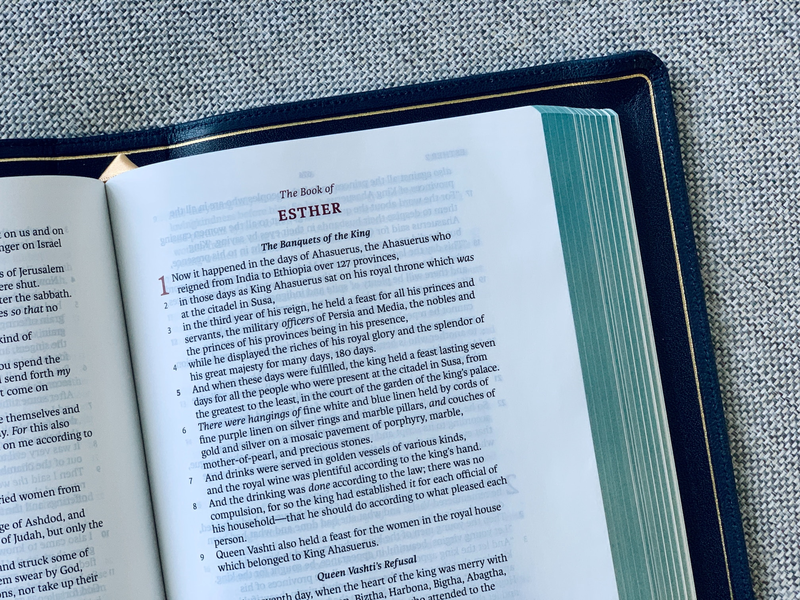
Esther: Historical & Chronological Comments (IV)

2. The Setting of the Book of Esther A. Xerxes (continued from previous issue) Ezra 6:14 says that the Jews finished building "according to the command of the God of Israel and the decree of Cyrus and Darius and Artaxerxes king of Persia." The problem with this verse is that…

by James B. JordanJune 28, 1996
ales-krivec-4mibe6zg5r0-unsplash
Acts

Jesus and Amalek

This essay goes with our previous study of the Amalek pattern back in Biblical Horizons No. 2. Since many do not have this essay, entitled "The Battle of Gog and Magog," let me cite the relevant paragraphs: Note in Genesis 12-15 that Abram moves into the land after escaping Pharaoh…

by James B. JordanJune 28, 1996
aaron-burden-1ebsmyrau-s-unsplash
Proverbs

The Strange Woman

Proverbs 7:6-23 is one of several passages early in the Proverbs in which Solomon warns his son about the wiles and dangers of the "strange woman." It is certainly quite proper to take these as straightforward warnings against sexual sins, and these are certainly warnings that need to be impressed…

by Peter LeithartJune 27, 1996
jan-kahanek-g3o5ztrk2e4-unsplash
Biblical Studies

Some Observations

1. In Luke 4:20 we read that after Jesus finished reading from Isaiah, "the eyes of all in the synagogue were fixed upon Him." This is usually taken in a psychological sense: They were amazed at Jesus somehow. I suggest that, as always, a merely psychological reading is a modern…

by James B. JordanMay 28, 1996
tim-wildsmith-j6jv-mkdzqs-unsplash
Esther

Esther: Historical & Chronological Comments (III)

2. The Setting of the Book of Esther Up to now we have assumed what we must prove, that the king in Esther is Darius the Great. While Biblical chronologists have usually taken this position, commentators on the book of Esther have often taken others as the king. One view,…

by James B. JordanMay 28, 1996

Showing page 265 of 309

See all
See all

Turn of civilization

At the end of his wonderful essay on “Art and Sacrament,” the Welsh poet and painter David Jones included a fragment that he wrote and rewrote over several decades. Here is wisdom: I said, ah! what shall I write? I inquired up and down (he’s tricked before with his manifold…

September 14, 2005

The Pianist and the Nazis

In a 2003 TNR review of Roman Polanski’s Oscar-winning film, The Pianist , Michael Oren gives information about Wilm Hosenfeld, the German officer who assists Szpilman: “while scrounging in an abandoned house for food, Szpilman comes face-to-face with a German officer. Instead of drawing his revolver, the officer asks Szpilman…

September 14, 2005
Literature

Marilynne Robinson

Here are a couple of selections from a September 2004 New Yorker interview with Marilynne Robinson: Q. “In your nonfiction collection, ‘The Death of Adam: Essays on Modern Thought,’ you wrote about the sixteenth-century theologian John Calvin, and about his strong sense of humanism and tolerance and his importance to…

September 14, 2005

Odysseus’ return to himself

Charles Segal argues in his Singers, Heroes, and Gods in the Odyssey that Odysseus’ return to Ithaca is a return to himself. This works in several dimensions. Through the second half of the epic, various characters reconstruct the story of Odysseus’ life - the story of his naming and the…

September 14, 2005

Odysseus’ return to himself

Charles Segal argues in his Singers, Heroes, and Gods in the Odyssey that Odysseus’ return to Ithaca is a return to himself. This works in several dimensions. Through the second half of the epic, various characters reconstruct the story of Odysseus’ life - the story of his naming and the…

September 14, 2005
Theology

Matter and spirit

Discussing the question of the corporeality of angels, Herman Bavinck argues that angels cannot have bodies because that would imply they are material and “matter and spirit are mutually exclusive.” He charges that “it is a form of pantheistic identity philosophy to mix the two and to erase the distinction…

September 13, 2005

Showing page 1946 of 2212

Browse by Category

In Medias Res

Your weekly digest for all things Theopolis.

Donate

Theopolis is nearly 100% donor-supported. Consider joining us on our mission.