Theopolis Logo

Writing

Explore our collection of theological essays, biblical studies, and reflections on faith and culture.

See all
tanner-mardis-xuxghzhibn4-unsplash-1-2
Biblical Studies

Tweets-turned-Notes on the Bible’s Chronology

Summary In what follows, I will consider the “year-stamps” employed in Scripture, i.e., statements of the form, “Such-and-such an event took place in the Xth year of Y.” In the process, I will suggest some ways in which the Biblical narrative might relate to events in the extra-Biblical world, though…

by James BejonJuly 16, 2019
durer-prodigal-son-2
Luke

Perspectives on the Prodigal, (Part 2)

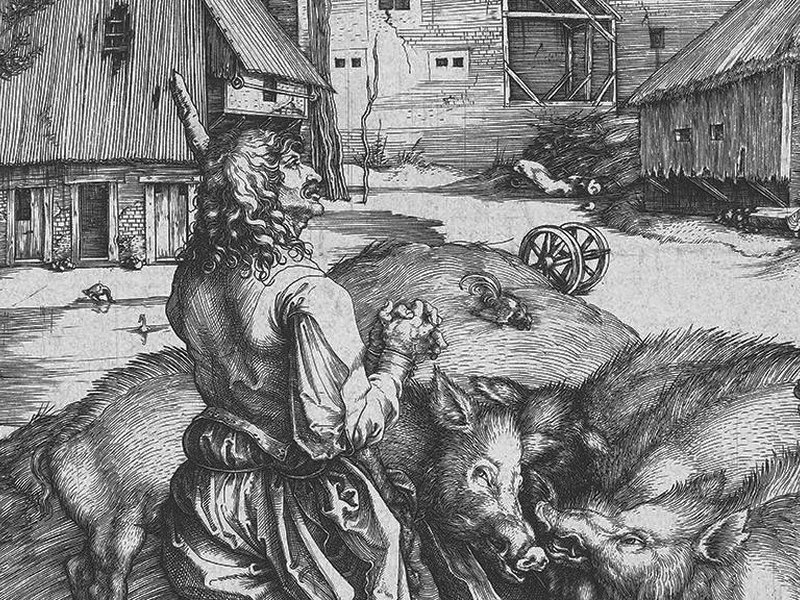
In the first essay on the parable of the Prodigal Son, I suggested that the problems commentators and others encounter in interpreting Jesus three-part parable are not accidental. These are not just problems in our ignorance of cultural background. They are intentional features of the stories —stories designed to poke…

by Ralph Allan SmithJuly 11, 2019
durer-prodigal-son-2
Luke

Perspectives on the Prodigal, (Part 1)

The story of the Prodigal Son is perhaps the most well-known story in the Bible. As others have observed, it may also be one of the most misunderstood. In two short essays, I will point out features of this story that are commonly neglected, aspects of Jesus’ parable that might…

by Ralph Allan SmithJuly 9, 2019
de-rijke-man-en-de-arme-lazarus-by-jacopo-da-ponte-16th-century
Luke

Lazarus and the Rich Man

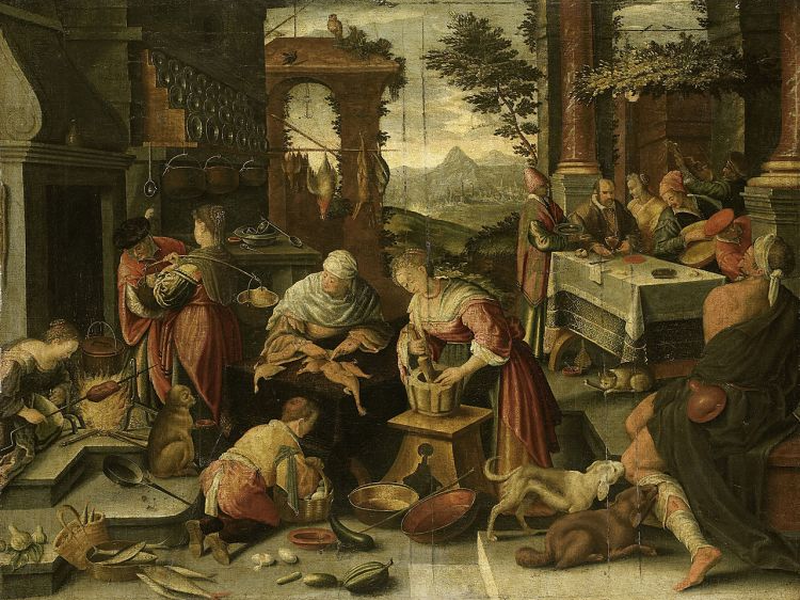
The parable of Lazarus and the nameless rich man is not an independent story. It is part of a long context that begins in Luke 15:1, where Jesus is eating with tax collectors and sinners and the scribes and Pharisees grumble. In response to their hardheartedness, Jesus tells a three-part…

by Ralph Allan SmithJuly 4, 2019
aaron-burden-uynrnfdkjwg-unsplash
Luke

Everybody has Dropsy - Luke 14:1-24

The Bible is written so that even when a reader cannot pick up on what might be deeper or more detailed aspects of a text, there is virtually always a message to be heard. In the ancient world, where the “reader” of Scripture would likely be a church official facing…

by Ralph Allan SmithJuly 2, 2019
communion
Biblical Theology

Fruit Trees and Grain Plants

The distinction between garden (or vineyard) and field begins in Genesis 2. This relates to the ordering of the formless world. Plants of the field are contrasted with the garden planted by God in Genesis 2:5&8. Later on, under the Old Covenant the Israelites will be required to keep their…

by James B. JordanJune 27, 2019

Showing page 77 of 309

See all
See all
History

Pentecostalism

Philip Jenkins’ The Next Christendom is packed with stimulating historical insights. But this is one of the most striking: Most ?listings of major trends of the past century?Ehave ?rightly devoted much space to political movements like fascism and communism, but ignored vital religious currents like Pentecostalism. Yet today, Fascists or…

May 14, 2005

Fenrir’s bonds

The Edda records: “The unbreakable fetters which bound down the Great Wolf Fenrir had been cunningly forged by Loki from these: the footfall of a cat, the roots of a rock, the beard of a woman, the breath of a fish, the spittle of a bird.” Who knows what that…

May 13, 2005

Fenrir’s bonds

The Edda records: “The unbreakable fetters which bound down the Great Wolf Fenrir had been cunningly forged by Loki from these: the footfall of a cat, the roots of a rock, the beard of a woman, the breath of a fish, the spittle of a bird.” Who knows what that…

May 13, 2005
Philosophy

Literary Wittgenstein

Terry Eagleton reviews a new book on The Literary Wittgenstein (edited by John Gibson and Wolfgang Huemer) in the April 29 issue of the TLS. There are a number of highlights: 1) Eagleton sets Wittgenstein firmly in the glitzy, kitchy world of Vienna. “The place,” he writes, “was a cockpit…

May 13, 2005

Justification and eschatology

The notion of a “future justification” has come under criticism from some Reformed writers, though the idea has a fairly established place in Reformed thought (beginning at least with Vos). The opposition to the idea suggests that some Reformed soteriology is eschatologically schizophrenic. Consider: It seems clear that adoption is…

May 12, 2005
Theology

Infra/Supra and Narrative theology

Awhile back, I suggested some reasons for leaning toward supralapsarianism. Here’s some more: Infra seems to lack an eschatology. Creation is made, the fall is decreed, and then salvation is seen as a rescue from the fall. In supra, creation is never considered apart from a consummation. Salvation is not…

May 10, 2005

Showing page 1981 of 2212

Browse by Category

In Medias Res

Your weekly digest for all things Theopolis.

Donate

Theopolis is nearly 100% donor-supported. Consider joining us on our mission.