Theopolis Logo

Writing

Explore our collection of theological essays, biblical studies, and reflections on faith and culture.

See all
31-03-0213
Hermeneutics

Apocalyptic Eyes

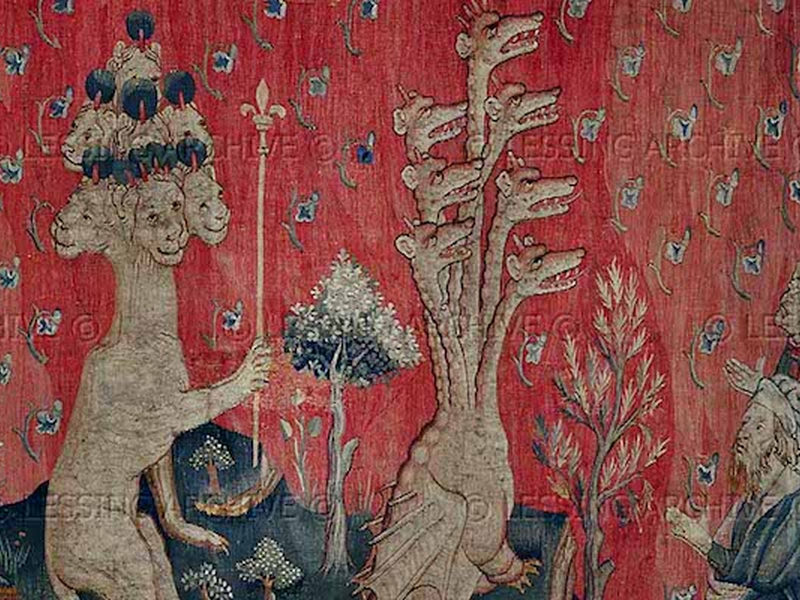
Flying scrolls. Red horses. Beasts coming out of the sea. Winged women. The list goes on. Apocalyptic literature in the Bible is like a cross between science fiction and Marvel comics. And the Bible has a fair bit of this sort of thing. Daniel sees visions in Babylon, Zechariah sees…

by Toby SumpterNovember 4, 2014

bhm-skyline-2
Theopolis News

New Name, New Look

Trinity House Institute has taken a new name, the Theopolis Institute. This striking new name expresses our unique vision and mission and captures the unified purpose behind all our specific programs and activities. We still have Bible, liturgy, and culture in our tagline. We still offer the same courses on…

by TheopolisNovember 4, 2014
istock_000012860926small
Atonement

Not Fearing the Devil

Adam Kotsko offers a socio-political variation on the Christus Victor atonement theory in his 2010 study, The Politics of Redemption: The Social Logic of Salvation . He does this by explaining "the devil" in terms of the Hegelian concept of "objective spirit," Geist . As Kotsko puts it, Geist "refers…

by Peter LeithartOctober 13, 2014
jez-timms-8muutamcwu4-unsplash
Leviticus

The Meaning of Sacrifice

Two factors keep Nahtali Meshel from discussing the meaning of sacrifice until late in his The "Grammar" of Sacrifice . The first has to do with the texts he draws from: "P says little about the meaning of its rituals" (174). The other has to do with the grammatical theory…

by Peter LeithartOctober 8, 2014
jez-timms-8muutamcwu4-unsplash
Leviticus

Praxemics

Chapter 5 of Naphtali Meshel's The "Grammar" of Sacrifice focuses on "praxemics," the physical actions of sacrificial ritual. Praxemes are constituted by six elements: an "atomact," an elementary physical act or gesture; an actor; an object that is acted up; a target for the action and often for the object…

by Peter LeithartOctober 6, 2014
markus-winkler-aid-xyrtlec-unsplash
Leviticus

Jugation and Hierarchy

Two chapters of Naphtali Meshel’s The “Grammar” of Sacrifice cover what he calls “jugation” and “hierarchies.” The first involves the addition of other materials to an animal offering. Jugates include wine, cereal, and oil that are added to the animals (zoemes) that are offered in sacrifice. Some jugates are coordinated…

by Peter LeithartOctober 1, 2014

Showing page 167 of 309

See all
See all

Reformers and Fathers on Justification

Chemnitz has some interesting comments on how the Reformers handled the patristic usage of ?justification,?Ewhich did not match their own usage. He admits that the ?fathers mostly take the word ?justify?Efor the renewal,?Ewhich is not the Reformation definition of ?justify,?Ebut he commends the fathers for those places ?where they according…

December 20, 2004

Chemnitz on Justification and Renewal

Chemnitz cites the views of the German Roman Catholic Johann Gropper (1503-59). According to Chemnitz, he ?argues at great length that Christ by his obedience did not merit only the remission of sins but also the Spirit of renewal; and that God remits sins to no one without at the…

December 20, 2004

Eucharistic Meditation, Fourth Advent

John 6:56: ?He who eats My flesh and drinks My blood abides in Me, and I in him?E This morning we have examined the Bible?s teaching on the mutual indwelling of the Persons of the Trinity. The Persons are distinct from each other, and not reducible to each other; the…

December 19, 2004

Exhortation, Fourth Advent

God created our bodies; He will redeem our bodies and raise them from the dead; and in between He calls us to ?present the members of our bodies as instruments of righteousness?Eand to ?offer your bodies as living sacrifices.?EOur bodies are gifts from God, and we should offer them for…

December 19, 2004

Trinity, Worship, and Dialogue

INTRODUCTION We?ve been looking at Christian worship in the light of Scriptural patterns of sacrifice. This gives us an overall order or sequence of worship. In this session, I want to examine two main issues: First, the Trinitarian basis of worship, and second, the dialogic structure of worship. These are…

December 19, 2004

Escher and the Trinity

Thinking about perichoresis or about Gregory Nazianzen’s famous “No sooner do I conceive of the one than I am illumined by the splendour of the three; no sooner do I distinguish them than I am carried back to the one” always makes me think of Escher. I find now that…

December 18, 2004

Showing page 2025 of 2212

Browse by Category

In Medias Res

Your weekly digest for all things Theopolis.

Donate

Theopolis is nearly 100% donor-supported. Consider joining us on our mission.