Theopolis Logo

Writing

Explore our collection of theological essays, biblical studies, and reflections on faith and culture.

See all
tanner-mardis-xuxghzhibn4-unsplash-1-2
Biblical Studies

Tweets-turned-Notes on the Bible’s Chronology

Summary In what follows, I will consider the “year-stamps” employed in Scripture, i.e., statements of the form, “Such-and-such an event took place in the Xth year of Y.” In the process, I will suggest some ways in which the Biblical narrative might relate to events in the extra-Biblical world, though…

by James BejonJuly 16, 2019
durer-prodigal-son-2
Luke

Perspectives on the Prodigal, (Part 2)

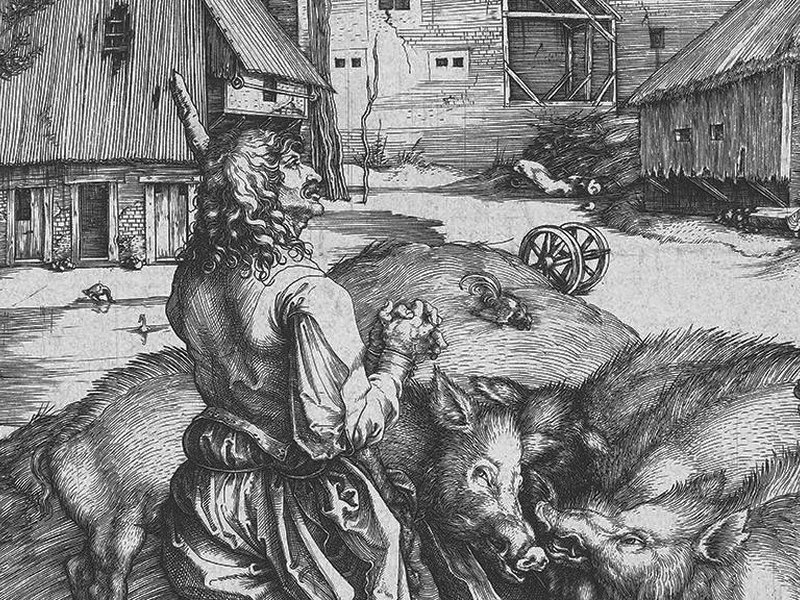
In the first essay on the parable of the Prodigal Son, I suggested that the problems commentators and others encounter in interpreting Jesus three-part parable are not accidental. These are not just problems in our ignorance of cultural background. They are intentional features of the stories —stories designed to poke…

by Ralph Allan SmithJuly 11, 2019
durer-prodigal-son-2
Luke

Perspectives on the Prodigal, (Part 1)

The story of the Prodigal Son is perhaps the most well-known story in the Bible. As others have observed, it may also be one of the most misunderstood. In two short essays, I will point out features of this story that are commonly neglected, aspects of Jesus’ parable that might…

by Ralph Allan SmithJuly 9, 2019
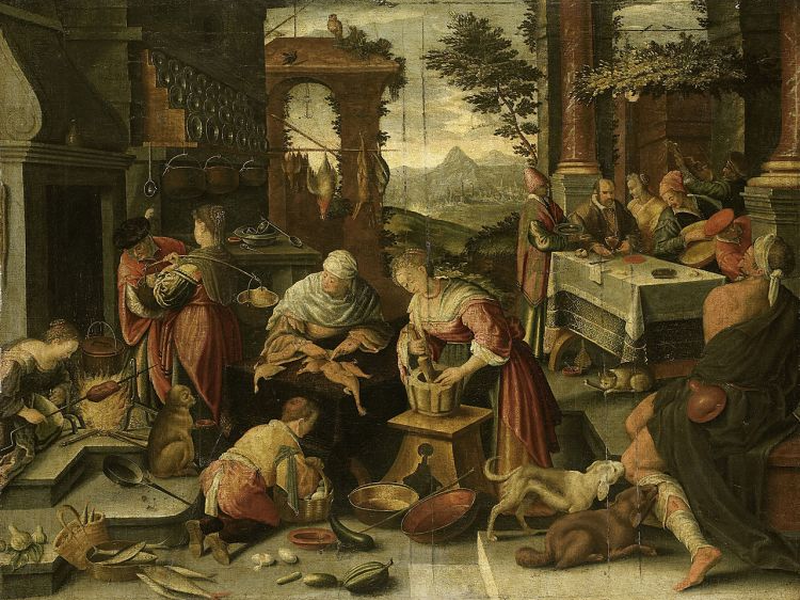
de-rijke-man-en-de-arme-lazarus-by-jacopo-da-ponte-16th-century
Luke

Lazarus and the Rich Man

The parable of Lazarus and the nameless rich man is not an independent story. It is part of a long context that begins in Luke 15:1, where Jesus is eating with tax collectors and sinners and the scribes and Pharisees grumble. In response to their hardheartedness, Jesus tells a three-part…

by Ralph Allan SmithJuly 4, 2019
aaron-burden-uynrnfdkjwg-unsplash
Luke

Everybody has Dropsy - Luke 14:1-24

The Bible is written so that even when a reader cannot pick up on what might be deeper or more detailed aspects of a text, there is virtually always a message to be heard. In the ancient world, where the “reader” of Scripture would likely be a church official facing…

by Ralph Allan SmithJuly 2, 2019
communion
Biblical Theology

Fruit Trees and Grain Plants

The distinction between garden (or vineyard) and field begins in Genesis 2. This relates to the ordering of the formless world. Plants of the field are contrasted with the garden planted by God in Genesis 2:5&8. Later on, under the Old Covenant the Israelites will be required to keep their…

by James B. JordanJune 27, 2019

Showing page 77 of 309

See all
See all

The Passion, Again

I’ve read some surprising things in The New Republic : Andrew Sullivan ‘s analysis of the Roman Catholic Church several years ago was very insightful, and Eugene Genovese , reviewing a book on Southern slavery, encouraged TNR ‘s readers to check out the works of James Henley Thornwell. But I’ve…

March 6, 2004

Air Travel

Air travel requires a reversion to infantile behavior, or at best to behavior characteristic of elementary school kids. You’ve got to stay in the seat, you can’t go to the bathroom without permission from the captain or the flight attendant, you’re served packaged food (if at all) in pouches. How…

March 6, 2004
Literature

Merchant of Veniceas Allegory

Watching the closing courtroom scene of The Merchant of Venice , I was struck by how allegorical it is. First, there’s Antonio, threatened with death for a debt that really was incurred by Bassanio. Second, he’s threatened by a Jew. Third, Shylock says something like “his blood be on my…

March 6, 2004

Foolishness of God

Does the “foolishness of God” carry the connotation of “God playing the fool”? As in, God the jester? Is Paul saying that God the jester is wiser than the sages?

March 4, 2004
Literature

Walter Scott, Again

Further reflection on Scott: His anti-romanticism, as I suggested, is a common theme in early novel-writing. Defoe furnishes another example. Robinson Crusoe is warned by his father against running off to sea and seeking adventure, but Robin is unwilling to settle down to a boring middle-class life. Of course, when…

March 4, 2004
Theology

The Antiquity of Moses

The church fathers went to great lengths to prove that Moses was both more antique than Greek sages, and also to show that the Greek sages were dependent on Moses. While historically plausible, these efforts a form of Christian apologetics done within the confines of pagan thought. The assumption is…

March 4, 2004

Showing page 2114 of 2212

Browse by Category

In Medias Res

Your weekly digest for all things Theopolis.

Donate

Theopolis is nearly 100% donor-supported. Consider joining us on our mission.