Theopolis Logo

Writing

Explore our collection of theological essays, biblical studies, and reflections on faith and culture.

See all
tim-marshall-k2u71wv2ei4-unsplash
Modernity

Protestantism and the Postmodern self

Postmodernism has, we are told, “decentered” the modern self, that unified, sovereign, isolated, godlike “thinking thing” discovered by Rene Descartes. The postmodern self is not single but multiple; not sovereign but controlled by external forces; not isolated but “embedded” in the world and in relation; not godlike, but human, all…

by Peter LeithartMay 6, 2013

kiwihug-l4gw27xzn1i-unsplash
Matthew

Law and History: How to Read the Law of Moses (Part 8)

This is the eighth in a series of studies on Deuteronomy 22:30-23:8. And Jesus went out thence, and withdrew into the parts of Tyre and Sidon. And behold, a Canaanitish woman came out from those borders, and cried, saying, Have mercy on me, O Lord, thou son of David; my…

by Ralph Allan SmithMay 1, 2013
screen-shot-2023-09-20-at-7-04-07-am
Augustine

A Cusan Modernity?

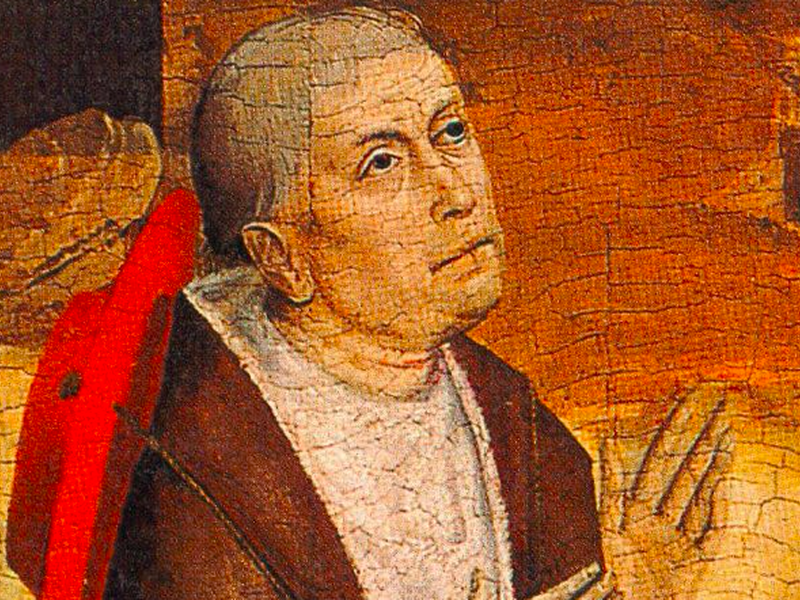
The fifteenth-century German Cardinal Nicholas of Cusa led a busy and wide-ranging life. Educated in liberal arts and law at Heidelberg and Padua, Nicholas was a leading figure in the Conciliarist movement, and later served as a papal legate to both Constantinople and throughout Germany. As Bishop of Brixen, he…

by Peter LeithartApril 29, 2013
screenshot-2023-07-27-at-10-25-35-am
Deuteronomy

Law and History: How to Read the Law of Moses (Part 7)

This is the seventh in a series of studies on Deuteronomy 22:30-23:8. Thou shalt not abhor an Edomite, for he is thy brother; thou shalt not abhor an Egyptian, because thou wast a sojourner in his land. The children of the third generation that are born unto them shall enter…

by Ralph Allan SmithApril 25, 2013
ivan-aleksic-16yxcjsoaek-unsplash
Romans

What Advantage the Jew?

A sermon on Romans 3:1-8. 1 Then what advantage has the Jew? Or what is the value of circumcision? 2 Much in every way. To begin with, the Jews were entrusted with the oracles of God. A lot of people speculate here about what kind of advantage Paul is talking…

by Mark HorneApril 22, 2013
screenshot-2023-07-27-at-10-25-35-am
Deuteronomy

Law and History: How to Read the Law of Moses (Part 6)

This is the sixth in a series of studies on Deuteronomy 22:30-23:8. An Ammonite or a Moabite shall not enter into the assembly of Yahweh; even to the tenth generation shall none belonging to them enter into the assembly of Yahweh forever: because they met you not with bread and…

by Ralph Allan SmithApril 17, 2013

Showing page 195 of 309

See all
See all
Literature

Michel on Tragedy

Laurence Michel, exploring the “Possibility of a Christian Tragedy,” suggests that the creation account of Genesis opens the possibility for a “tragic sense of life.” How? “To have a world imitative of the simple perfection of God one must have multiplicity and diversity of goods. Various evils and contraries will…

January 15, 2004
Theology

Evil and Good

CS Lewis says in Pilgrim’s Regress : “Evil is fissiparous, and could never in a thousand eternities find any way to arrest its own reproduction. If it could, it could be no longer evil: for Form and Limit belong to the good.” But what then of a Good and Infinite…

January 15, 2004
Literature

Niebuhr on Christianity and Tragedy

In a chapter in Beyond Tragedy , Reinhold Niebuhr considers the relationship between Christianity and tragedy. He denies that Christianity is tragic: “The cross is not tragic but the resolution of tragedy.” In the course of his discussion he makes several intriguing points about the tragic outlook: 1) He highlights…

January 15, 2004
Literature

Weil on Tragedy

Simone Weil offered one of the most thorough-going Christian defenses of tragedy, though that defense comes at considerable cost to her orthodoxy. As Katherine Brueck points out in her study of Weil’s theory ( The Redemption of Tragedy ), Weil recognized that what was at stake in a discussion of…

January 15, 2004

More Thoughts from Segal

Some more thoughts from Segal’s book: 1) He points out the optimism that gripped Athens in the Periclean period, an optimism about the ability of human LOGOS and NOMOS to stave off the savage potential of man’s PHUSIS. But that was short-lived: The Peloponnesian wars broke out, marked by several…

January 15, 2004

civilization in Sophocles

In his study of Sophocles, Tragedy and Civilization , Charles Segal points to several Greek terms that might be translated as “civilization” and that capture various aspects of civilized life: NOMOS = the established institutions, customs, and norms of a people POLITEIA = the form of government, especially the constitutional…

January 15, 2004

Showing page 2136 of 2212

Browse by Category

In Medias Res

Your weekly digest for all things Theopolis.

Donate

Theopolis is nearly 100% donor-supported. Consider joining us on our mission.