Theopolis Logo

Writing

Explore our collection of theological essays, biblical studies, and reflections on faith and culture.

See all
screen-shot-2022-08-04-at-9-36-57-am
Matthew

Paul Doesn't Care About Universal Individual Sinfulness or General Revelation

One reason readers assume Paul is trying to prove that all human beings are sinful is that they understand him to be arguing that no one can keep the law. That means, they think, his opponents must believe that human nature is potentially sinless. Taking Paul’s statement that, if you…

by Mark HorneJune 17, 2013

karsten-wurth-imegmbunara-unsplash
Mission

Dreams and Visions

[Note: This post was written prior to our name changing to Theopolis Institute.] What is Trinity House for? Three things: We aim to advance the reformation of the church and, through the church, to promote the renewal of culture; in furthering reformation, we aspire to be a site of fraternal,…

by Peter LeithartJune 12, 2013
sixteen-miles-out-al48tflf4e8-unsplash
Deuteronomy

Sons to Yahweh your God!

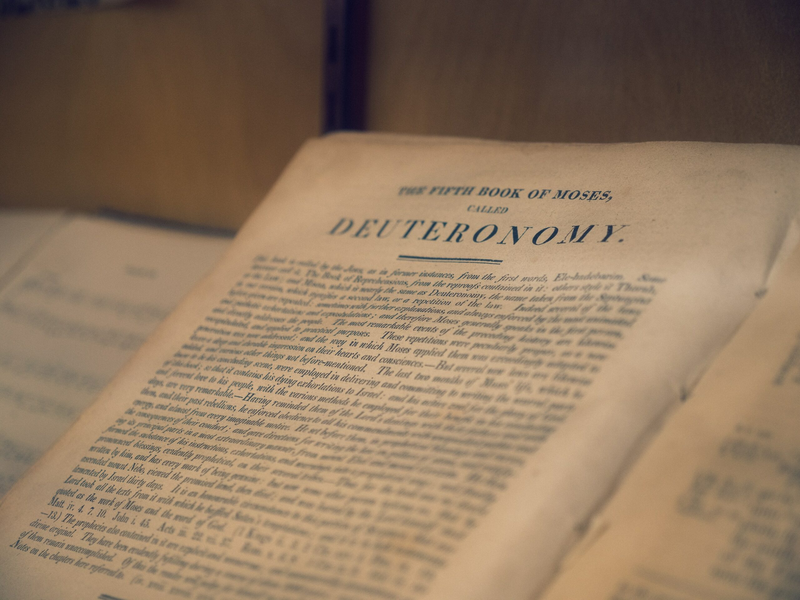
This is the third in a series of studies of the Third Word, and especially of Deuteronomy 14. In 1979 Stephen Kaufman penned a groundbreaking essay on Deuteronomy, arguing that it was a meticulously structured and carefully composed book. In his view, chapters 12 to 26 in particular follow the…

by Ralph Allan SmithJune 10, 2013
kelly-sikkema-gpoh17dxqdm-unsplash
Romans

How is Wrath Revealed?

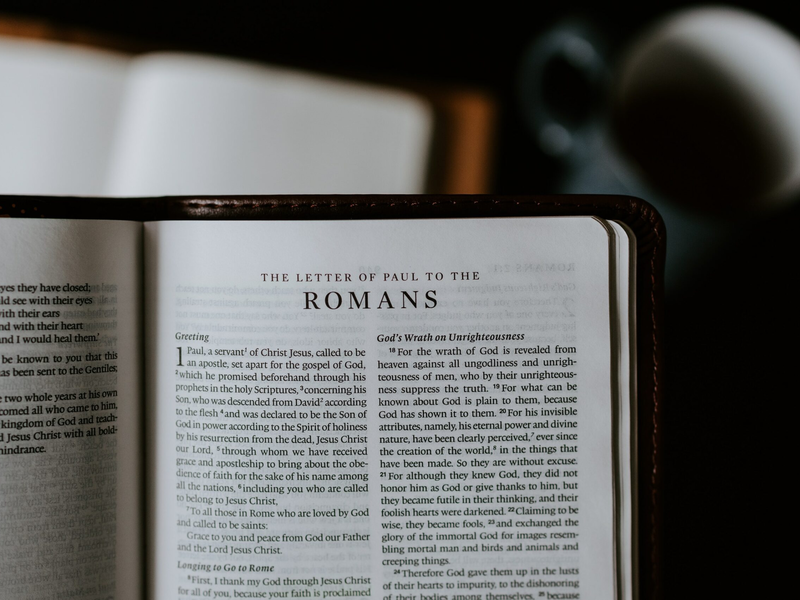
A large mistake is made in understanding Romans if one assumes that Paul is concerned with proving the fact that no one can ever live without sin—or that all attempts at obeying God’s commands are at least tainted with human sinfulness. The first problem with such an assumption is that…

by Mark HorneJune 5, 2013
chris-bair-ndczc5739ck-unsplash
Deuteronomy

The Third Word

This is the second in a series of studies on the Third Word, and especially on the food laws of Deuteronomy 14. In the second part of this series, I argue that Moses’ reworking of the Ten Words in Deuteronomy 5 includes adding nuance to the Third Word. This prepares…

by Ralph Allan SmithJune 3, 2013
yannis-papanastasopoulos-if_29sed7ta-unsplash
Culture

Turning Babel into a Beast

Recent months have brought a lively discussion of Christian participation in the culture war. On the one hand, the pro-life movement appears to be making some slow progress on the abortion issue. The trial of abortionist and serial murderer Kermit Gosnell has the potential to awaken those who are nominally…

by Joe RigneyMay 29, 2013

Showing page 193 of 309

See all
See all

David's Speech to Solomon

1 Chronicles 22:6–16 records David's hortatory speech to Solomon about building the temple. It is divided into two large sections, both marked by the phrase “my son” (22:7, 11). The first section repeats Yahweh's oracle to David explaining why he would not build the house and promising that David's son…

January 24, 2017

The Essential Mary

S ince the Son is incarnate, argues Aaron Riches in his Ecce Homo , “we must speak of unum esse simpliciter ,” yet Constantinople II determined that the Son is persona composita . Thus, in the words of Aquinas, “there is another being of this suppositum . . . insofar…

January 24, 2017

David's Restraint, Yahweh's Trap

W hen King Nahash of Ammon dies, David sends his condolences to his son Hanun (1 Chronicles 19). Nahash had shown love-and-loyalty ( hesed ) to David, so David returns hesed (v. 2). Hanun doesn't believe it, and the princes (apparently young advisors) stoke up his suspicions (v. 3). David…

January 23, 2017

Sherlock's Soap-Operization

N icholas Barber gets Sherlock just right. Benedict Cumberbatch has the intensity to kill the title role, and, puppyish though he is, Martin Freeman's Dr. Watson is a credible sidekick. The production is slick, the characters compelling, the rapport sharp and often witty. It's hugely entertaining. Then they go and…

January 20, 2017

Thomas and Pure Nature

S ummarizing a line of argument from Aquinas, Robert Spaemann ( Essays in Anthropology ) notes that Thomas acknowledges that “By nature animals are sufficiently equipped to attain their own end” (15). The question is: Are human beings? And if the end of human beings is union with God, how…

January 20, 2017

Christ the Lion

J esus is the Lion of Judah. This is no random metaphor, according to the medieval bestiary, the verse Physiologus attributed to the 11th-century writer Theobaldus. Lions have various habits, all of which point to Christ. For instance: “As the Lion dwells on the high mountain, so Christ the spiritual…

January 20, 2017

Showing page 214 of 2212

Browse by Category

In Medias Res

Your weekly digest for all things Theopolis.

Donate

Theopolis is nearly 100% donor-supported. Consider joining us on our mission.