Theopolis Logo

Writing

Explore our collection of theological essays, biblical studies, and reflections on faith and culture.

See all
tanner-mardis-xuxghzhibn4-unsplash-1-2
Deuteronomy

The Second Word II: Seeing & Hearing; Exposition

Hearing, Seeing, and History God is Word, not picture. He speaks, but He is not visible in Himself. Thus, God initiates history through language. He speaks the world into existence, and speaks to us to bring us out of formlessness and emptiness into the fullness of being His Bride. Similarly,…

by James B. JordanAugust 10, 1994
tim-wildsmith-jyculofqjak-unsplash-1
Biblical Studies

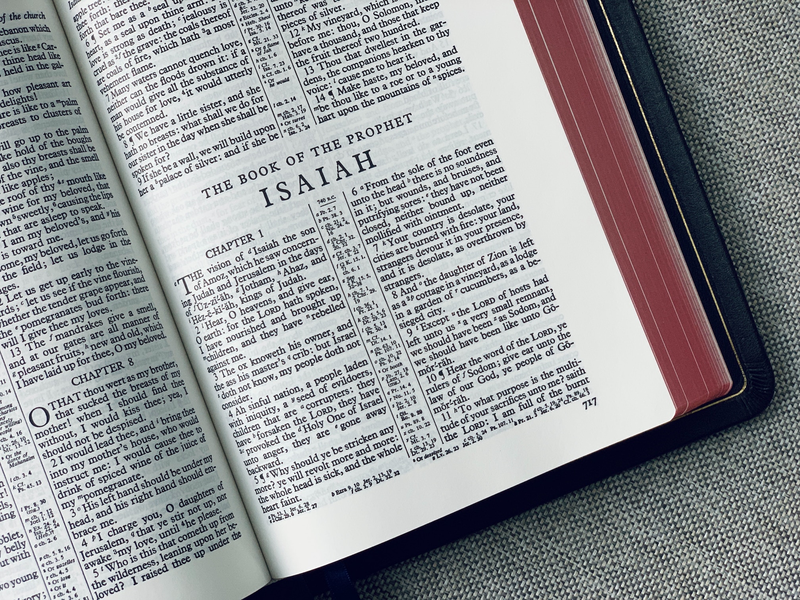
Passover and Exodus in Isaiah

The consensus of modern critical scholarship is that the book assigned to Isaiah was in fact composed by several different hands. "Deutero-Isaiah" supposedly begins with Isaiah 40:1. There are many good reasons for rejecting this conclusion. Among these, the narrative pattern of chapters 36-39 is a neglected piece of evidence.…

by Peter LeithartJuly 23, 1994
davide-ragusa-slgtmf8ejye-unsplash
Biblical Horizons

Human Life in Four Directions

Eugen Rosenstock-Huessy has pointed out throughout his many fascinating and occasionally quixotic writings and lectures that human life exists in four directions. These four directions are inward, outward, backward, and forward. In this article I want to explore these as they relate to the work of the Church. Each of…

by James B. JordanJuly 10, 1994
jan-kahanek-g3o5ztrk2e4-unsplash
Biblical Chronology

The Chronology of the Pentateuch (Part 5)

14. Joseph and Judah Genesis 38 tells us about Judah’s sons and grandsons, and if we try to get these events into the time before the descent of the Hebrews into Goshen, it is very difficult to do so. But this passage is almost certainly dischronologized. Thematically Genesis 38 is…

by James B. JordanJuly 10, 1994
trnava-university-sd8ujsf4xm4-unsplash
Art

A Short Survey of Good Fantasy and Science Fiction for Christian Schools and Home Schools

From time to time I am asked what is good SF and fantasy that teenagers in Christian and home schools might enjoy. The following brief discussion is my answer that question. I’ve tried to point out authors and stories that are not widely known, and therefore have set aside G.…

by James B. JordanJuly 10, 1994
whichbooksbelongintheot
Hermeneutics

Daniel 12:2

"And many of those who sleep in the dust of the ground will awaken, some to life everlasting and others to disgrace, to contempt everlasting." This verse is often cited as proof that there was a belief in the resurrection of the body in the Old Testament times. In fact,…

by James B. JordanJune 10, 1994

Showing page 277 of 309

See all
See all
History

Enlightenment

Two very different evaluations of the Enlightenment appear in recent books. First from Robert Darnton, historian of the French Enlightenment, who, according to the reviewer in the October 6 TNR , devotes the first and most substantative essay in his recent book George Washington’s False Teeth to defending the Enlightenment.…

October 20, 2003
Biblical Studies

Promised Land and Heaven

There’s a breakdown in the traditional typology that links “promised land” with “heaven.” Though the promised land is eschatologically a new heavens and new earth, the typology is more exactly fulfilled in the church’s fulfillment of the great commission on earth. After all, we don’t embark on a “conquest” of…

October 18, 2003
Biblical Studies

Moses the Matchmaker

Moses is the matchmaker who brings the bride to a trysting place with her lover, Yahweh. He is the “friend of the bridegroom” who, like John the Baptist, prepares the bride for her husband. As such, Moses and John are models for all Christian ministry, which is also all about…

October 18, 2003
Biblical Studies

Horned Man

Something to check: Is Moses the first “horned man” in the Bible? He comes down from the mountain, having seen the glory of God, with “horns” on his head, rays of glory radiating out. This may be the source of the horned man image used elsewhere, in the Psalms for…

October 18, 2003

“From Faith” (Rom. 1:17)

Douglas A. Campbell argues forcefully for interpreting the phrase ek pisteos (from faith) in Romans 1:17 as a reference to the faithfulness of Christ in his obedience to death. This, in turn, suggests strongly that Paul’s later use of pistis Christou (faith of Christ) as Christ’s own faithfulness rather than…

October 18, 2003

“From Faith” (Rom. 1:17)

Douglas A. Campbell argues forcefully for interpreting the phrase ek pisteos (from faith) in Romans 1:17 as a reference to the faithfulness of Christ in his obedience to death. This, in turn, suggests strongly that Paul’s later use of pistis Christou (faith of Christ) as Christ’s own faithfulness rather than…

October 18, 2003

Showing page 2181 of 2212

Browse by Category

In Medias Res

Your weekly digest for all things Theopolis.

Donate

Theopolis is nearly 100% donor-supported. Consider joining us on our mission.