Theopolis Logo

Writing

Explore our collection of theological essays, biblical studies, and reflections on faith and culture.

See all
31-03-0213
Hermeneutics

Apocalyptic Eyes

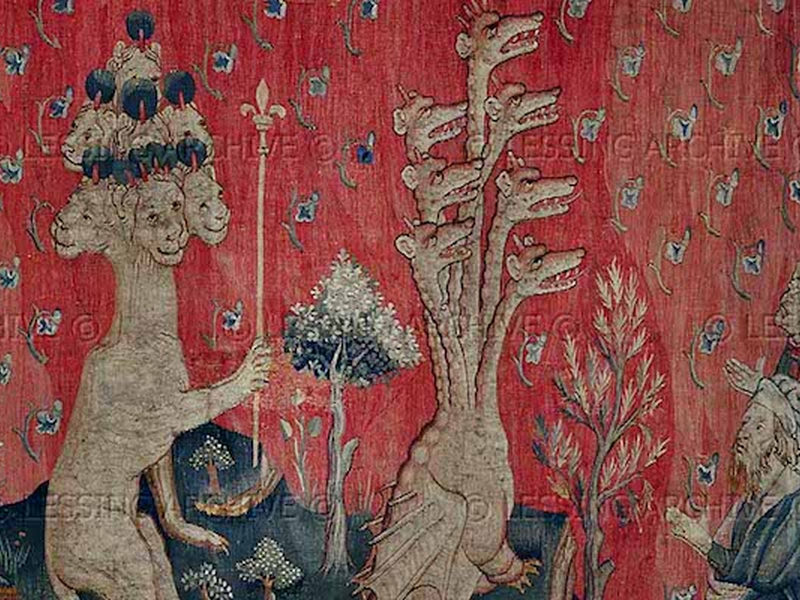
Flying scrolls. Red horses. Beasts coming out of the sea. Winged women. The list goes on. Apocalyptic literature in the Bible is like a cross between science fiction and Marvel comics. And the Bible has a fair bit of this sort of thing. Daniel sees visions in Babylon, Zechariah sees…

by Toby SumpterNovember 4, 2014

bhm-skyline-2
Theopolis News

New Name, New Look

Trinity House Institute has taken a new name, the Theopolis Institute. This striking new name expresses our unique vision and mission and captures the unified purpose behind all our specific programs and activities. We still have Bible, liturgy, and culture in our tagline. We still offer the same courses on…

by TheopolisNovember 4, 2014
istock_000012860926small
Atonement

Not Fearing the Devil

Adam Kotsko offers a socio-political variation on the Christus Victor atonement theory in his 2010 study, The Politics of Redemption: The Social Logic of Salvation . He does this by explaining "the devil" in terms of the Hegelian concept of "objective spirit," Geist . As Kotsko puts it, Geist "refers…

by Peter LeithartOctober 13, 2014
jez-timms-8muutamcwu4-unsplash
Leviticus

The Meaning of Sacrifice

Two factors keep Nahtali Meshel from discussing the meaning of sacrifice until late in his The "Grammar" of Sacrifice . The first has to do with the texts he draws from: "P says little about the meaning of its rituals" (174). The other has to do with the grammatical theory…

by Peter LeithartOctober 8, 2014
jez-timms-8muutamcwu4-unsplash
Leviticus

Praxemics

Chapter 5 of Naphtali Meshel's The "Grammar" of Sacrifice focuses on "praxemics," the physical actions of sacrificial ritual. Praxemes are constituted by six elements: an "atomact," an elementary physical act or gesture; an actor; an object that is acted up; a target for the action and often for the object…

by Peter LeithartOctober 6, 2014
markus-winkler-aid-xyrtlec-unsplash
Leviticus

Jugation and Hierarchy

Two chapters of Naphtali Meshel’s The “Grammar” of Sacrifice cover what he calls “jugation” and “hierarchies.” The first involves the addition of other materials to an animal offering. Jugates include wine, cereal, and oil that are added to the animals (zoemes) that are offered in sacrifice. Some jugates are coordinated…

by Peter LeithartOctober 1, 2014

Showing page 167 of 309

See all
See all

House of Wisdom

1 Chronicles 22 records a lengthy speech from David to his son Solomon. The very setup suggests an analogy with the book of Proverbs, in which Solomon gives instructions to his son the prince. For the Chronicler, Solomon learned to teach wisdom by receiving it from David. That formal hint…

December 1, 2016

Sources of Apocalyptic

I n his 1892 Lectures on the Apocalypse (29–30), William Milligan argues that “the symbolism of the Revelation is wholly and exclusively Jewish.” He illustrates: Even “the crown of life” in chap. i. 10 is not the wreath of the victor in the Grecian games, but the Hebrew crown of…

December 1, 2016

Limits of Pen and Tongue

S hakespeare's Sonnet 103 laments the limits of language to capture the thing it describes. “Look in your glass,” the poet says, and you will see a face that overwhelms “my blunt invention quite.” The reality dulls the poet’s lines and disgraces him. And it would be a sin to…

November 30, 2016

Church With Soul of America?

The paragraphs below are taken, with slight changes, from a column I wrote at Firstthings.com in July 2015. The questions are even more pressing since Trump's election. I mmigration has always roiled under the surface of American politics. It’s the price of being America, a land subdued by outcasts and…

November 30, 2016

A House by and for Nations

A fter David sinfully takes a census of Israel (1 Chronicles 21), the threshing site where he builds the altar that arrests the plague becomes the temple site (1 Chronicles 22:1). David begins preparations for the temple. First, he gathers the “strangers” (Heb. ger ), non-Israelite residents of the land…

November 29, 2016

Love Well What You Leave

S hakespeare's Sonnet 73 embodies the excessiveness of poetry. It’s possible to summarize the poem in a brief statement: “I’m getting old. I'll die. Love me while you can.” Why so belabor the point? One effect of belaboring through fourteen lines of iambic pentameter is to link aging with cosmic…

November 29, 2016

Showing page 228 of 2212

Browse by Category

In Medias Res

Your weekly digest for all things Theopolis.

Donate

Theopolis is nearly 100% donor-supported. Consider joining us on our mission.