Theopolis News
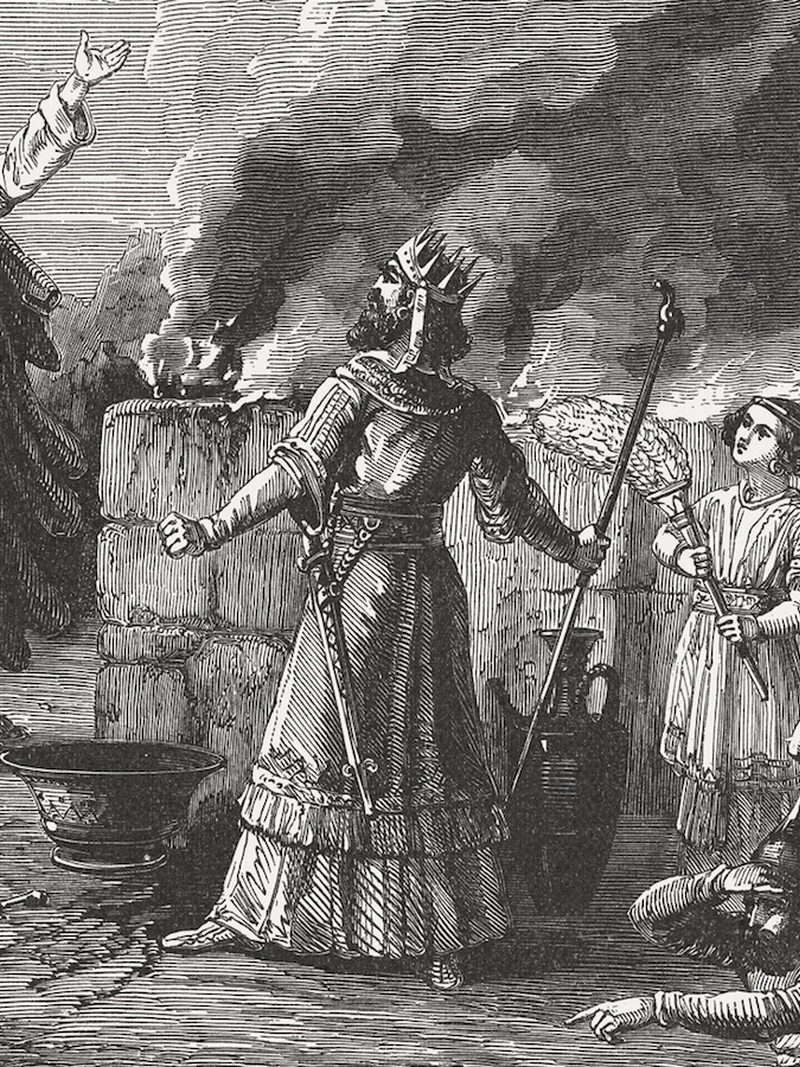
Constantine the Pious
Trinity House President Peter Leithart will deliver a lecture on "Constantine the Pious" at Oregon State University, Wednesday, October 30, at 7:00 PM.
by Peter LeithartOctober 29, 2013
Explore our collection of theological essays, biblical studies, and reflections on faith and culture.
Trinity House President Peter Leithart will deliver a lecture on "Constantine the Pious" at Oregon State University, Wednesday, October 30, at 7:00 PM.

In his rich study, We Have Never Been Modern (Harvard 1993), Bruno Latour describes modernity in terms of a dual process of “purification” and “hybridization.” Purification involves the clean construction of a nature (and science) separated off from society and the self, while hybridization involves mixtures of nature and culture.…

In James K.A. Smith’s excellent book, Introducing Radical Orthodoxy: Mapping a Post-secular Theology , he explains recent developments in theology and philosophy among mostly post-liberal (some Catholic) theologians. As with everything Dr. Smith writes, his prose is accessible, and written with clarity and precision as he describes the contribution made…

This is the last of a three-part series. 1:14-19 – The Lights in the Firmament The fourth day is the first day where God sets out His mediators and rulers. In the celestial bodies, God sets out His mediators and rulers in the same single class of created beings. We…
Trinity House President Peter Leithart will be in Chicago this weekend lecturing on Revelation. Sign up here .
Only two more weeks to register for the Trinity House Advent class on the book of Genesis. Register before the late fees kick in!
Showing page 185 of 309
Showing page 41 of 43
Laurence Moore's Religious Outsiders and the Making of Americans is a study of American religion that is not considered “mainstream” or “mainline”—Mormons, Catholics, Jews, Christian Science, Fundamentalists, Black churches. The goal is not to fill in a gap. The goal is to challenge the assumption that the “mainline” should function…
After John introduces the new scene – “I saw another sign in the heaven, great and marvelous” – the sign is described with two clauses (Revelation 15:1). The first is, woodenly translated, “angels seven having plagues seven the last”; and the second it “in them finished the passion of God.”…
Both Old and New Testaments, writes David Martin ( Pentecostalism , 12) include principles that “by persistent extension and deepening . . . can divest systems of authority of their justification and turn law into a matter of inward judgement and sincerity rather than external observance.” “Rend your heart and…
Greek myths valorize blindness. Tiresias is a blind seer, and when Oedipus finally “sees,” he becomes Tiresias, digging out his eyes with Jocasta's brooches. The bard who sings of the Trojan War in the Odyssey is, like Homer himself, blind. For the Greeks, the sightless are the true seers. Scripture…
The saints playing harps and singing on the fiery firmament are there because they are victorious over three enemies: the beast, the image of the beast, and the number of the beast's name (Revelation 15:2). When we look back at how those three are presented earlier in Revelation, we realize…
Girard's theory of scapegoating as the great virtue of explaining how the death of Jesus can remake human society. By refusing to acknowledge sin, Jesus becomes the innocent scapegoat, and thereby exposes the scapegoat mechanism for what it is. That exposure is the good news, and undoes the perverse dynamics…
Showing page 374 of 2212
Your weekly digest for all things Theopolis.