Theopolis Logo

Writing

Explore our collection of theological essays, biblical studies, and reflections on faith and culture.

See all
macau-photo-agency-2agj7bq68lk-unsplash
Coronavirus

Does Corona Compassion Kill?

The corona virus hit Western society like a Biblical plague — almost. Biblical plagues were actually much more devastating. Still, as Peter Leithart describes the present situation, it is a judgment from God, because the disease itself together with our political solutions brought about a social situation that fits Deuteronomy’s…

by Ralph Allan SmithMay 26, 2020
dawkins
Theology

Is Theology Useless?

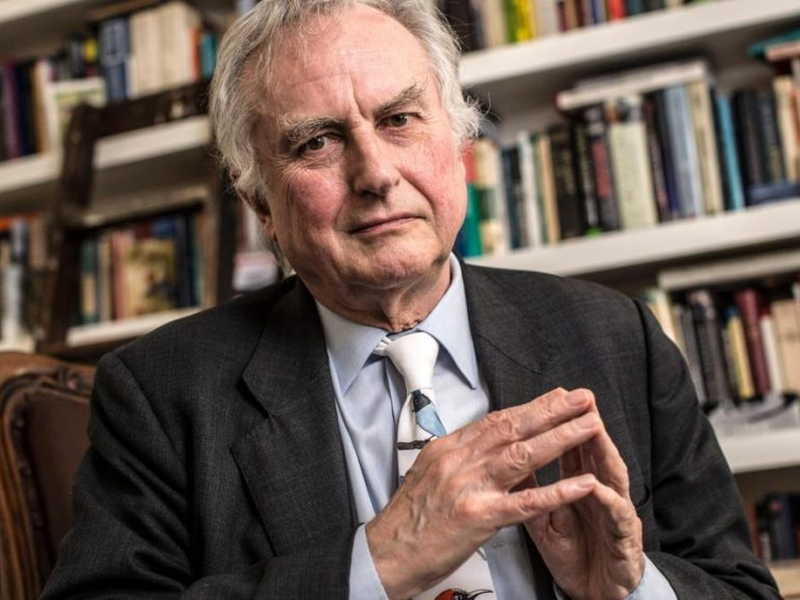
“The achievements of theologians don’t do anything, don’t affect anything, don’t mean anything. What makes anyone think that ‘theology’ is a subject at all?” - Richard Dawkins One cannot be a Christian college president or seminary trustee (your essayist is both) without wondering if Richard Dawkins’s notorious take-down of theology…

by Alexander WhitakerMay 19, 2020
nagesh-badu-nsn5labyy-m-unsplash
How to Worship

How Should Churches Respond to One Another?

Nearly every church that I am aware of has adopted differing practices since the recent virus scare began. Some churches continued to meet during the state lock downs, and other churches left their building empty, meeting online through various video conference technologies. Some churches have gone back to life as…

by Jonah BarnesMay 12, 2020
madhu-shesharam-vbrahouc05w-unsplash
Fear

Fear

Fear is an inseparable companion of human life. We are afraid of illness and death, poverty and cataclysms, rejection and betrayal, failure and shame. We are afraid of the unknown, so in a sense we are afraid of the future and life itself. Unless we live in the illusory belief…

by Bogumil JarmulakMay 5, 2020
stanislav-kondratiev-6po3qfkk7hq-unsplash
Heresy

The Blessing of “Heresies”

In the title above, I put the word “heresies” in quotation marks because I would prefer that the word “heresy” be confined to erroneous beliefs about the Trinity and the Person of Christ, rather than be used broadly to describe any view that might be considered an error. 1 At…

by Ralph Allan SmithApril 30, 2020
olesya-yemets-lyw7pqsp81k-unsplash-2
Fear

On Coping (or not) with a Crisis

I’ve been trying to work out why I’m feeling existentially disconnected from CoV-19-related fears. I’m taking it seriously, but it’s not registering in any deeply personal way. Partly it’s that my routines are largely undisrupted. But as I reflect on people’s reactions I think there’s more, because a lot of…

by Matthew MasonApril 28, 2020

Showing page 67 of 309

See all
See all

Why Now?

Jesus prayed that the church's unity would reflect the unity of the Father and Son. Paul urged the Ephesians to cultivate the virtues of peace that would express the sevenfold unity of the church (Ephesians 4). That demand is a perennial one. But we've been divided for a long time.…

March 12, 2015

Fragile Fruitfulness

Israel is a vine, transplanted from Egypt (Psalm 80; Isaiah 5). She exists to produce wine that gladdens the hearts of men. Israel is the Dionysian people. Ezekiel brings out another dimension of the vine image: “Son of man, how is the wood of the vine better than any wood…

March 12, 2015

Judgment to the Corners

The oracle of judgment in Ezekiel 14:12-23 is structured as a fourfold judgment: sword, famine, beasts, plague (v. 21). The descriptions of judgment are laid out in four paragraphs that use repetitive, stereotyped language. Throughout, Yahweh says that even the intercession of Noah, Daniel, and Job could not rescue Judah…

March 12, 2015
Fairy Tales

The Political Economy of Fairy Tales

In a TLS review of several recent books on fairy tales, Fracesca Wade points to the political context and economic setting of early folk and fairy tale collections. Inspired by Herder, the Grimms, she observes, intended to recover Germanitas by study of natural German poetry: “Although the brothers drew widely…

March 12, 2015

Remembering the Present

In his Deja Vu and the End of History , Italian philosopher Paolo Virno explores the phenomenology of memory, especially in its relation to philosophies of history. The deja vu of the title isn't a metaphor; following Henri Bergson, Virno argues that it represents “the untrammelled extension of memory's jurisdiction,…

March 11, 2015

Potential, Act, and Violence

Paolo Virno ( Deja Vu and the End of History ) observes that potential and act occur simultaneously. Take language: “The language faculty irrupts into becoming in concomitance with the phrase that I am speaking. It appears precisely now, as I speak, neither before nor afterwards: but, note, right now…

March 11, 2015

Showing page 453 of 2212

Browse by Category

In Medias Res

Your weekly digest for all things Theopolis.

Donate

Theopolis is nearly 100% donor-supported. Consider joining us on our mission.