Theopolis Logo

Writing

Explore our collection of theological essays, biblical studies, and reflections on faith and culture.

See all
evangelists
Matthew

Dating Matthew, (Part 1)

When might the Gospel according to Matthew have been written? Of course, any answer can only be speculation, but that does not mean we are reduced to groundless opinion. In this series of articles I point the way to an approach different from the general consensus among scholars today which…

by Ralph Allan SmithNovember 22, 2016
hebrew-manuscript-3
Hermeneutics

Synopticity, (Part 2)

In my first essay on “synopticity” I offered a rather rough definition of the phenomenon and important, though not exhaustive examples. In this essay, I want to introduce broader aspects of the phenomenon of “synopticity.” The first example that I have in mind is conventional stories, stories of different historical…

by Ralph Allan SmithNovember 17, 2016
screen-shot-2016-03-31-at-9-32-11-am
Ascension

Brexit and the Binding of Satan, Part 4

Since the judgment of Babel was followed by the initiation of the circumcision, the impending end of the circumcision in AD70 explains the significance of the first century miracle of foreign tongues. Except for a few Aramaic “teasers” in the book of Daniel, the Word of God was monolingual and…

by Mike BullNovember 15, 2016
four-evangelists
Hermeneutics

Synopticity, (Part 1)

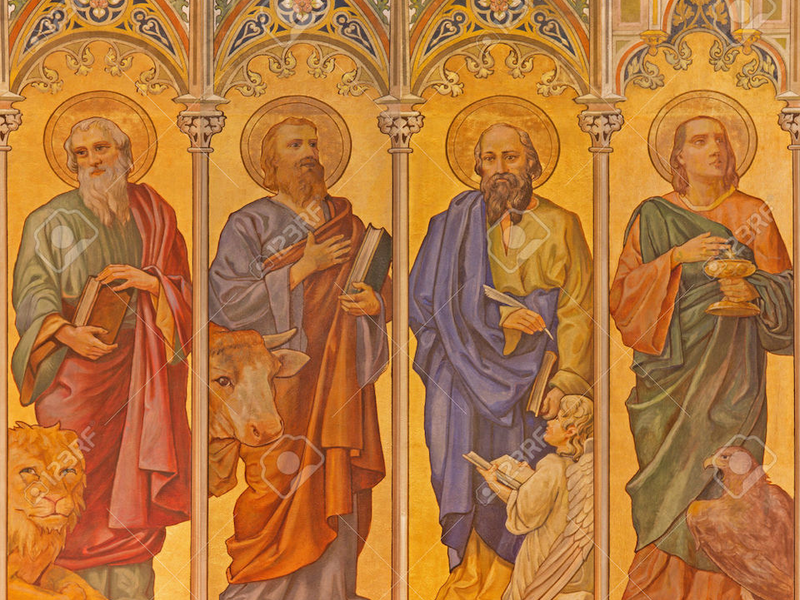
To the best of my knowledge “synopticity” is not a word used in theology or Biblical studies, but it seems an appropriate word to describe the kind of phenomena associated with the Synoptic Gospels, Matthew, Mark, and Luke. These three Gospels tell essentially the same story with significant — sometimes…

by Ralph Allan SmithNovember 10, 2016
laughing_statue_by_xxbobbiie-d5f0meh-2
Humor

Learning to Laugh

Humor is a funny thing. It is altogether familiar yet also mysterious. What makes us laugh? Why do we find things funny? There are academic fields of study dedicated to discovering what makes things humorous. These academicians even have a journal entitled International Journal of Humor Research . No joke.…

by Bill SmithNovember 8, 2016
chaucer
Literature

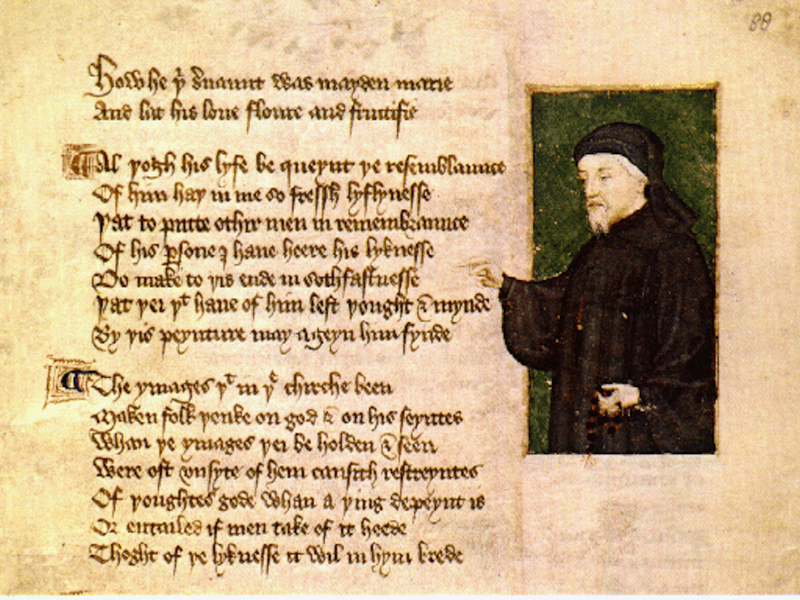
Flawed Means of Grace: Liturgy in The Pardoner's Tale

Out of all the characters in Geoffrey Chaucer’s The Canterbury Tales , the Pardoner has been called the “one lost soul.” The pious Parson, who closes out the collection of tales with a sermon on the seven deadly sins and how a sinner can absolve himself of them, connects the…

by Christian LeithartNovember 3, 2016

Showing page 122 of 309

See all
See all

Form and Type

It sure seems that the story of Joseph is a typological foreshadowing of the life of Jesus. Joseph is hated by his brothers; turned over to Gentiles; falsely accused; thrown into pit and prison; raised up, finally set on a throne, from which he gathers and distributes bread. Of course,…

March 5, 2015

Othering and Order

Jock Young ( Vertigo of Late Modernity ) discerns two sorts of “othering” in contemporary life: “the first is a conservative demonisation which projects negative attributes on the other and thereby grants positive attributes to oneself The second, very common yet rarely recognised, is a liberal othering where the other…

March 5, 2015

Fragmentation and Aestheticism

In several dense paragraphs in The Fragmented World of the Social , Axel Honneth describes the Gyorgy Lukacs's analysis of the fragmentation caused by capitalist society and the romantic reaction. There is, for starters, the fragmentation of the human being himself, induced by the capitalist separation of the worker from…

March 4, 2015

A World Beyond Morality

In his little book, Alone Again , Zygmunt Bauman summarizes his characteristic themes: We live in a liquid world, nothing permanent, nothing solid, nothing predictable. Typically pungent, Bauman points to “the overall tendency to dismantle, deregulate and dissipate the once solid and relatively lasting frames in which the concerns and…

March 4, 2015

Heifers, Serpents, Trees, Locusts

Jeremiah 46 is an oracle against Egypt, which, like Judah, is threatened by the advancing forces of Babylon. In the space of four verses (20-23), Jeremiah runs through a dizzying series of metaphors. Egypt is a pretty heifer (v. 20), and Nebuchadnezzar's army is a “horsefly” that is going to…

March 4, 2015

Making Selves Without Straw

The late Jock Young observes in his Vertigo of Late Modernity that our period is characterized by “a combination of factors, some long existing yet unique in their combination, others pre-existent yet transformed in the present period. The impact revolves around three axes, the disembeddedness of everyday life, the awareness…

March 4, 2015

Showing page 456 of 2212

Browse by Category

In Medias Res

Your weekly digest for all things Theopolis.

Donate

Theopolis is nearly 100% donor-supported. Consider joining us on our mission.