Theopolis Logo

Writing

Explore our collection of theological essays, biblical studies, and reflections on faith and culture.

See all
andriy-nestruiev-gdbrwwh6doc-unsplash
Biblical Studies

Funerals and Flutes

Matthew 8-9 records three clusters of miracles, interspersed with snatches of Jesus’ teaching about various aspects of discipleship. Just as the Sermon on the Mount displays the authority of Jesus’ Word in teaching, these chapters display the authority of Jesus’ Word over sickness, uncleanness, the creation, demons, and death. In…

by Peter LeithartApril 17, 1992

michal-parzuchowski-w9uljjwg2fa-unsplash
Baptism

Daddy, Why Was I Excommunicated?

Since the early 1980s, several of the conservative Reformed Churches have debated and wrestled with the issue of paedocommunion (infant communion). The PCA and the OPC assigned study committees to examine the question, both of which produced useful reports both in support of and against the position. Though the debate…

by Peter LeithartApril 13, 1992
skyler-gerald-akljfvj5ym4-unsplash
Biblical Chronology

Chronologies and Kings, Part 9: Jehu, Hazael, and Assyria

(This issue of Biblical Chronology concludes a discussion of the Biblical and Assyrian chronologies, begun in previous posts. Click on the category link of "Biblical Chronology" above to see previous issues. Did Shalmaneser Know Jehu? Allis writes: "The Black Obelisk of Shalmaneser contains, in addition to brief accounts of the…

by James B. JordanMarch 23, 1992
denise-jans-dpemksg59la-unsplash
American Culture

Arts and Play, Part 4

Movies Movies as an art form have a powerful impact because they take place in a dark room, on a large screen, with no distractions, and because they entail many of the arts: music, acting, choreography, design and color, etc. A movie can be an overwhelming experience for a young…

by James B. JordanMarch 23, 1992
sincerely-media-bhaswrjttzw-unsplash-2
Leviticus

The Ecology of the Tribute Offering

The Hebrew word translated as "grain offering" or "cereal offering" is minchah . Like the translation of `olah as "burnt offering," the translation of minchah as "grain offering" is somewhat deceiving, since minchah does not refer to grain or cereal. In liturgical contexts outside of Leviticus, in fact, the word…

by Peter LeithartMarch 13, 1992
sincerely-media-bhaswrjttzw-unsplash-2
Ascension

Skinned and Cut

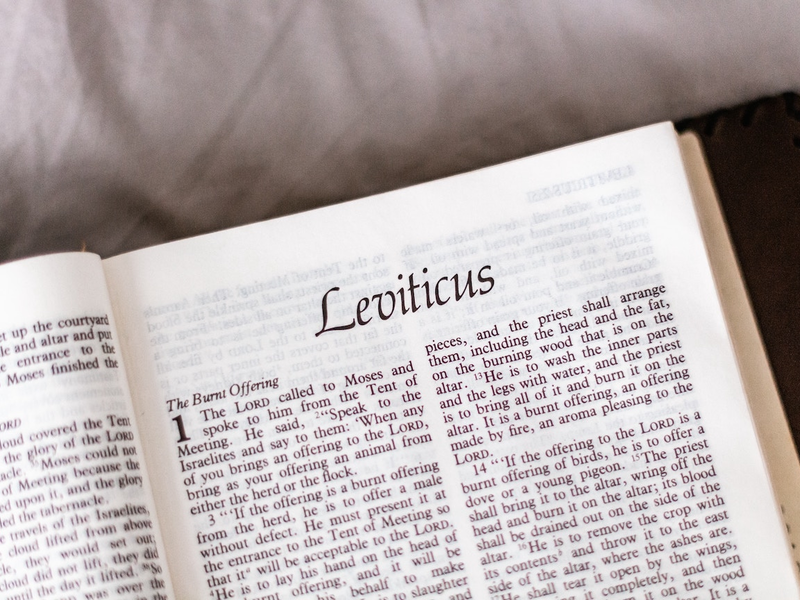
"He shall then skin the burnt offering and cut it into its pieces" (Leviticus 1:6). The normal word ( `olah ) that is translated as "burnt offering" and "whole burnt offering" has nothing to do with either burning or wholeness. It is the noun form of a verb meaning "to…

by Peter LeithartMarch 13, 1992

Showing page 291 of 309

See all
See all

Idolatry After Idols

During the Second Temple period, the Talmud says, "the temptation for idolatry was slaughtered" (quoted in Haberthal and Margalit, Idolatry , 2). Then the fight returned, with Maimonides. Now, though, idolatry was a contrast-concept to a new conception of God. Halberthal and Margalit summarize: "The central effort of philosophical religion…

May 9, 2018
sixteen-miles-out-al48tflf4e8-unsplash
Exodus

No Graven Images

The First of the Ten Words speaks to the question of whom we worship: We are to have no other gods before the face of Yahweh. The Second Word had to do with how we worship: We are to approach God as He commands us to approach Him. The Second…

May 9, 2018

Text Patterns in Exodus 20

There are Ten Words, but they are grouped in several different ways. The first two commandments stand out from the rest. Only in the first three commandments does the Lord speak in the first person (FW Farrar): “I am Yahweh your God . . . thou shalt have no other…

May 8, 2018

Patterned by Idols

A little over a year ago, I wrote the following in a post reflecting on the Hebrew term tabnit, used in Exodus and Chronicles to describe the heavenly "pattern" of the sanctuary: "Deuteronomy 4:16-18 uses the word five times, not of a 'model' or 'plan' but of likenesses made according…

May 7, 2018

Rosenzweig on Anthropomorphism

Franz Rosenzweig didn't buy Maimonides philosophical critique of the Bible's anthropomorphism. In 1928, he wrote a short essay on the topic and, in the summary of Leora Batnitzky ( Idolatry and Representation ) he "argues that the tendency to rationalize away biblical anthropomorphisms . . . is both dishonest and…

May 4, 2018

Secularizing Sacrifice

In Theology and the First Theory of Sacrifice , Ivan Strenski recounts an epochal shift in the study of religion, and of sacrifice in particular, that took place in the France of the late 19th and early 20th centuries. At the time, the "lions" of the field of religion were…

May 4, 2018

Showing page 71 of 2212

Browse by Category

In Medias Res

Your weekly digest for all things Theopolis.

Donate

Theopolis is nearly 100% donor-supported. Consider joining us on our mission.