Theopolis Logo

Writing

Explore our collection of theological essays, biblical studies, and reflections on faith and culture.

See all
tanner-mardis-xuxghzhibn4-unsplash-1-2
Deuteronomy

The Second Word II: Seeing & Hearing; Exposition

Hearing, Seeing, and History God is Word, not picture. He speaks, but He is not visible in Himself. Thus, God initiates history through language. He speaks the world into existence, and speaks to us to bring us out of formlessness and emptiness into the fullness of being His Bride. Similarly,…

by James B. JordanAugust 10, 1994
tim-wildsmith-jyculofqjak-unsplash-1
Biblical Studies

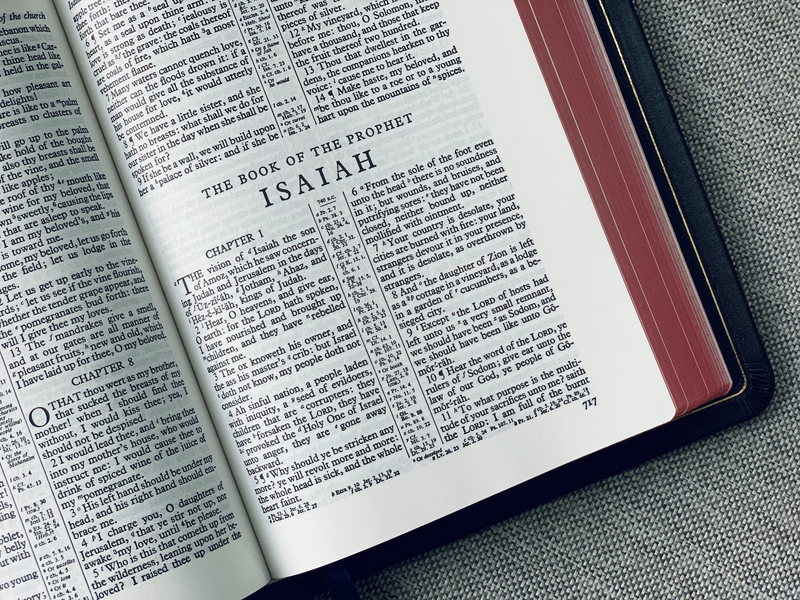
Passover and Exodus in Isaiah

The consensus of modern critical scholarship is that the book assigned to Isaiah was in fact composed by several different hands. "Deutero-Isaiah" supposedly begins with Isaiah 40:1. There are many good reasons for rejecting this conclusion. Among these, the narrative pattern of chapters 36-39 is a neglected piece of evidence.…

by Peter LeithartJuly 23, 1994
davide-ragusa-slgtmf8ejye-unsplash
Biblical Horizons

Human Life in Four Directions

Eugen Rosenstock-Huessy has pointed out throughout his many fascinating and occasionally quixotic writings and lectures that human life exists in four directions. These four directions are inward, outward, backward, and forward. In this article I want to explore these as they relate to the work of the Church. Each of…

by James B. JordanJuly 10, 1994
jan-kahanek-g3o5ztrk2e4-unsplash
Biblical Chronology

The Chronology of the Pentateuch (Part 5)

14. Joseph and Judah Genesis 38 tells us about Judah’s sons and grandsons, and if we try to get these events into the time before the descent of the Hebrews into Goshen, it is very difficult to do so. But this passage is almost certainly dischronologized. Thematically Genesis 38 is…

by James B. JordanJuly 10, 1994
trnava-university-sd8ujsf4xm4-unsplash
Art

A Short Survey of Good Fantasy and Science Fiction for Christian Schools and Home Schools

From time to time I am asked what is good SF and fantasy that teenagers in Christian and home schools might enjoy. The following brief discussion is my answer that question. I’ve tried to point out authors and stories that are not widely known, and therefore have set aside G.…

by James B. JordanJuly 10, 1994
whichbooksbelongintheot
Hermeneutics

Daniel 12:2

"And many of those who sleep in the dust of the ground will awaken, some to life everlasting and others to disgrace, to contempt everlasting." This verse is often cited as proof that there was a belief in the resurrection of the body in the Old Testament times. In fact,…

by James B. JordanJune 10, 1994

Showing page 277 of 309

See all
See all

Suffer the Children

Judith Gundry's contribution to The Child in the Bible examines the place of children in Mark's gospel, with particular focus on the episode of Jesus blessing the children. It's an illuminating essay. Mark includes no infancy narratives, but regularly shows Jesus exerting the power of the kingdom to rescue and…

November 14, 2017

Justification in the Age of Emancipation

In his Happiness Paradox , Ziyad Marar explores the sources of "justification." Humiliation is a uniquely human form of suffering. How do we deal with it? Our strategies for staving off humiliation are strategies of "justification." Freud offers some possibilities, He "enumerates a range of ways we avoid this kind…

November 13, 2017

Mystical Atheism

Virginia Woolf, atheist though she was, couldn't avoid religious language when she spoke about her writing. Writing began from "a revelation of some order; it is a token of some real thing behind appearances; and I make it real by putting it into words." It was her "shock-receiving capacity is…

November 10, 2017

Tales of Reason

Robert Brandom ( Tales of the Mighty Dead , 13-14) observes a continuity between Hegel and Kant: Both take concepts as "norms for judgment. They determine proprieties of application to particulars of terms that, because of the normative role they play in such judgments, express universals." But then Hegel adds…

November 10, 2017

Tridentine Utraquism

Did the Council of Trent allow communion in both kinds, in bread and wine? The answer is complicated. Nathan Mitchell ( Oxford History of Christian Worship , 338-9) writes that "After intense behind-the-scenes negotiations, Pope Pius IV authorized communion in both species for German (16 April 1564). In effect, the…

November 10, 2017
Reformation

Misreading the Reformation

Reviewing Carlos Eire's Reformations at First Things , Eamon Duffy claims that "Protestantism 'desacralized' the world by accepting an essentially binary division of reality into spirit and matter. That division was expressed in Reformation iconoclasm and the rejection of the notion that material objects—the bread and wine of the Mass,…

November 10, 2017

Showing page 123 of 2212

Browse by Category

In Medias Res

Your weekly digest for all things Theopolis.

Donate

Theopolis is nearly 100% donor-supported. Consider joining us on our mission.