Theopolis Logo

Writing

Explore our collection of theological essays, biblical studies, and reflections on faith and culture.

See all
max-kukurudziak-qbc3zmxw0g8-unsplash
History

Report from Ukraine

We lost Crimea. That is very clear. Putin proved he was not lying when he said he would place women and children ahead of his soldiers to storm Ukrainian military bases. Russian soldiers did exactly that with women (some who volunteered and some who were forced). Russia now occupies all…

by San SanychMarch 28, 2014
screenshot-2023-09-21-at-3-59-23-pm
Church Calendar

God Gone Silent

Sound is an indicator of life and energy. “Sound signals the present use of power, since sound must be in active production to exist at all.” Things don’t have to be alive to make themselves visible, and “a primitive hunter can see, feel, smell, and taste an elephant when the…

by Peter LeithartMarch 26, 2014
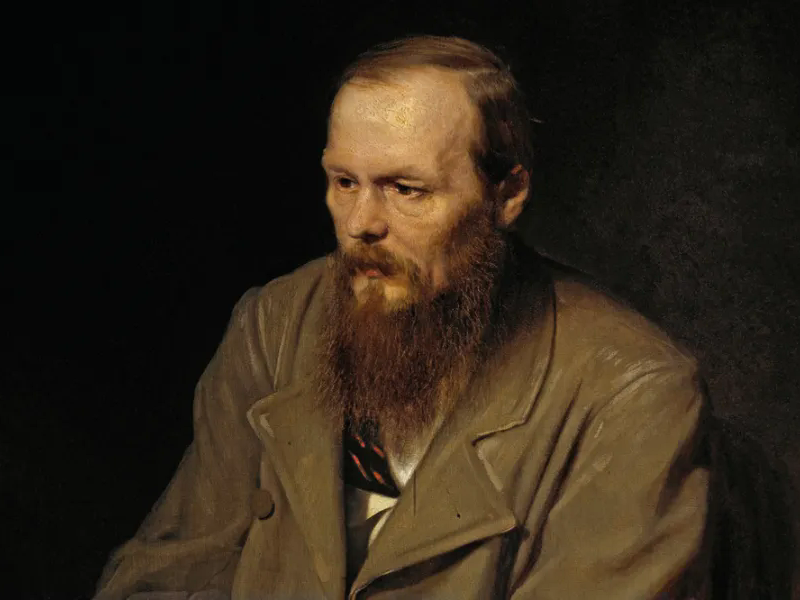
web-lead-image_final_dostoevsky
Books

Dostoevsky the Liberal

In the most famous section of his best-known novel, Dostoevsky’s Ivan Karamazov brings forward his case against God. He opens with a horrific litany of outrages against children. Turkish soldiers make a baby laugh and then shoot a pistol into his face. A little girl is beaten, thrashed, kicked by…

by Peter LeithartMarch 24, 2014
kelly-sikkema-ggs0_g6wi-i-unsplash
Epistemology

Subsidiary-Focal Integration and Liturgy

​At the heart of Esther Lightcap Meek's splendid ​Little Manual for Knowing is a concept she picked up from Michael Polanyi, "subsidiary-focal integration." The concept begins from the insight that all our knowing, all our experience, is double. We focus on something, but we are capable of "indwelling" that focal…

by Peter LeithartMarch 19, 2014
engin-akyurt-uz9qpvbol0e-unsplash
Revelation

White Stone

Jesus promises the overcomers of Pergamum "hidden manna" and a "white stone." The hidden manna is often linked with the manna stashed away in the ark of the covenant. The white stone has proved more elusive. Exodus tells us that manna was white (Exodus 16:31) and like bdellium (Numbers 11:7),…

by Peter LeithartMarch 17, 2014
226961fgsdl
Leviticus

A Theology of Festivity

Leviticus 23 begins with a reference to “Yahweh’s appointed times” ( mo’ade-YHWH ). Mo’ed is the common term for the feasts of Israel. A few dimensions to this term. First, it means “appointed time” or “designated time.” It is a time set by Yahweh. Yahweh has claimed certain times as…

by Peter LeithartMarch 12, 2014

Showing page 177 of 309

See all
See all

Dante's Journey

In the course of a review of Vittorio Montemaggi's Reading Dante's Commedia as Theology , Rowan Williams offers these observations on Inferno and Purgatorio : "There is still a tendency among not very attentive readers – not to mention people who have read almost nothing of the work but have…

September 29, 2017
kelly-sikkema-ggs0_g6wi-i-unsplash
Liturgy

The World Needs the Liturgy

"God's work in history," writes Mark Searle ( Liturgy Made Simple ), "is to gather into one the scattered children of God, to overcome divisions, to provide a place for the homeless and the lonely, to give support to those whose burdens are heavy, and to create an oasis of…

September 29, 2017

Christian Historicism

John Milbank argues in his Beyond Secular Order that " historicism cannot straightforwardly be considered as something specifically modern" (8). In fact, it originates from a Christian insight: "the sense of estranged distance from the past is initially the fruit of the Christian contrast between old and new covenants and…

September 29, 2017

No Thucydides Trap

Last week, I wrote a Firstthings.com column summarizing the argument of Graham Allison's Destined for War , a study of Sino-American relations organized around the concept of the "Thucydides Trap." Allison says that the ancient Greek historian claimed that Athens and Sparta went to war because Sparta was fearful of…

September 29, 2017
Eucharist

Bodies Renewed by Christ's Body

Christine Chaillot has a fascinating summary of the liturgical traditions of the "Ancient Oriental Churches" (Egyptian, Ethiopian, Syrian, Assyrian, Indian) in The Oxford History of Christian Worship . She quotes this Eucharistic hymn from the fifth-century Saint Yazdin (p. 164): "Strengthen, O our Lord, the hands which reach out and…

September 29, 2017

Do Human Beings Create?

In ST I, 45, 5, Thomas Aquinas asks whether God alone creates. His sed contra cites Augustine’s de Trinitate (3.8), where Augustine says that angels cannot create anything. If angels cannot, Thomas reasons, neither can any other creature. He presents several arguments in favor of this conclusion. Creation is, Thomas…

September 28, 2017

Showing page 139 of 2212

Browse by Category

In Medias Res

Your weekly digest for all things Theopolis.

Donate

Theopolis is nearly 100% donor-supported. Consider joining us on our mission.