Theopolis Logo

Writing

Explore our collection of theological essays, biblical studies, and reflections on faith and culture.

See all
tanner-mardis-xuxghzhibn4-unsplash-1-2
Deuteronomy

The Second Word II: Seeing & Hearing; Exposition

Hearing, Seeing, and History God is Word, not picture. He speaks, but He is not visible in Himself. Thus, God initiates history through language. He speaks the world into existence, and speaks to us to bring us out of formlessness and emptiness into the fullness of being His Bride. Similarly,…

by James B. JordanAugust 10, 1994
tim-wildsmith-jyculofqjak-unsplash-1
Biblical Studies

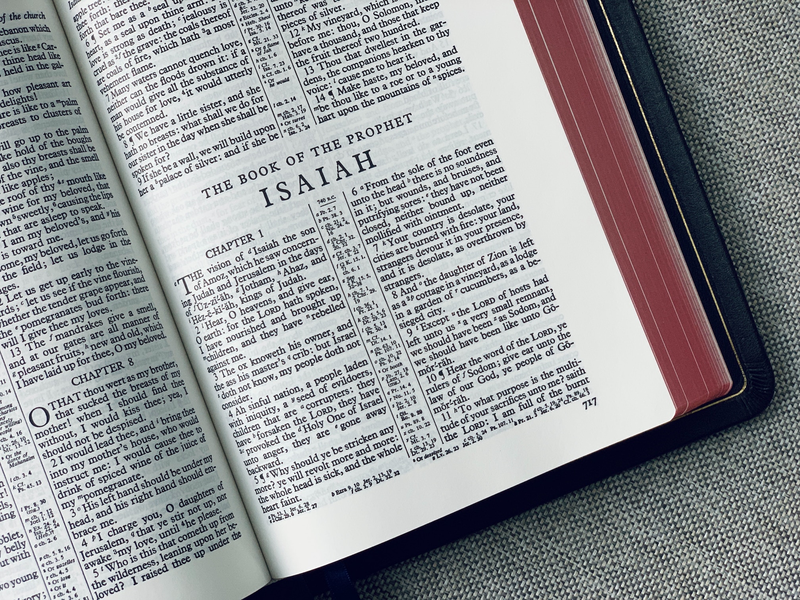
Passover and Exodus in Isaiah

The consensus of modern critical scholarship is that the book assigned to Isaiah was in fact composed by several different hands. "Deutero-Isaiah" supposedly begins with Isaiah 40:1. There are many good reasons for rejecting this conclusion. Among these, the narrative pattern of chapters 36-39 is a neglected piece of evidence.…

by Peter LeithartJuly 23, 1994
davide-ragusa-slgtmf8ejye-unsplash
Biblical Horizons

Human Life in Four Directions

Eugen Rosenstock-Huessy has pointed out throughout his many fascinating and occasionally quixotic writings and lectures that human life exists in four directions. These four directions are inward, outward, backward, and forward. In this article I want to explore these as they relate to the work of the Church. Each of…

by James B. JordanJuly 10, 1994
jan-kahanek-g3o5ztrk2e4-unsplash
Biblical Chronology

The Chronology of the Pentateuch (Part 5)

14. Joseph and Judah Genesis 38 tells us about Judah’s sons and grandsons, and if we try to get these events into the time before the descent of the Hebrews into Goshen, it is very difficult to do so. But this passage is almost certainly dischronologized. Thematically Genesis 38 is…

by James B. JordanJuly 10, 1994
trnava-university-sd8ujsf4xm4-unsplash
Art

A Short Survey of Good Fantasy and Science Fiction for Christian Schools and Home Schools

From time to time I am asked what is good SF and fantasy that teenagers in Christian and home schools might enjoy. The following brief discussion is my answer that question. I’ve tried to point out authors and stories that are not widely known, and therefore have set aside G.…

by James B. JordanJuly 10, 1994
whichbooksbelongintheot
Hermeneutics

Daniel 12:2

"And many of those who sleep in the dust of the ground will awaken, some to life everlasting and others to disgrace, to contempt everlasting." This verse is often cited as proof that there was a belief in the resurrection of the body in the Old Testament times. In fact,…

by James B. JordanJune 10, 1994

Showing page 277 of 309

See all
See all
History

Converted Jerusalem

In his fascinating Rise of Christianity , Rodney Stark cites estimates that there were between 10,000 and 20,000 inhabitants of Jerusalem in the first century. Stark uses this to falsify Luke’s claims that there were 5000 Christians in Jerusalem (Acts 4:4) and “many thousands” of Jews (Acts 21:20): “Had there…

March 30, 2007

Hebraic hermeneutics

One Rhonda Wauhkonen discusses Nicholas of Lyra’s “Hebraic” semiotics and hermeneutics in a 1992 article on Chaucer. She begins by contrasting Augustine’s signum/res distinction to Lyra’s Hebraic viewpoint: “In the Hebrew system as evidenced in Scripture and as adapted by Nicholas, such stratification of signification did not exist, for the…

March 29, 2007

Last and first

Nicholas of Lyra is known for his notion of a “double literal” sense to Scripture. For him, interpretation ad litteram includes both the historical and the doctrinal/christological senses, and he suggests that the ancient Hebrews could well have seen the Messianic sense as the literal sense. He also suggests that…

March 29, 2007

Nicholas of Lyra’s afterlife

In Book 3 of Gargantua and Pantagruel, Rabelais attributes an odd opinion to the 14th-century exegete, Nicholas of Lyra: “Pantagruel, having wholly subdued the land of Dipsody, transported thereunto a colony of Utopians, to the number of 9,876,543,210 men, besides the women and little children, artificers of all trades, and…

March 29, 2007

Nicholas of Lyra’s afterlife

In Book 3 of Gargantua and Pantagruel, Rabelais attributes an odd opinion to the 14th-century exegete, Nicholas of Lyra: “Pantagruel, having wholly subdued the land of Dipsody, transported thereunto a colony of Utopians, to the number of 9,876,543,210 men, besides the women and little children, artificers of all trades, and…

March 29, 2007

Thomas on the Parable of the Workers

Steinmetz summarizes Thomas’s remarkably “NTWrightian” commentary on Matthew 20:1-16. While acknowledging an Origenist tradition that sees the hours as moments of an individual life, Thomas is more interested in the Irenaean tradition that interprets the parable in terms of redemptive history: “The hours mentioned in the parable are not stages…

March 29, 2007

Showing page 1699 of 2212

Browse by Category

In Medias Res

Your weekly digest for all things Theopolis.

Donate

Theopolis is nearly 100% donor-supported. Consider joining us on our mission.