Theopolis Logo

Writing

Explore our collection of theological essays, biblical studies, and reflections on faith and culture.

See all
jelleke-vanooteghem-gnxb59lgu1m-unsplash
Baptism

Baptism and the Spirit

Pneumatology, the doctrine of the Holy Spirit, is often formulated along dispensational lines. The Holy Spirit’s work in the Old Testament, we tend to think, was earthly, concerned with political and military leadership, while in the New Testament the Spirit’s work has to do with mediating salvation achieved by Christ.…

by Peter LeithartMay 27, 1996

trnava-university-beeyeib-am8-unsplash
Biblical Horizons

Open Book 6: Views & Reviews

Homosexuality and the Love of Death Some years ago (September, 1980) Midge Decter published in Commentary one of the most illuminating pieces that I have ever seen on homosexuality. It was a very autobiographical piece dealing with her own summer vacation experiences on Fire Island off of New Jersey. When…

by Richard BledsoeApril 28, 1996
tim-wildsmith-j6jv-mkdzqs-unsplash
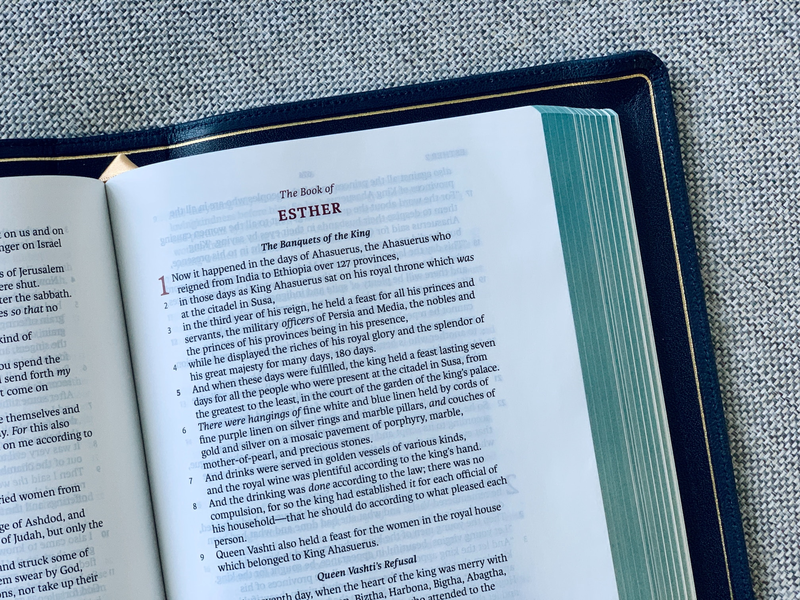
Esther

Esther: Historical & Chronological Comments (II)

C. The Battle of Gog and Magog (Ezekiel 38-39) (continued for previous issue) A final corroboration of this interpretive hypothesis comes from what we might call the "Amalek Pattern" in the Bible. Note in Genesis 12-15 that Abram moves into the land after escaping Pharaoh (ch. 12), settles down and…

by James B. JordanApril 28, 1996
image-20150409-15244-1r08rsu
Romans

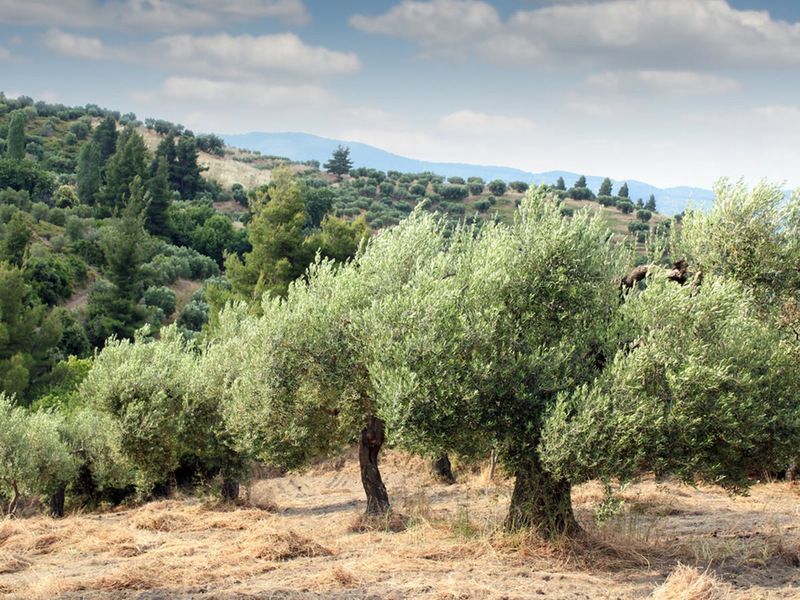
Christ in the Holy of Holies: The Meaning of the Mount of Olives

Speaking of the Church, Romans 11:16-17 says, "And if the root be holy, the branches are also. But if some of the branches were broken off, and you, being a wild olive were grafted in among them and became partaker with them of the root of the fatness of the…

by James B. JordanApril 28, 1996
aaron-burden-h8s0pf2rcqs-unsplash
Romans

Committed to the Form of Teaching

But thanks be to God that though you were slaves of sin, you became obedient from the heart to that form of teaching (tupos didaskales) to which you were committed, and having been freed from sin, you became slaves of righteousness (Romans 6:17-18). In his study of the use of…

by Peter LeithartApril 27, 1996
screenshot-2023-07-27-at-10-25-35-am
Biblical Horizons

Review: Biblical Theology, by John Owen

John Owen (1616-1683), Biblical Theology, or the Nature, Origin, Development, and Study of Theological Truth in Six Books, translated by Stephen P. Westcott (Pittsburgh: Soli Deo Gloria Publications, [1661] 1994), hardcover, 911 pages, $50.00. Here for the first time in English is one of Owen’s most important Latin works, along…

by James B. JordanMarch 28, 1996

Showing page 266 of 309

See all
See all
History

Hospitality

For us, hospitality usually means entertaining. It means having our friends and neighbors and church members into the home. Sometimes, in our world, it involves jockeying for position and power by showing hospitality to the right kinds of people. That’s how the rich and famous create and sustain the aura…

March 24, 2007

Obscene dancing

The London Times fulminates: “It is quite sufficient to cast one’s eyes on the voluptuous intertwining of the limbs, and close compressure of the bodies, in this dance, to see that it is far indeed removed from the modest reserve which has hitherto been considered distinctive of English females. So…

March 22, 2007

Christ and Horrors

Marilyn McCord Adams ( Christ and Horrors , Cambridge, 2006) proposes to demonstrate the coherence of Christology not by starting with sin and explaining how Christ has dealt with sin, but by starting with “horrors” and asking, What must Christ be and do if He is going to rescue us…

March 22, 2007
History

The Alexandrian West

In her book on medieval Bible scholarship, Beryl Smalley notes that “Alexandrian exegesis penetrated to the Latin middle ages, when knowledge of Greek had declined, by two main channels: indirectly through the Latin Fathers and directly through translations of Origen’s works. Rufinus’ translations of some of his homilies were used…

March 22, 2007

Allegory and empire

Philo thought of allegory as a means for universalizing Jewish history and law, analogous to the way the Roman world had fused all peoples into a single empire. Literalists are “citizens of a petty state,” while allegorists are “on the roll of citizens of a greater country, namely, this whole…

March 21, 2007

Androgynous numbers

Why did God create the world in six days? Philo said that 6 is the perfect number, both the sum and the product of its factors, which happen to be the first three integers (1, 2, 3). But there’s more: “We may say that [6] is in its nature both…

March 21, 2007

Showing page 1703 of 2212

Browse by Category

In Medias Res

Your weekly digest for all things Theopolis.

Donate

Theopolis is nearly 100% donor-supported. Consider joining us on our mission.