Theopolis Logo

Writing

Explore our collection of theological essays, biblical studies, and reflections on faith and culture.

See all
last-supper
Eucharist

The Epiclesis in Reformed Eucharistic Prayer, (Part 1)

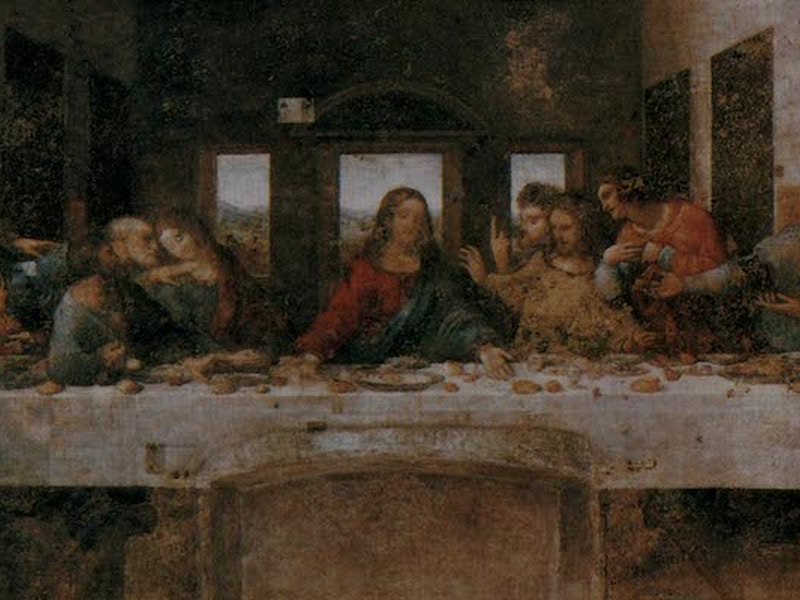
What happens at the Table of the Lord? If Christ is really present, then how is this so? The witness of the Church throughout history has been that Christ is present in the Eucharist through the operation of the Holy Spirit, and in the practice of the Church, prayers at…

by Christopher KouOctober 11, 2016

sixteen-miles-out-al48tflf4e8-unsplash
Spiritual Warfare

Enemies and Victims

In the power of the Spirit, the gospel forms a society in which there is neither Jew nor Greek, slave nor free, a society that is characterized by unity, long-suffering, patience; love. The gospel forms a culture whose participants do not steal but labor and give, who are not angry…

by Peter LeithartOctober 6, 2016
sixteen-miles-out-d40gdcd_-he-unsplash
Mark

Sovereignty and Self-Gift

At the 1997 Biblical Horizons Summer Conference, the Rev. Jeffrey Meyers presented a series of remarkable lectures on the gospel of Mark. Among his many insightful comments, he suggested that the second gospel continues where the first gospel ends; Matthew ends with Jesus saying "Go" (Matthew 28:19), and Mark’s shows…

by Peter LeithartOctober 4, 2016
e99a2338
Art

Birmingham Life and Culture Series: Joseph Bottum

On October 25 at Avondale Brewery , Theopolis will be co-sponsoring the 2nd Annual Birmingham Life and Culture Series. This year's event will feature author Joseph Bottum. Joseph is known for his writings on literary criticism, religion, and his short stories. Essayist and reviewer Mary Eberstadt has said that "his…

by Brian MoatsSeptember 29, 2016
hebrew-manuscript
Biblical Studies

Are Not All These Galileans?

One of the curiosities of the New Testament revelation is its focus on Galilee. The region of Galilee was given to Asher, Zebulun, Naphtali, and Issachar, and the events of Judges 4-8 occurred there, so it had some importance in Israelite history. But when the tribe of Ephraim led the…

by James B. JordanSeptember 29, 2016
screen-shot-2016-03-31-at-9-32-11-am
Hermeneutics

Hero's Theme

In a recent post , Ian Paul discusses the practice of allegorical interpretation, reflecting in particular upon a conversation he had with someone concerning the reading of the story of Rahab. Paul’s interlocutor argued strongly for an allegorical reading of the Rahab story, writing: “Joshua is a type of Christ…

by Alastair RobertsSeptember 27, 2016

Showing page 124 of 309

See all
See all
Philosophy

Heidegger in his woods

Latour is tired of being accused of having forgotten Being, and offers this clever brush-off of Heidegger: “If, scorning empiricism, you opt out of the exact sciences, then the human sciences,, then traditional philosophy, then the sciences of language, and you hunker down in your forest - then you will…

November 15, 2006
History

Semi-modernism

Postmoderns, Latour suggests, think they are still modern, but in fact they have greatly oversimplified the modern Constitution. Postmoderns might emphasize the separation of subject and world, and stretch that opposition to a breaking point (Latour vividly describes them as doing the splits to keep subject and world apart); but…

November 15, 2006
History

Modern temporality

In his very good section on modern temporality, Latour argues that modernity assumes that everything in the present, modern moment, is purely modern, novel. Anything that appears that is not up-to-date is a “archaism,” and moderns worry constantly that this or that event or trend might “turn back the clock.”…

November 15, 2006
History

Representation

One of the key moves made since the 17th century, Latour argues, is a distinction between modes of “representation.” In the laboratory Boyle is representing things before selected witnesses through scientific experiments, giving mute nature a voice through the scientist, while in politics Hobbes suggests that the Sovereign speaks for…

November 15, 2006
History

We Have Never Been Modern

Bruno Latour’s We Have Never Been Modern (Harvard 1993) is a rich study. He describes modernity in terms of a dual process of “purification” and “hybridization.” Purification involves the clean construction of a nature (and science) separated off from society and the self, while hybridization involves mixtures of nature and…

November 15, 2006

Tears of things

And/Or: Virgil is aware that the furor of civil war can be curbed only by an opposing, and more intense, furor. That, as Milbank says, is the way of paganism - peace established only by superior violence against violence. But in those tears Virgil expresses the the painful recognition -…

November 13, 2006

Showing page 1763 of 2212

Browse by Category

In Medias Res

Your weekly digest for all things Theopolis.

Donate

Theopolis is nearly 100% donor-supported. Consider joining us on our mission.