
Theopolis Logo

Writing

Explore our collection of theological essays, biblical studies, and reflections on faith and culture.

See all
giammarco-zeh-ljawhtg-unsplash
Biblical Horizons

OPEN BOOK: Views and Reviews

Isaac E. Mozeson, The Word: The Dictionary that Reveals the Hebrew Sources of English (Northvale, NJ: Jacob Aaronson Inc., 1995), 310 pp. Reviewed by James B. Jordan. Once there was only one language in the world, the language God spoke to Adam. At the Tower of Babel, there came to…

by James B. JordanJune 28, 1996
tim-wildsmith-j6jv-mkdzqs-unsplash
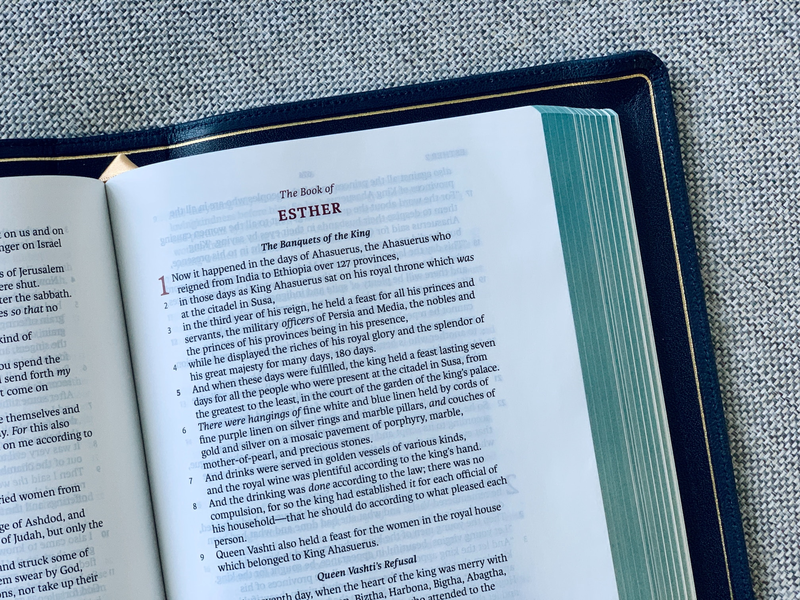
Esther

Esther: Historical & Chronological Comments (IV)

2. The Setting of the Book of Esther A. Xerxes (continued from previous issue) Ezra 6:14 says that the Jews finished building "according to the command of the God of Israel and the decree of Cyrus and Darius and Artaxerxes king of Persia." The problem with this verse is that…

by James B. JordanJune 28, 1996

ales-krivec-4mibe6zg5r0-unsplash
Acts

Jesus and Amalek

This essay goes with our previous study of the Amalek pattern back in Biblical Horizons No. 2. Since many do not have this essay, entitled "The Battle of Gog and Magog," let me cite the relevant paragraphs: Note in Genesis 12-15 that Abram moves into the land after escaping Pharaoh…

by James B. JordanJune 28, 1996
aaron-burden-1ebsmyrau-s-unsplash
Proverbs

The Strange Woman

Proverbs 7:6-23 is one of several passages early in the Proverbs in which Solomon warns his son about the wiles and dangers of the "strange woman." It is certainly quite proper to take these as straightforward warnings against sexual sins, and these are certainly warnings that need to be impressed…

by Peter LeithartJune 27, 1996
jan-kahanek-g3o5ztrk2e4-unsplash
Biblical Studies

Some Observations

1. In Luke 4:20 we read that after Jesus finished reading from Isaiah, "the eyes of all in the synagogue were fixed upon Him." This is usually taken in a psychological sense: They were amazed at Jesus somehow. I suggest that, as always, a merely psychological reading is a modern…

by James B. JordanMay 28, 1996
tim-wildsmith-j6jv-mkdzqs-unsplash
Esther

Esther: Historical & Chronological Comments (III)

2. The Setting of the Book of Esther Up to now we have assumed what we must prove, that the king in Esther is Darius the Great. While Biblical chronologists have usually taken this position, commentators on the book of Esther have often taken others as the king. One view,…

by James B. JordanMay 28, 1996

Showing page 265 of 309

See all
See all
Theology

Exhortation

When he talks about prayer, Calvin emphasizes that everything in Scripture encourages us to pray. Our condition encourages us to pray: We have no good in ourselves, no hope for salvation in our own efforts; and therefore we must seek help from outside ourselves. The gift of Jesus encourages us…

August 6, 2006

Matthew and Stephen

Assuming that Matthew was composed very early in the history of the church - in the early 30s, I suspect - it fits neatly into the early persecution situation of the church. As a retelling of Israel’s history, it mimics Stephen’s sermon, which presents the history of Israel as a…

August 5, 2006

Partners with God

Albert Wolters suggests in an old Calvin Theological Journal article that Peter’s phrase “partakers of divine nature” should be understood covenantally, rather than ontologically. “Partaker” should be rendered “partner” and “divine nature” is simply a circumlocution for “God.” We become partners with God when we are delivered from the world.

August 4, 2006

Overshadowing

David Daube suggests in his book on the New Testament and rabbinic Judaism that the image of the Spirit “overshadowing” Mary is ultimately drawn from the image of Boaz covering Ruth with the wing of his garment. The Lord spreads his skirt over Mary - who, like Ruth, calls herself…

August 4, 2006
Biblical Studies

Wrestling with God

The story of Israel is the story of her repeated rejection of Yahweh’s emissaries, and thus of Yahweh himself. The gospel is the announcement that Yahweh will not allow Himself to be rejected: Resurrection is the I in the TULIP. Jacob, the first Israel, wrestled with everyone, and found he…

August 4, 2006

Typology and history

In his classic essay on the “Reasonableness of Typology,” GWH Lampe argued that critical scholarship reintroduced history into biblical interpretation: “In place of the unhistorical attitude which saw the Bible as a vast harmonious complex of prophecy and fulfillment, type and antitype, allegorical picture and spiritual reality, fused together by…

August 4, 2006

Showing page 1818 of 2212

Browse by Category

In Medias Res

Your weekly digest for all things Theopolis.

Donate

Theopolis is nearly 100% donor-supported. Consider joining us on our mission.