Theopolis Logo

Writing

Explore our collection of theological essays, biblical studies, and reflections on faith and culture.

See all
tanner-mardis-xuxghzhibn4-unsplash-1-2
Biblical Studies

Tweets-turned-Notes on the Bible’s Chronology

Summary In what follows, I will consider the “year-stamps” employed in Scripture, i.e., statements of the form, “Such-and-such an event took place in the Xth year of Y.” In the process, I will suggest some ways in which the Biblical narrative might relate to events in the extra-Biblical world, though…

by James BejonJuly 16, 2019
durer-prodigal-son-2
Luke

Perspectives on the Prodigal, (Part 2)

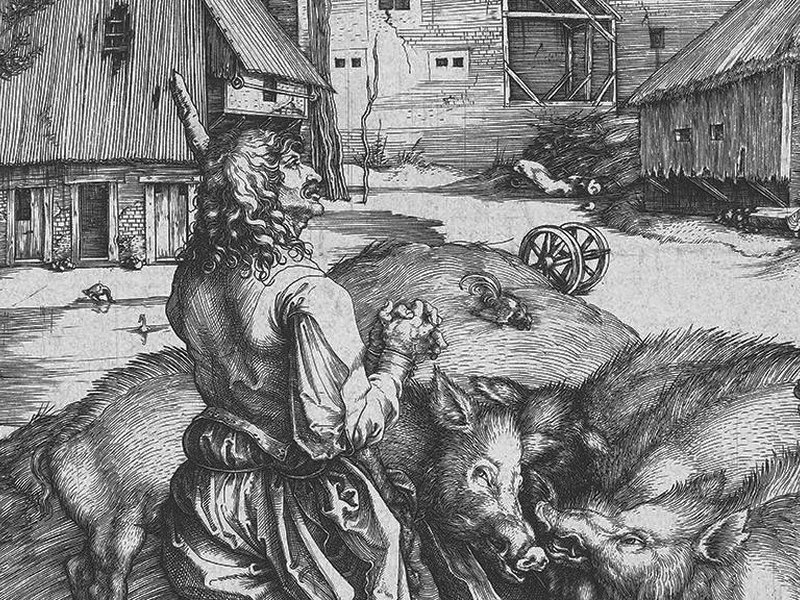
In the first essay on the parable of the Prodigal Son, I suggested that the problems commentators and others encounter in interpreting Jesus three-part parable are not accidental. These are not just problems in our ignorance of cultural background. They are intentional features of the stories —stories designed to poke…

by Ralph Allan SmithJuly 11, 2019
durer-prodigal-son-2
Luke

Perspectives on the Prodigal, (Part 1)

The story of the Prodigal Son is perhaps the most well-known story in the Bible. As others have observed, it may also be one of the most misunderstood. In two short essays, I will point out features of this story that are commonly neglected, aspects of Jesus’ parable that might…

by Ralph Allan SmithJuly 9, 2019
de-rijke-man-en-de-arme-lazarus-by-jacopo-da-ponte-16th-century
Luke

Lazarus and the Rich Man

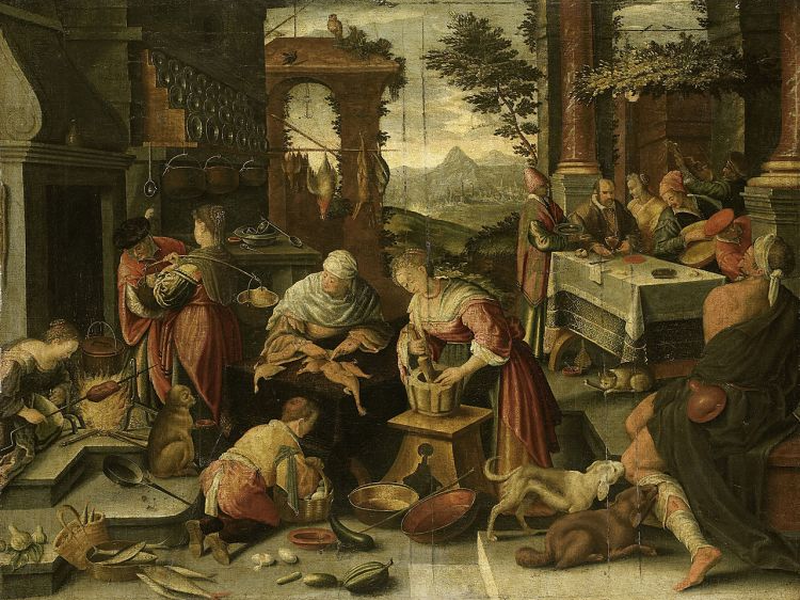
The parable of Lazarus and the nameless rich man is not an independent story. It is part of a long context that begins in Luke 15:1, where Jesus is eating with tax collectors and sinners and the scribes and Pharisees grumble. In response to their hardheartedness, Jesus tells a three-part…

by Ralph Allan SmithJuly 4, 2019
aaron-burden-uynrnfdkjwg-unsplash
Luke

Everybody has Dropsy - Luke 14:1-24

The Bible is written so that even when a reader cannot pick up on what might be deeper or more detailed aspects of a text, there is virtually always a message to be heard. In the ancient world, where the “reader” of Scripture would likely be a church official facing…

by Ralph Allan SmithJuly 2, 2019
communion
Biblical Theology

Fruit Trees and Grain Plants

The distinction between garden (or vineyard) and field begins in Genesis 2. This relates to the ordering of the formless world. Plants of the field are contrasted with the garden planted by God in Genesis 2:5&8. Later on, under the Old Covenant the Israelites will be required to keep their…

by James B. JordanJune 27, 2019

Showing page 77 of 309

See all
See all
Theology

Exhortation

When he talks about prayer, Calvin emphasizes that everything in Scripture encourages us to pray. Our condition encourages us to pray: We have no good in ourselves, no hope for salvation in our own efforts; and therefore we must seek help from outside ourselves. The gift of Jesus encourages us…

August 6, 2006

Matthew and Stephen

Assuming that Matthew was composed very early in the history of the church - in the early 30s, I suspect - it fits neatly into the early persecution situation of the church. As a retelling of Israel’s history, it mimics Stephen’s sermon, which presents the history of Israel as a…

August 5, 2006

Partners with God

Albert Wolters suggests in an old Calvin Theological Journal article that Peter’s phrase “partakers of divine nature” should be understood covenantally, rather than ontologically. “Partaker” should be rendered “partner” and “divine nature” is simply a circumlocution for “God.” We become partners with God when we are delivered from the world.

August 4, 2006

Overshadowing

David Daube suggests in his book on the New Testament and rabbinic Judaism that the image of the Spirit “overshadowing” Mary is ultimately drawn from the image of Boaz covering Ruth with the wing of his garment. The Lord spreads his skirt over Mary - who, like Ruth, calls herself…

August 4, 2006
Biblical Studies

Wrestling with God

The story of Israel is the story of her repeated rejection of Yahweh’s emissaries, and thus of Yahweh himself. The gospel is the announcement that Yahweh will not allow Himself to be rejected: Resurrection is the I in the TULIP. Jacob, the first Israel, wrestled with everyone, and found he…

August 4, 2006

Typology and history

In his classic essay on the “Reasonableness of Typology,” GWH Lampe argued that critical scholarship reintroduced history into biblical interpretation: “In place of the unhistorical attitude which saw the Bible as a vast harmonious complex of prophecy and fulfillment, type and antitype, allegorical picture and spiritual reality, fused together by…

August 4, 2006

Showing page 1818 of 2212

Browse by Category

In Medias Res

Your weekly digest for all things Theopolis.

Donate

Theopolis is nearly 100% donor-supported. Consider joining us on our mission.