
Theopolis Logo

Writing

Explore our collection of theological essays, biblical studies, and reflections on faith and culture.

See all
foster-child
Adoption

Sometimes a Platitude is a Precious Gift

Platitudes are often sayings whose truthfulness is so apparent, so accepted, and so repeated that they are divested of their power and in fact become the object of ridicule. Their failure lies in their fame, and the contempt they invite is bred by their familiarity. To say that children are…

by Bill DeJongJanuary 15, 2015
nevin_2015_square
Uncategorized

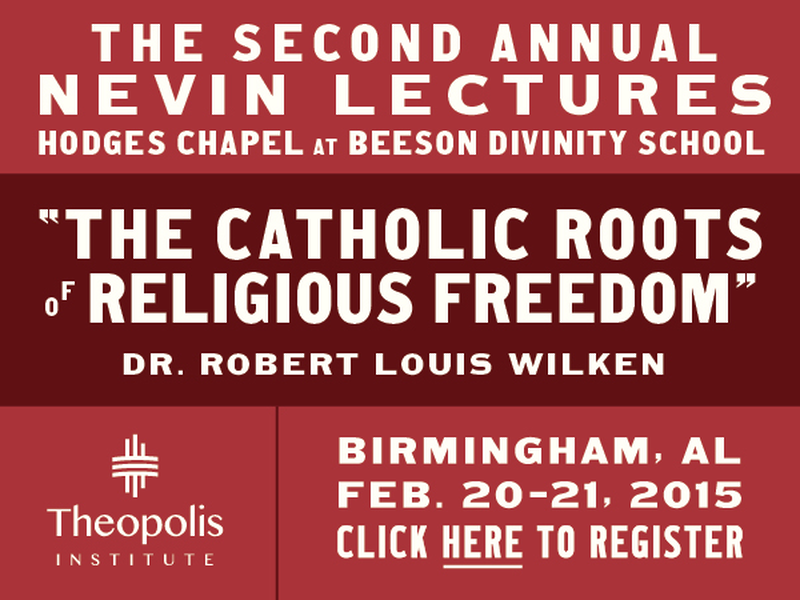
Second Annual Nevin Lectures

by TheopolisJanuary 13, 2015
emmanuel-phaeton-1bwmfmvybi8-unsplash
Psalms

Psalm 29

Click here to download the Translation Here we have the seven-fold Voice of Yahweh, bracketed by two sets of four lines about Yahweh. The central seven-fold Voice section uses "Yahweh" ten times, for a total in this psalm of eighteen usages of "Yahweh" (3 x 3 x 2). The psalm,…

by James B. JordanJanuary 13, 2015
tree-2
Creation

A Sabbath Conversation

As Adam and Eve walked to the Garden of Eden to meet with Yahweh on their first Sabbath they conversed about the origin and age of the earth. Adam: You know, honey, we spent a lot of time yesterday making preparations for this house, and we still have an awful…

by Jeff MeyersJanuary 13, 2015
mountain-top
Covenant

The Highest of the Mountains

Knowing His paths through Moses and David, in the darkness of the prophets we yet walk in His light. It shall come to pass in the latter days that the mountain of the house of the Lord shall be established as the highest of the mountains, and shall be lifted…

by Mike BullJanuary 8, 2015
bennet-sisters
Charity

Candor

These days, to be “candid” is to be frank, honest, genuine. But the word didn’t always mean that. It used to be the name for a virtue that we don’t really have a name for anymore. Its obsolete meaning is “kindliness”: a disposition to think well of others, a tendency…

by Leta SundetJanuary 7, 2015

Showing page 162 of 309

See all
See all
History

Nature/Supernature in Luther

According to Oberman, “Luther’s critique of Aristotle concerns the disregard of that fundamental nominalist axioma , the demarcation line between the realms of reason and faith. Provided that this distinction is respected, Aristotle is not merely useful but indeed to be respected. In a Latin sermon probably preached to the…

May 4, 2006
Theology

Person v. Being

Oberman sees a crucial shift in late medieval theology from God as being to God as person, and sees Luther as both heir and critic of the late medieval theology proper. Without the earlier shift, “the Reformation breakthrough would be inconceivable,” but this does not mean that there is “unbroken…

May 4, 2006
History

Plague and Theology

Oberman again: “The experience of the [bubonic] plague may in fact help us understand the fifteenth-century ascendency of nominalism, its innovations in the whole field ranging from theology to science, and its successful invasion of schools and universities, where it was firmly established as the via moderna . What must…

May 4, 2006
History

Cultural history and religion

Heiko Oberman notes the impact of cultural history in his posthumously published book, The Two Reformations : “By moving from established politicla history to cultural and mentality studies, historians reestablished the crucial importance of religion, although they frequently marginalized it under the misleading category of popular religion . . .…

May 4, 2006

Proverbs 14:8-15

INTRODUCTION Waltke points to links between verses 8-9 and verses 1-2 of the same chapter: Wisdom and folly are contrasted in verses 1 and 8; the image of the “way” is used in both verses; and the term “upright” appears in verse 2 and 9. These links suggests that verses…

May 4, 2006
Theology

Simmel, Faithfulness and Gratitude

Notes on Georg Simmel, “Faithfulness and Gratitude,” printed in Kurt H. Wolff, The Sociology of Georg Simmel (Free Press, 1950). 1) Simmel describes faithfulness as “the inertia of the soul.” Less impressionistically, faithfulness is “the peculiar feeling which is not directed toward the possessor’s eudaemonistic good, nor toward the other’s…

May 3, 2006

Showing page 1846 of 2212

Browse by Category

In Medias Res

Your weekly digest for all things Theopolis.

Donate

Theopolis is nearly 100% donor-supported. Consider joining us on our mission.