Theopolis Logo

Writing

Explore our collection of theological essays, biblical studies, and reflections on faith and culture.

See all
evangelists
Matthew

Dating Matthew, (Part 1)

When might the Gospel according to Matthew have been written? Of course, any answer can only be speculation, but that does not mean we are reduced to groundless opinion. In this series of articles I point the way to an approach different from the general consensus among scholars today which…

by Ralph Allan SmithNovember 22, 2016

hebrew-manuscript-3
Hermeneutics

Synopticity, (Part 2)

In my first essay on “synopticity” I offered a rather rough definition of the phenomenon and important, though not exhaustive examples. In this essay, I want to introduce broader aspects of the phenomenon of “synopticity.” The first example that I have in mind is conventional stories, stories of different historical…

by Ralph Allan SmithNovember 17, 2016
screen-shot-2016-03-31-at-9-32-11-am
Ascension

Brexit and the Binding of Satan, Part 4

Since the judgment of Babel was followed by the initiation of the circumcision, the impending end of the circumcision in AD70 explains the significance of the first century miracle of foreign tongues. Except for a few Aramaic “teasers” in the book of Daniel, the Word of God was monolingual and…

by Mike BullNovember 15, 2016
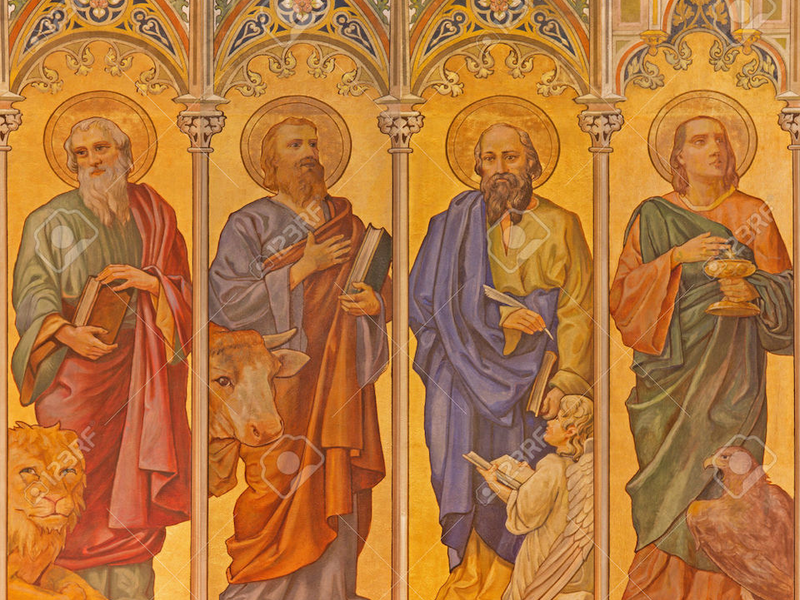
four-evangelists
Hermeneutics

Synopticity, (Part 1)

To the best of my knowledge “synopticity” is not a word used in theology or Biblical studies, but it seems an appropriate word to describe the kind of phenomena associated with the Synoptic Gospels, Matthew, Mark, and Luke. These three Gospels tell essentially the same story with significant — sometimes…

by Ralph Allan SmithNovember 10, 2016
laughing_statue_by_xxbobbiie-d5f0meh-2
Humor

Learning to Laugh

Humor is a funny thing. It is altogether familiar yet also mysterious. What makes us laugh? Why do we find things funny? There are academic fields of study dedicated to discovering what makes things humorous. These academicians even have a journal entitled International Journal of Humor Research . No joke.…

by Bill SmithNovember 8, 2016
chaucer
Literature

Flawed Means of Grace: Liturgy in The Pardoner's Tale

Out of all the characters in Geoffrey Chaucer’s The Canterbury Tales , the Pardoner has been called the “one lost soul.” The pious Parson, who closes out the collection of tales with a sermon on the seven deadly sins and how a sinner can absolve himself of them, connects the…

by Christian LeithartNovember 3, 2016

Showing page 122 of 309

See all
See all
Theology

Milbank on Gift

INTRODUCTION To wind up our discussion of gift, we will cover three large concerns. First, we will examine Milbank’s work, particularly his essay “Can A Gift Be Given?”, to see how he handles the challenges thrown up by Derrida and Marion. Second, we will take some time to think about…

May 2, 2006
Literature

Bloom and Jesus

James Wood has his fun with Harold Bloom in his TNR review of Bloom’s recent Jesus and Yahweh . Wood offers this parody of a typical Bloomian sentence: “Only Don Quixote can rival the fat knight, Sir John Falstaff, and even Emerson at his strongest - stronger, here, even than…

May 2, 2006

Cost of Discipleship

Jerome Neyrey summarizes the effect of Jesus’ instruction to pray, give alms, and fast “in private” in terms of ancient honor systems: “In essence, the disciples must separate themselves from ‘their’ synagogues; they may not join other observant Judeans in publicly practicing almsgiving, prayer, and fasting. But inasmuch as these…

May 2, 2006

Impurity and caste

Mary Douglas has observed that “Levitical impurity is a fact of biology, common to all persons, and also a result of specific moral offences that anyone is liable to commit such as lying or stealing . . . Biblical impurity is of no use in demarcating advantaged social classes or…

May 2, 2006

Sermon Outline, Fourth Sunday of Easter

INTRODUCTION Hezekiah reverses the work of his father, Ahaz. As a result, the two kingdoms reunite under Hezekiah, who gathers people from “Beersheba even to Dan” to his Passover (2 Chronicles 30:6). In Hezekiah’s reign, the Davidic line experiences another renewal, as under Joash (2 Kings 11). THE TEXT “Now…

May 1, 2006

Devil’s opportuity

“Do not leg the sun go down on your anger, and do not give the devil an opportunity.” It sounds spooky and bizarre: Are we in danger of being haunted by some anger-demon? Once we remember that “diabolos” means “slanderer,” it’s no longer the stuff of horror movies. It’s a…

May 1, 2006

Showing page 1847 of 2212

Browse by Category

In Medias Res

Your weekly digest for all things Theopolis.

Donate

Theopolis is nearly 100% donor-supported. Consider joining us on our mission.