
Theopolis Logo

Writing

Explore our collection of theological essays, biblical studies, and reflections on faith and culture.

See all
giammarco-zeh-ljawhtg-unsplash
Biblical Horizons

OPEN BOOK: Views and Reviews

Isaac E. Mozeson, The Word: The Dictionary that Reveals the Hebrew Sources of English (Northvale, NJ: Jacob Aaronson Inc., 1995), 310 pp. Reviewed by James B. Jordan. Once there was only one language in the world, the language God spoke to Adam. At the Tower of Babel, there came to…

by James B. JordanJune 28, 1996
tim-wildsmith-j6jv-mkdzqs-unsplash
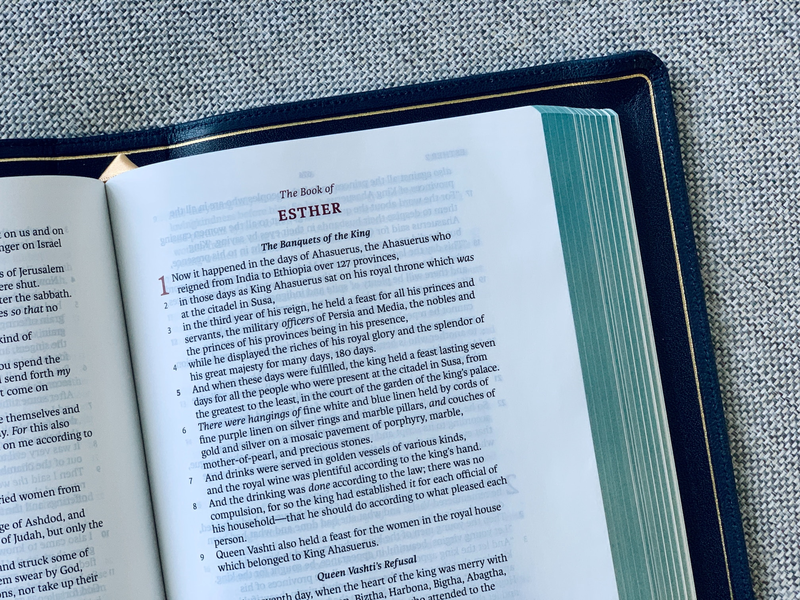
Esther

Esther: Historical & Chronological Comments (IV)

2. The Setting of the Book of Esther A. Xerxes (continued from previous issue) Ezra 6:14 says that the Jews finished building "according to the command of the God of Israel and the decree of Cyrus and Darius and Artaxerxes king of Persia." The problem with this verse is that…

by James B. JordanJune 28, 1996

ales-krivec-4mibe6zg5r0-unsplash
Acts

Jesus and Amalek

This essay goes with our previous study of the Amalek pattern back in Biblical Horizons No. 2. Since many do not have this essay, entitled "The Battle of Gog and Magog," let me cite the relevant paragraphs: Note in Genesis 12-15 that Abram moves into the land after escaping Pharaoh…

by James B. JordanJune 28, 1996
aaron-burden-1ebsmyrau-s-unsplash
Proverbs

The Strange Woman

Proverbs 7:6-23 is one of several passages early in the Proverbs in which Solomon warns his son about the wiles and dangers of the "strange woman." It is certainly quite proper to take these as straightforward warnings against sexual sins, and these are certainly warnings that need to be impressed…

by Peter LeithartJune 27, 1996
jan-kahanek-g3o5ztrk2e4-unsplash
Biblical Studies

Some Observations

1. In Luke 4:20 we read that after Jesus finished reading from Isaiah, "the eyes of all in the synagogue were fixed upon Him." This is usually taken in a psychological sense: They were amazed at Jesus somehow. I suggest that, as always, a merely psychological reading is a modern…

by James B. JordanMay 28, 1996
tim-wildsmith-j6jv-mkdzqs-unsplash
Esther

Esther: Historical & Chronological Comments (III)

2. The Setting of the Book of Esther Up to now we have assumed what we must prove, that the king in Esther is Darius the Great. While Biblical chronologists have usually taken this position, commentators on the book of Esther have often taken others as the king. One view,…

by James B. JordanMay 28, 1996

Showing page 265 of 309

See all
See all

Language of deficit

After listing 22 descriptive terms for the self (including stressed, self-alienated, paranoid, bulimic), Kenneth Gergen notes that “they are all terms of mental deficit. They discredit the individual, drawing attention to problems, shortcomings, or incapacities. To put it more broadly, the vocabulary of human deficit has undergone enormous expansion within…

February 8, 2006

When to start philosophy

Montaigne wrote in his essay on the education of children, “The boy we would breed has a great deal less time to spare; he owes but the first fifteen or sixteen years of his life to education; the remainder is due to action. Let us, therefore, employ that short time…

February 8, 2006
History

Self-conscious modernity

Postmodernity is from one angle modernity coming to self-consciousness. Managerialism is as much at the heart of modernity as of postmodernity, but postmoderns know they are being managed. As a result, management is always shot through with irony. How can we take the wizard seriously after the curtain has been…

February 8, 2006
History

Postmodern society

David Lyon’s little book, Postmodernity, provides an excellent introduction to the sociological, technological, and political contexts in which postmodern thought has arisen. He is cautious about inflating claims about a “postmodern” condition or the coming of a “new society,” but attempts to isolate those features of contemporary life that have…

February 7, 2006
Literature

More on Hamlet

INTRODUCTION As many critics have pointed out, Act 2 of Hamlet focuses on the efforts of both the “mighty opposites” - Hamlet and Claudius - to spy out the intentions and plans of the other. Thus begins the process of inserting various mediators between the two, all of whom end…

February 7, 2006

Watts on Mark 1:1f

Rikki Watts offers some other dimensions to the quotation from Mark 1:1. He notes that Mark is quoting not only from Isaiah 40, but also from Exodus 23 and Malachi 3, and shows how these three texts overlay each other in Mark’s presentation. Exodus 23 is a warning to Israel…

February 7, 2006

Showing page 1888 of 2212

Browse by Category

In Medias Res

Your weekly digest for all things Theopolis.

Donate

Theopolis is nearly 100% donor-supported. Consider joining us on our mission.