Theopolis Logo

Writing

Explore our collection of theological essays, biblical studies, and reflections on faith and culture.

See all
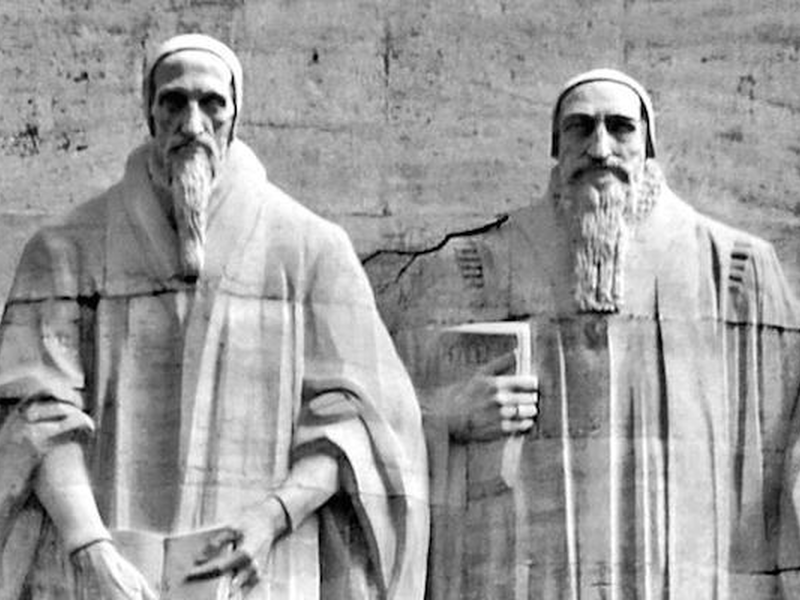
reformation-wall
Protestantism

More Anti-Catholic Than Thou

The “second Reformation” introduced Reformed liturgy and teaching into Lutheran Germany. This was seen by some as a continuation of the Reformation and a purgation of Catholic remnants. The effort to carry on “further reformation” led to disputes with Lutherans. As Bodo Nischan has put it, the hottest debate in…

by Peter LeithartMarch 28, 2017

bilbo
Literature

Bilbo: A Reformation Hero?

In J. R. R. Tolkien: Author of the Century , Tom Shippey observes that Bilbo is a member of the middle class, a bourgeois. Bilbo does not have any servants, but his hole is “the home of a member of the Victorian upper-middle class of Tolkien’s nineteenth-century youth, full of…

by Bogumil JarmulakMarch 23, 2017
cross-2
Isaiah

God In the Dock

Idolatry has deprived Israel of her senses. This was one of the early messages to Isaiah (Isaiah 6). Yahweh sent him out to a people who had been deprived of their senses because of their commitment to idols. They become like the idols they serve. They still have eyes, but…

by Peter LeithartMarch 21, 2017
jesus-baptism
Trinity

Triune Personhood

In the current climate of Trinitarian discussion concerning personhood, it's good to reach back to David Bentley Hart's treatment of the subject in his wonderful Beauty of the Infinite . Hart addresses the dangers of misreading Rahner’s rule, namely, the danger of dissolving the ontological Trinity into the economic. In…

by Peter LeithartMarch 16, 2017
e99a9259
Certificate Program

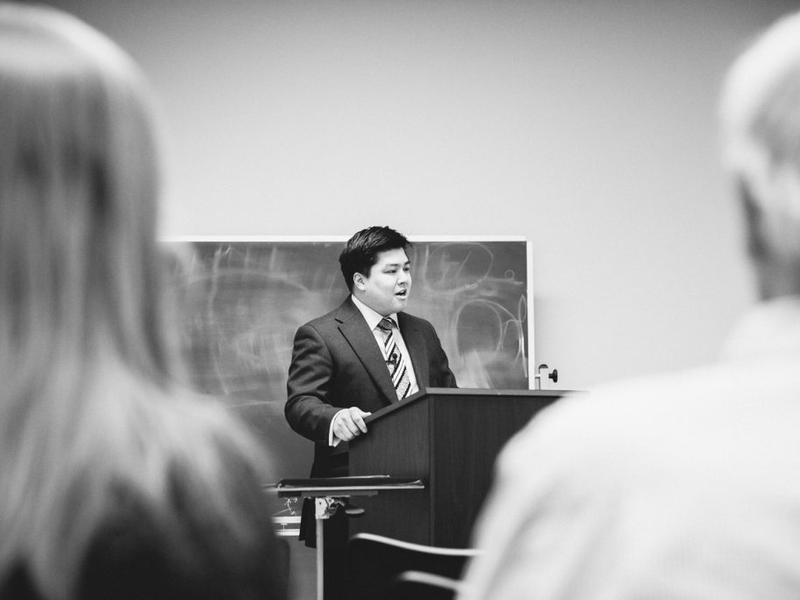
Chris Kou Completes the Certificate Program

Chris Kou is the oldest son of Chinese immigrants. Chris and his brothers run a branding and marketing business, Imagineering, in the northwest suburbs of Chicago. In his spare time, he takes online courses from Reformed Theological Seminary, and aspires to be a pastor. Chris is also one of our…

by Peter LeithartMarch 15, 2017
church-monet
Architecture

House of Living Stones

The following was delivered as the Solemn Charge and Exhortation to Theopolis students beginning the Easter term course on Architecture and Liturgical Space . As we will be reminded repeatedly throughout the week, the Bible has a lot to say about building and buildings. Long stretches of Exodus, Kings, Chronicles,…

by Peter LeithartMarch 14, 2017

Showing page 115 of 309

See all
See all

Poesis in Renaissance

More evidence of “poesis” in Renaissance notions of human nature and “self-fashioning.” The first quotation is from Pico, and is drawn from Lewis’s English Literature in the Sixteenth Century : God’s words to Adam at creation were: “To thee, O Adam, we have given no certain habitation nor countenance of…

January 14, 2004

Greenblatt on Fashion

A couple of quotations from Stephen Greenblatt’s Renaissance Self-Fashioning , with a comment appended. He is talking about the changing meanings of “fashion” in the English Renaissance: “In the sixteenth century there appears to be an increased self-consciousness about the fashioning of a human identity as a manipulable, artful process.…

January 13, 2004
Philosophy

Quotations from Michel de Montaigne

Some fun quotations from Michel de Montaigne, taken from Stephen Toulmin’s excellent Cosmopolis: The Hidden Agenda of Modernity : “He who wants to detach his soul, let him do it. When his body is ill, to free it from the contagion; at other times, on the contrary, let the soul…

January 13, 2004
Philosophy

Zizek on Modernity

Slavoj Zizek has this to say at the beginning of his The Puppet and the Dwarf : “One possible definition of modernity is: the social order in which religion is no longer fully integrated into and identified with a particular cultural life-form, but acquires autonomy, so that it can survive…

January 13, 2004
Philosophy

Derrida on Presence and Absence

Joel Garver helpfully explains Derrida’s deconstruction of “presence/absence” by suggesting that Derrida is attacking a particular view that assumes absolute presence and absolute absence. Either a thing is here or it is not, we instinctively thing, but in fact in all kinds of ways absent things leave “traces” of their…

January 13, 2004
Theology

Barth on God’s Omnipotence

Barth has a wonderful discussion of the omnipotence of God in Dogmatics in Outline (pp 48-49). He disputes the notion of absolute power, power in itself, as a description of God’s almightiness, and concludes (in line with the tradition of God’s simplicity) that God’s power is His holiness, righteousness, mercy,…

January 12, 2004

Showing page 2137 of 2212

Browse by Category

In Medias Res

Your weekly digest for all things Theopolis.

Donate

Theopolis is nearly 100% donor-supported. Consider joining us on our mission.