Theopolis Logo

Writing

Explore our collection of theological essays, biblical studies, and reflections on faith and culture.

See all
Deuteronomy

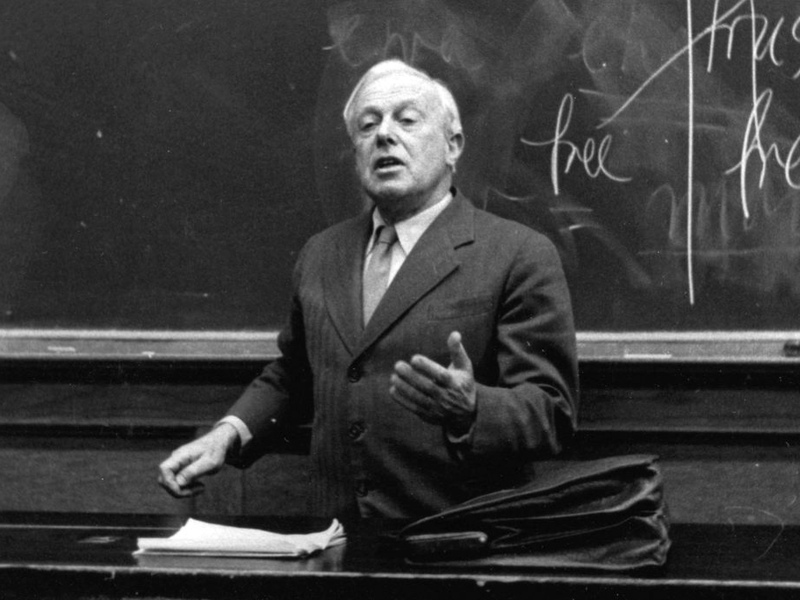
Sex & Power

I recently heard a tape of a discussion among several Christian writers and political thinkers, and one of the participants noted that it seems that some of our greatest leaders have not been sexually faithful men. Indeed, some have been profligate. Thus, the participant argued, it seems that private virtue…

by James B. JordanJanuary 7, 1995
lecture-a-e1547348850342
Biblical Horizons

A Brief Introduction to Eugen Rosenstock-Huessy

Eugen Rosenstock was born in Berlin in 1888, son of a Jewish banker. He converted to Christianity early in life, earned a doctorate in law, and served in the German army in World War I. After the war, he became convinced that Western Civilization was undergoing a great change and…

by James B. JordanJanuary 7, 1995

david-weber-fwuo_zluhnw-unsplash
Biblical Horizons

Passover, Paedocommunion, and Dr. Kenneth L. Gentry

What follows is a brief response to “Tape Set #1: The Passover Argument” in Dr. Gentry's series “Paedocommunion: Faith or Fad?” which purports to be a “reformed response” to those who believe young children should be admitted to the Lord's Table. His sermons are premised on the erroneous notion that…

by Mark HorneJanuary 6, 1995
zoltan-tasi-2pqk8fpok1s-unsplash
John

The Girding of Peter

"Truly, truly, I say to you, when you were younger, you used to gird yourself, and walk wherever you wished; but when you grow old, you will stretch out your hands, and someone else will gird you, and bring you where you do wish to go." Now this He said,…

by James B. JordanDecember 7, 1994
John

Jesus’ Burial Clothes

John devotes much attention to Jesus’ burial clothes. He tells us that Nicodemus brought about a hundred pounds of myrrh and aloes to spice Jesus body, and that He was bound in linen wrappings. We find out that His body and His head were wrapped separately. (John 19:39-40; 20:6-7). When…

by James B. JordanDecember 7, 1994
skyler-gerald-akljfvj5ym4-unsplash
John

Peter as High Priest

The Gospel According to Matthew presents Jesus as a new Moses, which is why there are so many speeches in Matthew and why Matthew focuses on Jesus as Lawgiver. In terms of this, Matthew presents Peter as a new high priest, established by Jesus. The rest of the twelve are…

by James B. JordanDecember 7, 1994

Showing page 274 of 309

See all
See all

Poesis in Renaissance

More evidence of “poesis” in Renaissance notions of human nature and “self-fashioning.” The first quotation is from Pico, and is drawn from Lewis’s English Literature in the Sixteenth Century : God’s words to Adam at creation were: “To thee, O Adam, we have given no certain habitation nor countenance of…

January 14, 2004

Greenblatt on Fashion

A couple of quotations from Stephen Greenblatt’s Renaissance Self-Fashioning , with a comment appended. He is talking about the changing meanings of “fashion” in the English Renaissance: “In the sixteenth century there appears to be an increased self-consciousness about the fashioning of a human identity as a manipulable, artful process.…

January 13, 2004
Philosophy

Quotations from Michel de Montaigne

Some fun quotations from Michel de Montaigne, taken from Stephen Toulmin’s excellent Cosmopolis: The Hidden Agenda of Modernity : “He who wants to detach his soul, let him do it. When his body is ill, to free it from the contagion; at other times, on the contrary, let the soul…

January 13, 2004
Philosophy

Zizek on Modernity

Slavoj Zizek has this to say at the beginning of his The Puppet and the Dwarf : “One possible definition of modernity is: the social order in which religion is no longer fully integrated into and identified with a particular cultural life-form, but acquires autonomy, so that it can survive…

January 13, 2004
Philosophy

Derrida on Presence and Absence

Joel Garver helpfully explains Derrida’s deconstruction of “presence/absence” by suggesting that Derrida is attacking a particular view that assumes absolute presence and absolute absence. Either a thing is here or it is not, we instinctively thing, but in fact in all kinds of ways absent things leave “traces” of their…

January 13, 2004
Theology

Barth on God’s Omnipotence

Barth has a wonderful discussion of the omnipotence of God in Dogmatics in Outline (pp 48-49). He disputes the notion of absolute power, power in itself, as a description of God’s almightiness, and concludes (in line with the tradition of God’s simplicity) that God’s power is His holiness, righteousness, mercy,…

January 12, 2004

Showing page 2137 of 2212

Browse by Category

In Medias Res

Your weekly digest for all things Theopolis.

Donate

Theopolis is nearly 100% donor-supported. Consider joining us on our mission.