Theopolis Logo

Writing

Explore our collection of theological essays, biblical studies, and reflections on faith and culture.

See all
aaron-burden-1ebsmyrau-s-unsplash
John

Moses & Jesus: Friends or Foes?

A Look at John 1.17 For the law was given through Moses, but grace and truth came through Jesus Christ. The above quotation is John 1.17 and comes from the New King James Version of the Bible. It is quite similar to the original translation in the old King James…

by Mark HorneJune 6, 2002

ben-white-w8qqn1pmqh0-unsplash
Christology

Grace Apart From Sin

And the Child continued to grow and become strong, increasing in wisdom; and the grace of God was upon Him. There is nothing faulty in this translation (New American Standard Bible); Jesus was the recipient of the grace of God His Father from whom He is eternally begotten and with…

by Mark HorneJune 6, 2002
ivan-aleksic-16yxcjsoaek-unsplash
Philemon

Flesh and Lord: Philemon 15 & 16

When Paul wrote to Philemon asking him to forgive his runaway slave, Onesimus, he gave Philemon an interesting perspective on how God used Onesimus’ action to bring about his conversion: For perhaps he was for this reason parted from you for a while, that you should have him back forever,…

by Mark HorneJune 6, 2002
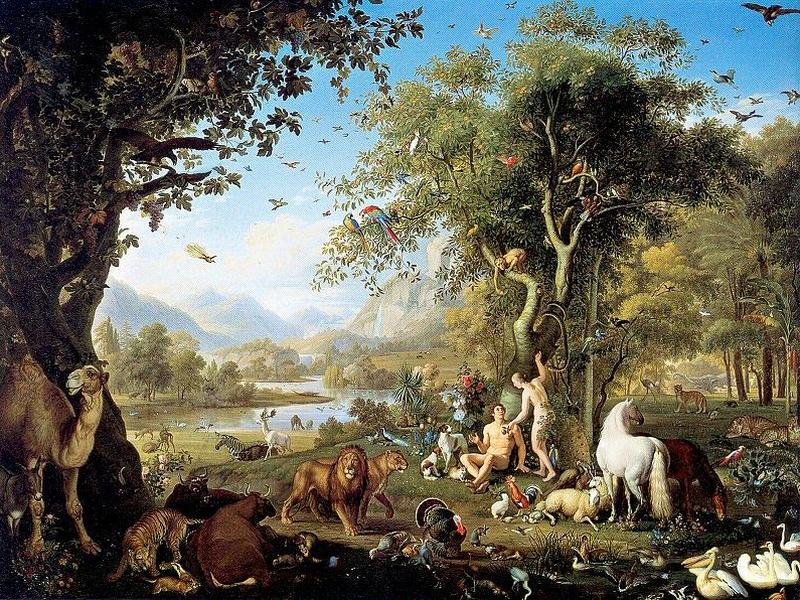
adam-and-eve-in-the-garden-of-eden-wenzel-peter
Covenant

Covenant of Works?

Adam’s good works were acceptable to God. He could do them and God would receive them. Our own “good” works, our very best works, require the forgiveness of God and the continual intercession of Jesus Christ due to their impurity. Thus, it is appropriate to describe God’s covenant with Adam…

by Mark HorneJune 6, 2002
sixteen-miles-out-al48tflf4e8-unsplash
Mark

Blasphemy Against the Holy Spirit?

In Mark’s Gospel we read: “And the scribes who came down from Jerusalem were saying, ‘He is possessed by Beelzebul,’ and ‘He casts out the demons by the ruler of the demons’” (3.22). Jesus replied in part, “Truly I say to you, all sins shall be forgiven the sons of…

by Mark HorneJune 6, 2002
e99a4713
Ecclesiology

A Visionary Ecclesiology

A Primer for Church Members on the Nature and Functions of the Body of Christ Introductory Note: I intend this paper to serve as something of a “user’s guide” for church members, though church leaders may also find it valuable in developing vision statements for their local bodies. I have…

by Rich LuskJune 5, 2002

Showing page 237 of 309

See all
See all
Literature

Sigurd’s New Order

Perhaps Sigurd, like Orestes, marks the beginning of a new order. Before Sigurd, the only absolute loyalties in the world of the Volsungs were family loyalties, loyalties of blood. Signy has no loyalty to her husband and encourages Sigmund to kill her sons. But Sigurd seems as loyal to his…

October 31, 2003

Religion in Europe

In Italy, there is a raging debate over a judge’s ruling that crucifixes need to be removed from schools. Seems that Europe, where religion (or religions) is still often a part of government education and where state churches still exist, is beginning to play catch up with American secularism.

October 31, 2003
Literature

Sigurd and the Dragon

In the introduction to his translation of the Volsung Saga, Jesse Byock points out that the scene of Sigurd slaying the dragon was employed on numerous churches throughout Scandinavian countries. The Christological dimensions of a dragon-slayer are obvious, but there is even more going on with Sigurd: He not only…

October 31, 2003

Differance

In an essay on “The Hermeneutics of Difference” in a volume edited by Merold Westphal, Garrett Green offers this helpful summary of Derrida’s conception of supplement: “The fundamental hermeneutical situation in which we all find ourselves as users of signs, which Derrida indicates by the word DIFFERANCE, means that no…

October 31, 2003

Oats

From Dr. Johnson’s dictionary, a definition of “Oats”: “A grain, which in England is generally given to horses, but in Scotland supports the people.”

October 31, 2003

Nothing Outside the Text

In his book “Is There A Meaning in This Text?” Kevin Vanhoozer explains Derrida’s dictum that “there is nothing outside the text” by saying that everything is part of a signifying system or classification system that is constituted by differences. He offers this illuminating illustration: “a Ford has its particular…

October 31, 2003

Showing page 2174 of 2212

Browse by Category

In Medias Res

Your weekly digest for all things Theopolis.

Donate

Theopolis is nearly 100% donor-supported. Consider joining us on our mission.