Theopolis Logo

Writing

Explore our collection of theological essays, biblical studies, and reflections on faith and culture.

See all
screen-shot-2021-08-12-at-2-57-54-pm
Matthew

What Tune is Playing? (Matthew 11:1-19)

Matthew’s gospel is a replay of Israel’s history, and this replay occurs at two different levels. On the one hand, Jesus relives Israel’s history and does it faithfully. He is the Son, the true Israel, called out of Egypt, baptized in the sea, tempted in the wilderness. He is the…

by Peter LeithartJanuary 14, 2014

markus-winkler-aid-xyrtlec-unsplash
Theopolis News

Constantine, Christendom, Christian Renewal

Trinity House President Peter Leithart will deliver two lectures at the Eighth Day Institute annual conference in Wichita, Kansas, January 16-18. The conference theme is "Constantine, Christendom, and Christian Renewal," and Dr. Leithart will be lecturing on Constantine. Dr. Leithart will preach on Sunday, January 19, at Trinity Covenant Church…

by Peter LeithartJanuary 13, 2014
screenshot-2023-08-30-at-11-50-23-am
Matthew

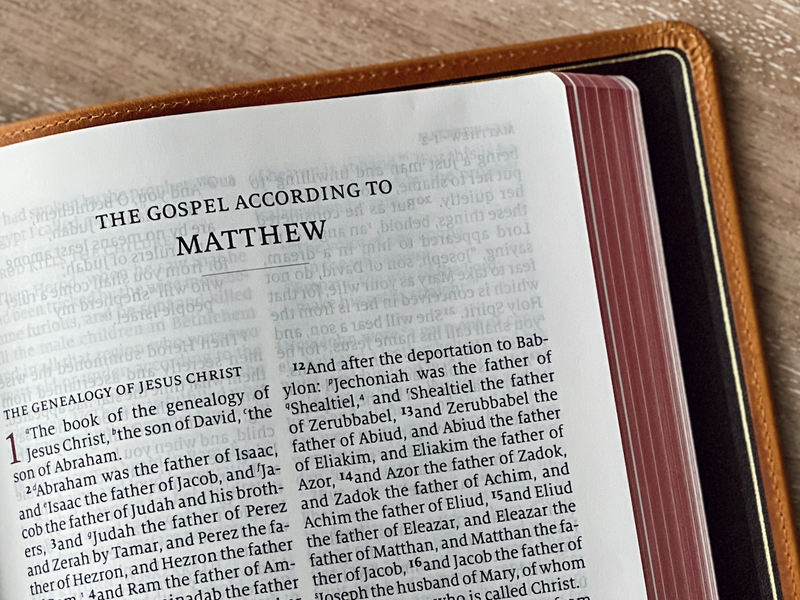
Treasures in Matthew's Genealogy, 2

In the previous article, we considered the life of Abraham up to the birth of Isaac and the way in which his life up to that point foreshadows later redemptive history. Our reason for this consideration was at the Gospel of Matthew's behest. He pointed us in that direction. He…

by Kelly KerrJanuary 9, 2014
annie-spratt-ia-cxcviwty-unsplash-3
Theology

The Trinity and the Nations, 3

The Spirit of Speech The last period in Israel’s history arrives almost from nowhere. The prophets appear unannounced, give short, but earth-shattering messages and then are whisked away by the Spirit (1 Kings 18:12). They do not hold high positions in Israel, but their words give them great political sway.…

by Brian MarrJanuary 7, 2014
markus-winkler-aid-xyrtlec-unsplash
Theopolis News

Nevin Lectures

Trinity House Institute is delighted to announce our first annual series of Nevin Lectures. Timothy George, Dean and Professor of Church History at Beeson Divinity School, will deliver four lectures on “Sacramental Theology from a Baptist Perspective” on February 7-8, 2014 at Trinity Presbyterian Church in Birmingham, Alabama. More information...…

by TheopolisJanuary 2, 2014
screen-shot-2022-08-04-at-9-36-57-am
Revelation

Him Whom They Pierced

Revelation 1: 7 states the theme of Revelation. It is a self-standing verse, beginning and ending with “Amen” (the “Amen” at the end of verse 6 should be taken as the beginning of the statement in verse 7). A double Amen as a double witness, and it becomes a threefold…

by Peter LeithartJanuary 1, 2014

Showing page 181 of 309

See all
See all
History

Enlightenment

Two very different evaluations of the Enlightenment appear in recent books. First from Robert Darnton, historian of the French Enlightenment, who, according to the reviewer in the October 6 TNR , devotes the first and most substantative essay in his recent book George Washington’s False Teeth to defending the Enlightenment.…

October 20, 2003
Biblical Studies

Promised Land and Heaven

There’s a breakdown in the traditional typology that links “promised land” with “heaven.” Though the promised land is eschatologically a new heavens and new earth, the typology is more exactly fulfilled in the church’s fulfillment of the great commission on earth. After all, we don’t embark on a “conquest” of…

October 18, 2003
Biblical Studies

Moses the Matchmaker

Moses is the matchmaker who brings the bride to a trysting place with her lover, Yahweh. He is the “friend of the bridegroom” who, like John the Baptist, prepares the bride for her husband. As such, Moses and John are models for all Christian ministry, which is also all about…

October 18, 2003
Biblical Studies

Horned Man

Something to check: Is Moses the first “horned man” in the Bible? He comes down from the mountain, having seen the glory of God, with “horns” on his head, rays of glory radiating out. This may be the source of the horned man image used elsewhere, in the Psalms for…

October 18, 2003

“From Faith” (Rom. 1:17)

Douglas A. Campbell argues forcefully for interpreting the phrase ek pisteos (from faith) in Romans 1:17 as a reference to the faithfulness of Christ in his obedience to death. This, in turn, suggests strongly that Paul’s later use of pistis Christou (faith of Christ) as Christ’s own faithfulness rather than…

October 18, 2003

“From Faith” (Rom. 1:17)

Douglas A. Campbell argues forcefully for interpreting the phrase ek pisteos (from faith) in Romans 1:17 as a reference to the faithfulness of Christ in his obedience to death. This, in turn, suggests strongly that Paul’s later use of pistis Christou (faith of Christ) as Christ’s own faithfulness rather than…

October 18, 2003

Showing page 2181 of 2212

Browse by Category

In Medias Res

Your weekly digest for all things Theopolis.

Donate

Theopolis is nearly 100% donor-supported. Consider joining us on our mission.