Theopolis Logo

Writing

Explore our collection of theological essays, biblical studies, and reflections on faith and culture.

See all
tanner-mardis-xuxghzhibn4-unsplash-1-2
Biblical Studies

Tweets-turned-Notes on the Bible’s Chronology

Summary In what follows, I will consider the “year-stamps” employed in Scripture, i.e., statements of the form, “Such-and-such an event took place in the Xth year of Y.” In the process, I will suggest some ways in which the Biblical narrative might relate to events in the extra-Biblical world, though…

by James BejonJuly 16, 2019
durer-prodigal-son-2
Luke

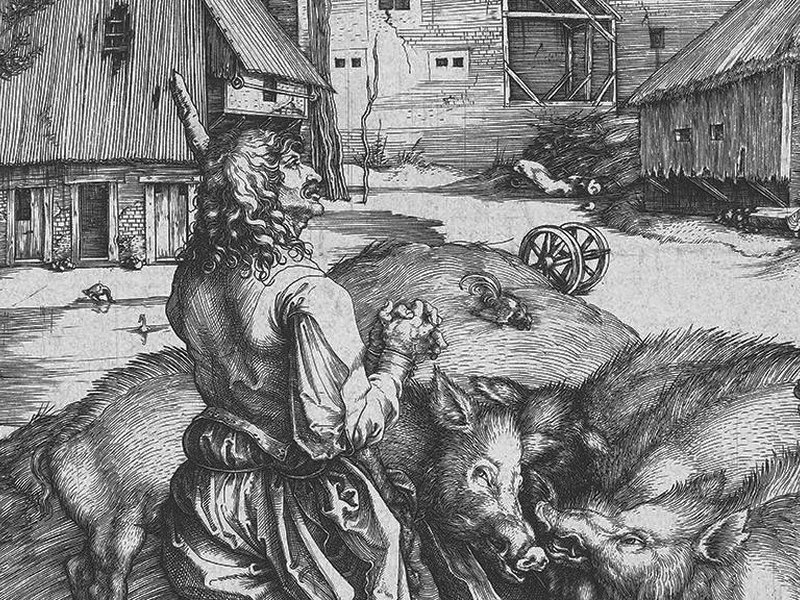
Perspectives on the Prodigal, (Part 2)

In the first essay on the parable of the Prodigal Son, I suggested that the problems commentators and others encounter in interpreting Jesus three-part parable are not accidental. These are not just problems in our ignorance of cultural background. They are intentional features of the stories —stories designed to poke…

by Ralph Allan SmithJuly 11, 2019
durer-prodigal-son-2
Luke

Perspectives on the Prodigal, (Part 1)

The story of the Prodigal Son is perhaps the most well-known story in the Bible. As others have observed, it may also be one of the most misunderstood. In two short essays, I will point out features of this story that are commonly neglected, aspects of Jesus’ parable that might…

by Ralph Allan SmithJuly 9, 2019
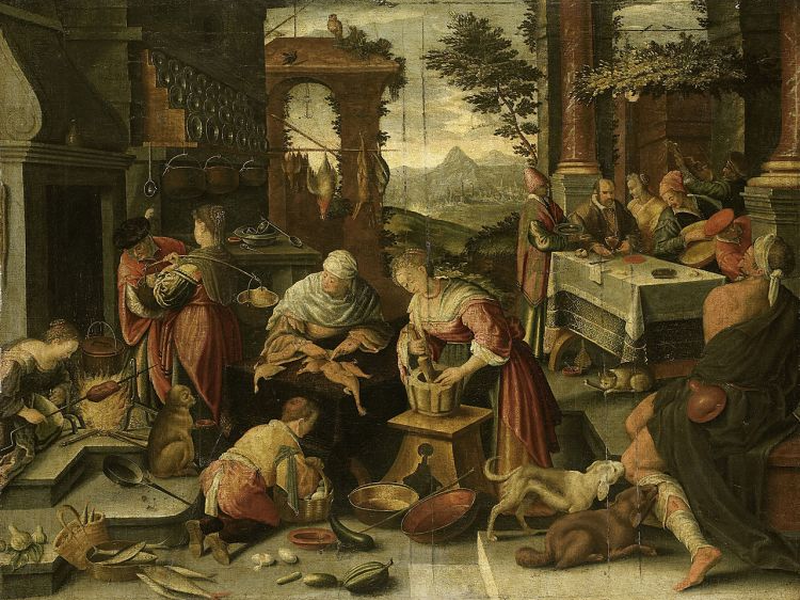
de-rijke-man-en-de-arme-lazarus-by-jacopo-da-ponte-16th-century
Luke

Lazarus and the Rich Man

The parable of Lazarus and the nameless rich man is not an independent story. It is part of a long context that begins in Luke 15:1, where Jesus is eating with tax collectors and sinners and the scribes and Pharisees grumble. In response to their hardheartedness, Jesus tells a three-part…

by Ralph Allan SmithJuly 4, 2019
aaron-burden-uynrnfdkjwg-unsplash
Luke

Everybody has Dropsy - Luke 14:1-24

The Bible is written so that even when a reader cannot pick up on what might be deeper or more detailed aspects of a text, there is virtually always a message to be heard. In the ancient world, where the “reader” of Scripture would likely be a church official facing…

by Ralph Allan SmithJuly 2, 2019
communion
Biblical Theology

Fruit Trees and Grain Plants

The distinction between garden (or vineyard) and field begins in Genesis 2. This relates to the ordering of the formless world. Plants of the field are contrasted with the garden planted by God in Genesis 2:5&8. Later on, under the Old Covenant the Israelites will be required to keep their…

by James B. JordanJune 27, 2019

Showing page 77 of 309

See all
See all

Jane Jacobs at 100

T o celebrate the centenary of Jane Jacobs's birth, Adam Gopnik devotes a New Yorker piece to the lyricist of the American city. Gopnik finds that her classic, Death and Life of Great American Cities “is still astonishing to read, a masterpiece not of prose—the writing is workmanlike, lucid—but of…

September 30, 2016
American Politics

Rooting out Burrowers

S everal weeks ago, I devoted my FT column to examining the Obama administration’s effort to consolidate its gender-equality gains by hiring attorneys to investigate and prosecute civil rights violations. Obama appointees will burrow in and continue the Obama agenda after he leaves office. Evan Osnos's attempt to imagine Trump’s…

September 30, 2016

Origins of Islam

O nce upon a time, everyone knew how Islam came into existence. As Tom Holland says ( In the Shadow of the Sword ), “Whole centuries’ worth of scholarship have been founded on the presumption that the sources for early Islam can be trusted. To this day, they continue to…

September 30, 2016

God With Us

E veryone who has sung a Christmas carol knows that “Immanuel” means “God with us,” but centuries of singing about Immanuel have domesticated and sentimentalized the word. The concept of “Immanuel” has a long history before Isaiah applied it to a child Messiah (Isaiah 7). It arises, in part, from…

September 30, 2016

It's the Theology, Stupid

T homas Small doesn’t think Hugh Kennedy’s Caliphate gives enough attention to the theological roots of the Caliphate. In his TLS review , he writes wryly: “ Reading Kennedy’s account of the Caliphate, you’d be forgiven for forgetting that there’s anything particularly religious about it. ” According to Small, the…

September 30, 2016

Get Ready to Rumble

Early in his To Change the World , James Davison Hunter counters simplistic Christian understanding of cultural change with a series of propositions about the character of culture and the dynamics of cultural change. Proposition Eleven is simultaneously reassuring and sobering: “Cultures change, but rarely if ever without a fight”…

September 30, 2016

Showing page 248 of 2212

Browse by Category

In Medias Res

Your weekly digest for all things Theopolis.

Donate

Theopolis is nearly 100% donor-supported. Consider joining us on our mission.