Theopolis Logo

Writing

Explore our collection of theological essays, biblical studies, and reflections on faith and culture.

See all
tanner-mardis-xuxghzhibn4-unsplash-1-2
Biblical Studies

Tweets-turned-Notes on the Bible’s Chronology

Summary In what follows, I will consider the “year-stamps” employed in Scripture, i.e., statements of the form, “Such-and-such an event took place in the Xth year of Y.” In the process, I will suggest some ways in which the Biblical narrative might relate to events in the extra-Biblical world, though…

by James BejonJuly 16, 2019
durer-prodigal-son-2
Luke

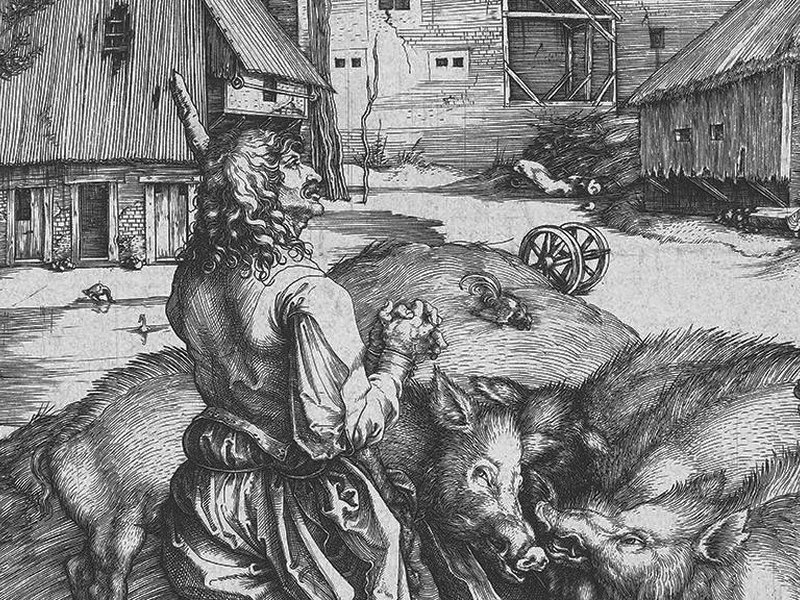
Perspectives on the Prodigal, (Part 2)

In the first essay on the parable of the Prodigal Son, I suggested that the problems commentators and others encounter in interpreting Jesus three-part parable are not accidental. These are not just problems in our ignorance of cultural background. They are intentional features of the stories —stories designed to poke…

by Ralph Allan SmithJuly 11, 2019
durer-prodigal-son-2
Luke

Perspectives on the Prodigal, (Part 1)

The story of the Prodigal Son is perhaps the most well-known story in the Bible. As others have observed, it may also be one of the most misunderstood. In two short essays, I will point out features of this story that are commonly neglected, aspects of Jesus’ parable that might…

by Ralph Allan SmithJuly 9, 2019
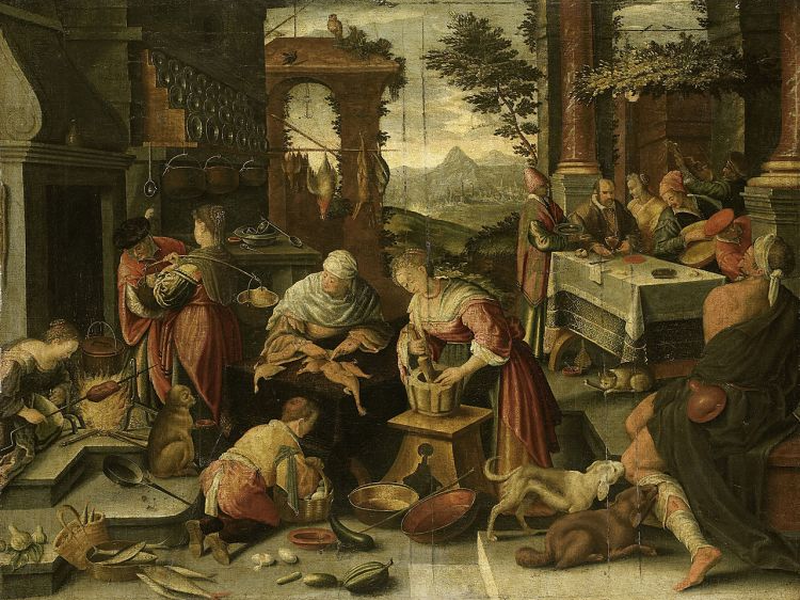
de-rijke-man-en-de-arme-lazarus-by-jacopo-da-ponte-16th-century
Luke

Lazarus and the Rich Man

The parable of Lazarus and the nameless rich man is not an independent story. It is part of a long context that begins in Luke 15:1, where Jesus is eating with tax collectors and sinners and the scribes and Pharisees grumble. In response to their hardheartedness, Jesus tells a three-part…

by Ralph Allan SmithJuly 4, 2019
aaron-burden-uynrnfdkjwg-unsplash
Luke

Everybody has Dropsy - Luke 14:1-24

The Bible is written so that even when a reader cannot pick up on what might be deeper or more detailed aspects of a text, there is virtually always a message to be heard. In the ancient world, where the “reader” of Scripture would likely be a church official facing…

by Ralph Allan SmithJuly 2, 2019
communion
Biblical Theology

Fruit Trees and Grain Plants

The distinction between garden (or vineyard) and field begins in Genesis 2. This relates to the ordering of the formless world. Plants of the field are contrasted with the garden planted by God in Genesis 2:5&8. Later on, under the Old Covenant the Israelites will be required to keep their…

by James B. JordanJune 27, 2019

Showing page 77 of 309

See all
See all

The Beast

I n an 1881 article , F.W. Farrar examined the case for Nero as the sea beast of Revelation 13. Many contemporary scholars dismiss this because they believe that Revelation was written decades after Nero. Farrar makes a circumstantial and exegetical case for the identification, and in the process provides…

August 23, 2016

It Takes A City

I n a 1977 Daedalus article on “ The Family and the City ,” French historian Philippe Aries argued that “the real roots of the present domestic crisis lie not in our families, but in our cities.” As cities “deterioriated” and urban culture weakened, “the omnipotent, omnipresent family took upon…

August 23, 2016

Born in Zion

P salm 87 is a hymn to Zion. The name “Zion” occurs four times, and the Psalm declares Yahweh's love for Zion (v. 1), the glory of Zion as city of God (v. 2), the joy that fills Zion (v. 6). It could be a “nationalistic” hymn to Israel's ancient…

August 22, 2016

Purity System

I n her contribution to The Peace of God , Amy Remensnyder examines the eleventh-century crackdown on simony, clerical marriage and unchastity, and the clergy's involvement in war. These were characterized as pollutions of the clergy and the church, and the rules were framed as purity prohibitions. Gregory VII denounced…

August 19, 2016
American Religion

Nature's Nation

A mericans have often justified American order and American exceptionalism by invoking “the myth of nature,” write Robert Hughes and C. Leonard Allen in Illusions of Innocence (205). They “first employed this myth to justify freedom from tyranny. But they soon began equating nature with particular dimensions of national life…

August 19, 2016

Mary Douglas and Taboo

I n a review of Jacob Milgrom's Anchor Bible Leviticus commentary, Jonathan Klawans provides a helpful summary of the achievement of Mary Douglas's Purity and Danger : Against especially Robertson Smith and Frazer, Douglas argued that avoidance behaviors could no longer be dismissed as something inherently or distinctly primitive. Douglas…

August 19, 2016

Showing page 262 of 2212

Browse by Category

In Medias Res

Your weekly digest for all things Theopolis.

Donate

Theopolis is nearly 100% donor-supported. Consider joining us on our mission.