Theopolis Logo

Writing

Explore our collection of theological essays, biblical studies, and reflections on faith and culture.

See all
tanner-mardis-xuxghzhibn4-unsplash-1-2
Biblical Studies

Tweets-turned-Notes on the Bible’s Chronology

Summary In what follows, I will consider the “year-stamps” employed in Scripture, i.e., statements of the form, “Such-and-such an event took place in the Xth year of Y.” In the process, I will suggest some ways in which the Biblical narrative might relate to events in the extra-Biblical world, though…

by James BejonJuly 16, 2019
durer-prodigal-son-2
Luke

Perspectives on the Prodigal, (Part 2)

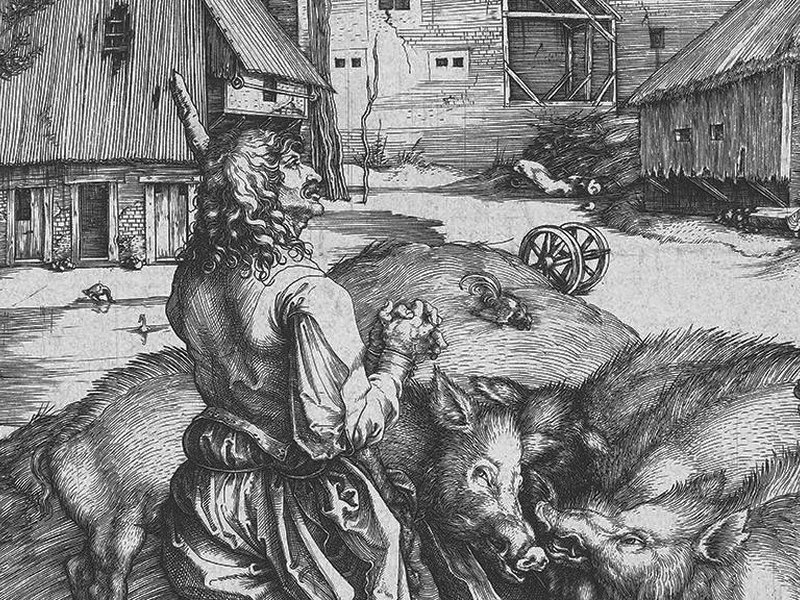
In the first essay on the parable of the Prodigal Son, I suggested that the problems commentators and others encounter in interpreting Jesus three-part parable are not accidental. These are not just problems in our ignorance of cultural background. They are intentional features of the stories —stories designed to poke…

by Ralph Allan SmithJuly 11, 2019
durer-prodigal-son-2
Luke

Perspectives on the Prodigal, (Part 1)

The story of the Prodigal Son is perhaps the most well-known story in the Bible. As others have observed, it may also be one of the most misunderstood. In two short essays, I will point out features of this story that are commonly neglected, aspects of Jesus’ parable that might…

by Ralph Allan SmithJuly 9, 2019
de-rijke-man-en-de-arme-lazarus-by-jacopo-da-ponte-16th-century
Luke

Lazarus and the Rich Man

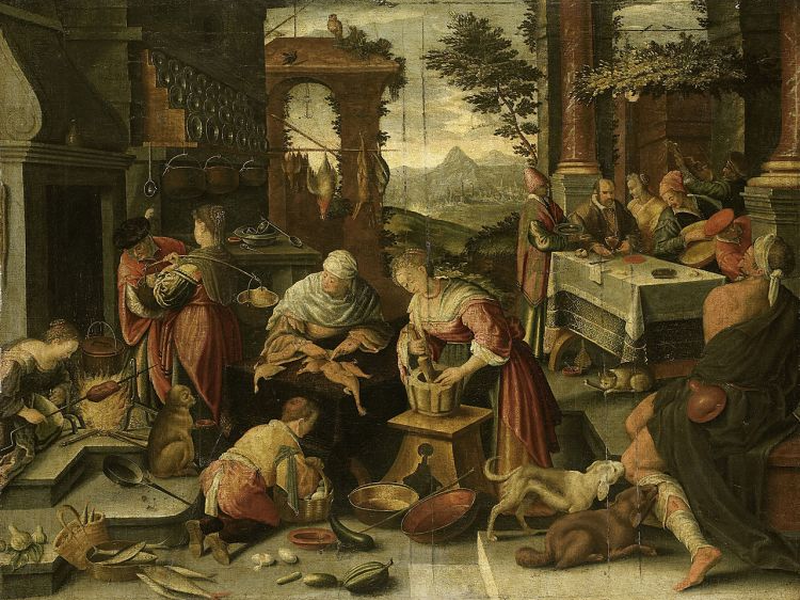
The parable of Lazarus and the nameless rich man is not an independent story. It is part of a long context that begins in Luke 15:1, where Jesus is eating with tax collectors and sinners and the scribes and Pharisees grumble. In response to their hardheartedness, Jesus tells a three-part…

by Ralph Allan SmithJuly 4, 2019
aaron-burden-uynrnfdkjwg-unsplash
Luke

Everybody has Dropsy - Luke 14:1-24

The Bible is written so that even when a reader cannot pick up on what might be deeper or more detailed aspects of a text, there is virtually always a message to be heard. In the ancient world, where the “reader” of Scripture would likely be a church official facing…

by Ralph Allan SmithJuly 2, 2019
communion
Biblical Theology

Fruit Trees and Grain Plants

The distinction between garden (or vineyard) and field begins in Genesis 2. This relates to the ordering of the formless world. Plants of the field are contrasted with the garden planted by God in Genesis 2:5&8. Later on, under the Old Covenant the Israelites will be required to keep their…

by James B. JordanJune 27, 2019

Showing page 77 of 309

See all
See all

Blessings of Business

D arren Grem's forthcoming The Blessings of Business is a study of the money men behind mid-20th century Evangelicalism. It's a revealing book, once one skims off Grem's premises, which seem to be: Evangelical ministry takes money, wealthy people provide the money. Grem seems to think this a scandal. It's…

June 13, 2016

Catholic v. Universal

W riting on Catholic education in a 1990 America essay , Walter Ong pushed the discussion of Catholic identity back to the roots: What is the “catholicity” of “Catholic”? “‘Catholic,'” he observed, “is commonly said to mean ‘universal,' a term from the Latin universalis .” But this doesn't fit the…

June 10, 2016

Philosophical Bible

W hy isn't the Hebrew Bible taken seriously as a text of philosophy, ethics, or political thought? That it isn't is obvious. As Yoram Hazony observes in his The Philosophy of Hebrew Scripture , his graduate training at Rutgers all but ignored the Bible: “political theory and the history of…

June 10, 2016

Satan Among Skeptics

M ikhail Bulgakov's The Master and Margarita has an epigraph from Goethe's Faust , and the novel is full of Faustian elements. Both involve temptation, the Satanic ball that Margarita attends resembles nothing so much as Faust's Walpurgis night, and the romantic overlay to a story of devilish temptation is…

June 10, 2016

Catholicity

I n an 1851 essay on “Catholicism” published in the Mercersburg Review , John Williamson Nevin unpacked the notion that the church is “catholic” or “universal.” He distinguished two ways of understanding the church's universality—as “all” or as “whole.” If the church is catholic as “all,” then it is an…

June 9, 2016

Outsider Ethics

W hile Athenian philosophy was in many respects quite distant from the political cosmologies that characterized the great Near Eastern empires,” writes Yoram Hazony ( The Philosophy of Hebrew Scripture ), “it continued to develop their view of man as being essentially a creature of the state that governs him,…

June 9, 2016

Showing page 280 of 2212

Browse by Category

In Medias Res

Your weekly digest for all things Theopolis.

Donate

Theopolis is nearly 100% donor-supported. Consider joining us on our mission.