Theopolis Logo

Writing

Explore our collection of theological essays, biblical studies, and reflections on faith and culture.

See all
aaron-burden-h8s0pf2rcqs-unsplash
Galatians

The Restoration of the Galatians

While controversies over the writings of Paul continue in various corners of the intellectual globe, the word of God given through Paul and his scribe and all of the church’s interpreters and translators over the last two millennia is still readily available to the lofty and the lowly. Paul, as…

by Grace LangnessMarch 25, 2013

kiwihug-l4gw27xzn1i-unsplash
Deuteronomy

Law and History: How to Read the Law of Moses (Part 2)

The second in a series of studies in Deuteronomy. Deuteronomy 22:30: A man shall not take his father’s wife, and shall not uncover his father’s wing (Hebrew: kanaf ). There are a number of unusual features in this law that mark it out from the previous context, indicating that it…

by Ralph Allan SmithMarch 20, 2013
200403-moss-pilate-tease_pncfq5
History

Victimhood and the Gospel

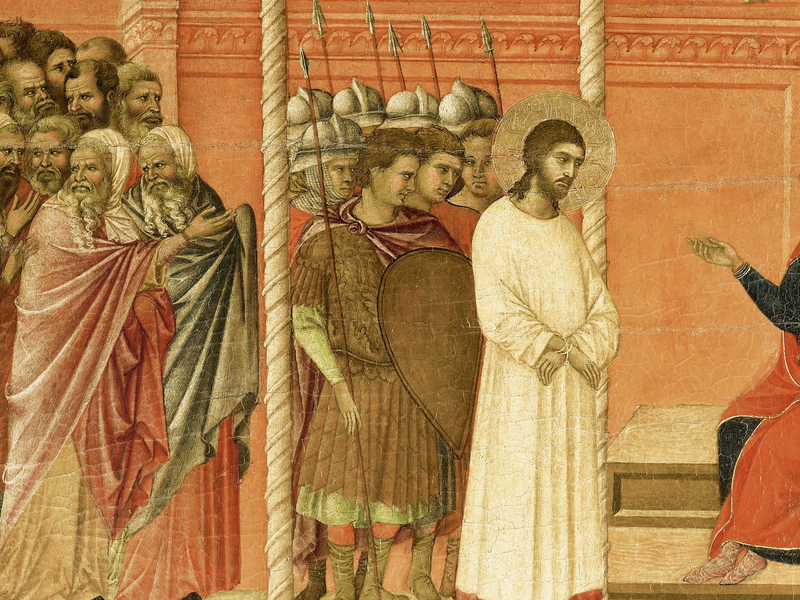
The texts of Christianity have been slowly at work, under the power of the Holy Spirit for 2000 years now. If we could be magically transported back into the world of two millennia ago, modern Americans would be shocked at the cruelty of that world. There was no concern for…

by Richard BledsoeMarch 18, 2013
aaron-burden-1ebsmyrau-s-unsplash
Luke

The Dysfunctional Family of the Gadarene Madman

The Story of the Gadarene Madman is told in all three synoptic Gospels (Matthew 8:28-34, Mark 5:1-20, Luke 8:26-37). Jesus ventures into a Gentile area when He passes over the Sea of Galilee. Upon disembarking from his boat, he is immediately met by a demon-possessed madman. Upon meeting Jesus, he…

by Richard BledsoeMarch 13, 2013
aaron-burden-1ebsmyrau-s-unsplash
Deuteronomy

Law and History: How to Read the Law of Moses

Part 1 of a multi-part series of studies on Deuteronomy 22:30-23:8. Eric Auerbach, in his classic work on Western literature, devotes his first chapter to contrasting Homer with the Bible. Of Homer, he writes of the “need of Homeric style to leave nothing which it mentions half in darkness and…

by Ralph Allan SmithMarch 12, 2013
markus-winkler-aid-xyrtlec-unsplash
Theopolis News

James Jordan in Korea, Japan

Trinity House Fellow James B. Jordan will be a speaker at an International Conference on Biblical Symbolism that will be held in Seoul on Monday, May 27 in 2013. He will address "The Importance of Biblical Symbolism and Symbolic Interpretation of the Bible." The conference will have three other speakers…

by Peter LeithartMarch 9, 2013

Showing page 197 of 309

See all
See all

Putting the oikos into Oikonomy

Psalm 128 promises a fruitful home to the man who fears Yahweh. He will prosper from the labor of his hands, with no one plundering or taxing away his goods. The assumption is that productive work is part of family life. The family is an economic unit, among other things,…

February 11, 2016

Glory of Kings

God gave us the book of Proverbs to teach us wisdom. Partly, He does that by teaching us the content of Proverbs. But he is also teaching us wisdom by the way He communicates wisdom. Proverbs 25:2 says, “It is the glory of kings to conceal a matter, but the…

February 11, 2016

Grace, Judgment, Gospel

Atonement theories can be seen as efforts to synthesize the grace and judgment of God: How does He show grace to a race that deserves condemnation. Solutions are often sought systematic syntheses, and there is something to that: The cross proves God to be just and the justifier of those…

February 11, 2016

Finding Fixed Points in Revelation

Revelation is a confusing book for many readers, apparently endlessly, perhaps even drearily repetitive. The pyrotechnics and special effects might fascinate for a bit, but after a while it all blurs and blends and leaves us wandering in the bewilderness (David Sterritt's wonderful term). Can we find fixed points, coordinates…

February 10, 2016

Hope of the Hopeless

We do what we do because we hope to accomplish something by our actions. All our actions are directed at the future. We want things to be different than they are now, and we plan and act in hope that we can make things come out differently than they otherwise…

February 10, 2016
Political Theology

Theology, Civic or Natural

Modern theology has often been obsessively concerned to justify itself to cultured despisers, and this self-justification has often taken the form of “prolegomenon,” the technical name for an introduction to a theological treatise. To the extent that prolegomena represent efforts to describe the work of theology and its place in…

February 10, 2016

Showing page 322 of 2212

Browse by Category

In Medias Res

Your weekly digest for all things Theopolis.

Donate

Theopolis is nearly 100% donor-supported. Consider joining us on our mission.