Theopolis Logo

Writing

Explore our collection of theological essays, biblical studies, and reflections on faith and culture.

See all
cloister

Gatekeepers

1 Chronicles 9:1 seems to bring the genealogies of 1 Chronicles to an end. The Chronicler has recorded the genealogy of the human race from Adam, focusing on the descendants of Abraham through Jacob. Summing it all up, he says, “So all Israel was enrolled by genealogies; and behold, they…

by Peter LeithartJune 21, 2016
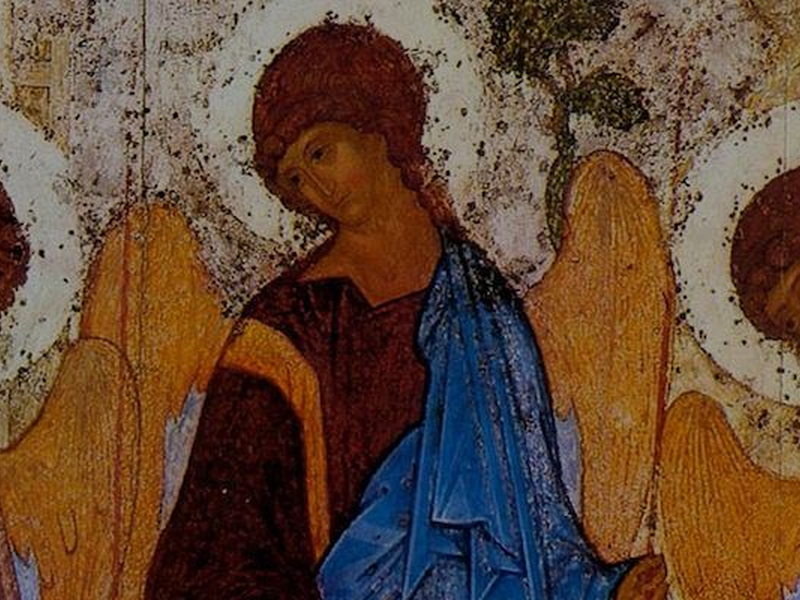
trinity-1-2
Trinity

Are the Divine Persons Persons?

The “personalist” understanding of the Trinity, articulated most influentially in the work of John Zizioulas, has fallen on hard times. Recent scholars have attacked Zizioulas’s idea that Cappadocian Trinitarianism represented an ontological revolution, hammering on the distinction between divine and human personhood. Michel Barnes’s conclusion is the most drastic of…

by Peter LeithartJune 16, 2016
img_4660-2
Architecture

On Biblical Theology

Biblical Theology is often defined as the historical unfolding of God’s revelation, or of God’s revelation and of the history of his covenantal redemption and transformation of humanity and the world. In practice, Biblical Theology is usually broader than this, and also includes the study of literary structure and of…

by James B. JordanJune 14, 2016
laughing_statue_by_xxbobbiie-d5f0meh-2
Humor

Wise Laughter

We are made to be happy. Created to enter into the eternal joy of God, our whole being inclines to that end, but the fallen world has put forth barriers and by our own sin we bar ourselves from that endless delight, and death blinds us to that reality. Yet…

by Remy WilkinsJune 7, 2016
img_7664
Liturgy

Why Theopolis? Take Two

At the end of Revelation, John sees the heavenly city descending to earth. The city shines with the brilliance of God's glory, which lightens the nations, so that kings bring their glory to the city. This is not a vision of the final new heaven and new earth. It's a…

by Peter LeithartJune 2, 2016
trinity-1-2
Attributes of God

How Can We Talk About God?

“No one has ever seen God,” writes John (John 1:18). If this is the case, then how can we speak about God? Some people say we actually cannot. Or at least we cannot speak about God positively, i.e. who He is. We can only say who or what God is…

by Bogumil JarmulakMay 31, 2016

Showing page 130 of 309

See all
See all

First Resurrection

Martyrs share in Jesus' suffering and death. Martyrs also come to life as Jesus did. This is what John calls the “first resurrection” (Revelation 20:5). That is the argument presented by GB Caird ( Revelation of St. John the Divine , 255). Jesus' resurrection, he argues, “had a double sequel,…

January 5, 2016

Democracy and Mixed Government

In a lively exchange with Eugene McCarraher , John Milbank summarizes his views on democracy. Like Chesterton, he is a defender of the democracy of the dead, and he insists that this is not simply “a defense of the given and an assault on the present.” That is, he claims,…

January 5, 2016

Levitical Priesthood

“Despite the central role which the priesthood played in Israel's life and worship,” writes Nicholas Haydock ( The Theology of the Levitical Priesthood ), it has only a small role in “the majority of Old Testament theologies” (xii). This neglect is partly due to the influence of Wellhausen's documentary thesis,…

January 5, 2016

Seconds

There are a number of “seconds” in the book of Revelation. References to the “second death” surround the book (2:11; 20:6, 14; 21:8), and there is a second seal (6:3), a second woe (11:14), and several second angels (8:8; 14:8; 16:3). The living creatures are enumerated, the lion first, the…

January 4, 2016

Didactic Poetry

In his introduction to Scott Cairns's collection, Slow Pilgrim , Gregory Wolfe recounts Cairns's development as a poet. He grew up “within a powerful religious subculture that splits the spirit off from the letter, reducing faith to didactic legalism. These fellow religionists of his youth loved nothing better than to…

January 4, 2016
Time

Ringing the Changes

JT Fraser begins one of his essays in Time and Time Again with this lovely sketch of a musical cosmology: “The noble English art of change ringing consists of the ringing of a set of bells of different pitches, according to sequences that follow stable mathematical patterns. A set of…

January 4, 2016

Showing page 336 of 2212

Browse by Category

In Medias Res

Your weekly digest for all things Theopolis.

Donate

Theopolis is nearly 100% donor-supported. Consider joining us on our mission.