Theopolis Logo

Writing

Explore our collection of theological essays, biblical studies, and reflections on faith and culture.

See all
31-03-0213
Hermeneutics

Apocalyptic Eyes

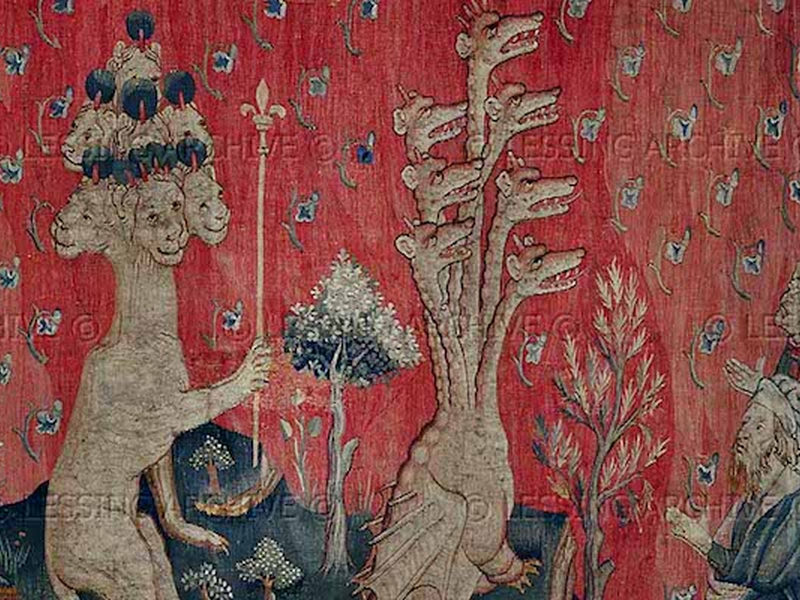
Flying scrolls. Red horses. Beasts coming out of the sea. Winged women. The list goes on. Apocalyptic literature in the Bible is like a cross between science fiction and Marvel comics. And the Bible has a fair bit of this sort of thing. Daniel sees visions in Babylon, Zechariah sees…

by Toby SumpterNovember 4, 2014

bhm-skyline-2
Theopolis News

New Name, New Look

Trinity House Institute has taken a new name, the Theopolis Institute. This striking new name expresses our unique vision and mission and captures the unified purpose behind all our specific programs and activities. We still have Bible, liturgy, and culture in our tagline. We still offer the same courses on…

by TheopolisNovember 4, 2014
istock_000012860926small
Atonement

Not Fearing the Devil

Adam Kotsko offers a socio-political variation on the Christus Victor atonement theory in his 2010 study, The Politics of Redemption: The Social Logic of Salvation . He does this by explaining "the devil" in terms of the Hegelian concept of "objective spirit," Geist . As Kotsko puts it, Geist "refers…

by Peter LeithartOctober 13, 2014
jez-timms-8muutamcwu4-unsplash
Leviticus

The Meaning of Sacrifice

Two factors keep Nahtali Meshel from discussing the meaning of sacrifice until late in his The "Grammar" of Sacrifice . The first has to do with the texts he draws from: "P says little about the meaning of its rituals" (174). The other has to do with the grammatical theory…

by Peter LeithartOctober 8, 2014
jez-timms-8muutamcwu4-unsplash
Leviticus

Praxemics

Chapter 5 of Naphtali Meshel's The "Grammar" of Sacrifice focuses on "praxemics," the physical actions of sacrificial ritual. Praxemes are constituted by six elements: an "atomact," an elementary physical act or gesture; an actor; an object that is acted up; a target for the action and often for the object…

by Peter LeithartOctober 6, 2014
markus-winkler-aid-xyrtlec-unsplash
Leviticus

Jugation and Hierarchy

Two chapters of Naphtali Meshel’s The “Grammar” of Sacrifice cover what he calls “jugation” and “hierarchies.” The first involves the addition of other materials to an animal offering. Jugates include wine, cereal, and oil that are added to the animals (zoemes) that are offered in sacrifice. Some jugates are coordinated…

by Peter LeithartOctober 1, 2014

Showing page 167 of 309

See all
See all

Can Civil Society Fix Us?

“Civil society” typically refers to private and voluntary institutions distinct from both the bureaucracies of the nation-state and the economic institutions of the market. It includes “mediating institutions” like the family, the Moose Lodge, charities, churches, unions, the Chamber of Commerce, educational institutions, United Way, neighborhoods, softball teams, professional associations,…

October 14, 2015

Dostoevsky's Theology

Pulling together the important “content” of Rowan Williams’s profound, masterful 2008 study of Dostoevsky inevitably distorts, since much of the book consists of sensitive readings of Dostoevskian texts. Williams begins with a text, analyzing a confession from an 1854 letter: “if someone were to prove to me that Christ was…

October 14, 2015
Liturgy

What We Get From Worship

It is often said that we come to worship to give and not to receive. That is a dangerous half-truth. Praise, thanks, adoration are all part of worship, of course, and God delights in our praise. But in worship as in all of life, we have nothing to give unless…

October 14, 2015

Isianic Passover

The consensus of modern critical scholarship is that the book assigned to Isaiah was in fact composed by several different hands. “Deutero-Isaiah” supposedly begins with Isaiah 40:1. There are many good reasons for rejecting this conclusion. Among these, the narrative pattern of chapters 36-39 is a neglected piece of evidence.…

October 13, 2015

Baptismal Imagery in James

James hooks the different sections of his epistle together by using the same or a similar word at the close of one section and the opening of the following section. James 1:1 ends with the word “greetings” (Greek, chairein ), and his first exhortation is to “consider it all joy…

October 13, 2015

Hope Springs Eternal

In the introduction to What Hath God Wrought , his contribution to the Oxford History of the United States, Daniel Walker Howe quotes an 1850 Methodist women’s magazine’s ecstasies over the telegraph: “This noble invention is to be the means of extending civilization, republicanism, and Christianity over the earth. It…

October 13, 2015

Showing page 364 of 2212

Browse by Category

In Medias Res

Your weekly digest for all things Theopolis.

Donate

Theopolis is nearly 100% donor-supported. Consider joining us on our mission.