Theopolis Logo

Writing

Explore our collection of theological essays, biblical studies, and reflections on faith and culture.

See all
screen-shot-2022-08-04-at-9-36-57-am
Matthew

Paul Doesn't Care About Universal Individual Sinfulness or General Revelation

One reason readers assume Paul is trying to prove that all human beings are sinful is that they understand him to be arguing that no one can keep the law. That means, they think, his opponents must believe that human nature is potentially sinless. Taking Paul’s statement that, if you…

by Mark HorneJune 17, 2013

karsten-wurth-imegmbunara-unsplash
Mission

Dreams and Visions

[Note: This post was written prior to our name changing to Theopolis Institute.] What is Trinity House for? Three things: We aim to advance the reformation of the church and, through the church, to promote the renewal of culture; in furthering reformation, we aspire to be a site of fraternal,…

by Peter LeithartJune 12, 2013
sixteen-miles-out-al48tflf4e8-unsplash
Deuteronomy

Sons to Yahweh your God!

This is the third in a series of studies of the Third Word, and especially of Deuteronomy 14. In 1979 Stephen Kaufman penned a groundbreaking essay on Deuteronomy, arguing that it was a meticulously structured and carefully composed book. In his view, chapters 12 to 26 in particular follow the…

by Ralph Allan SmithJune 10, 2013
kelly-sikkema-gpoh17dxqdm-unsplash
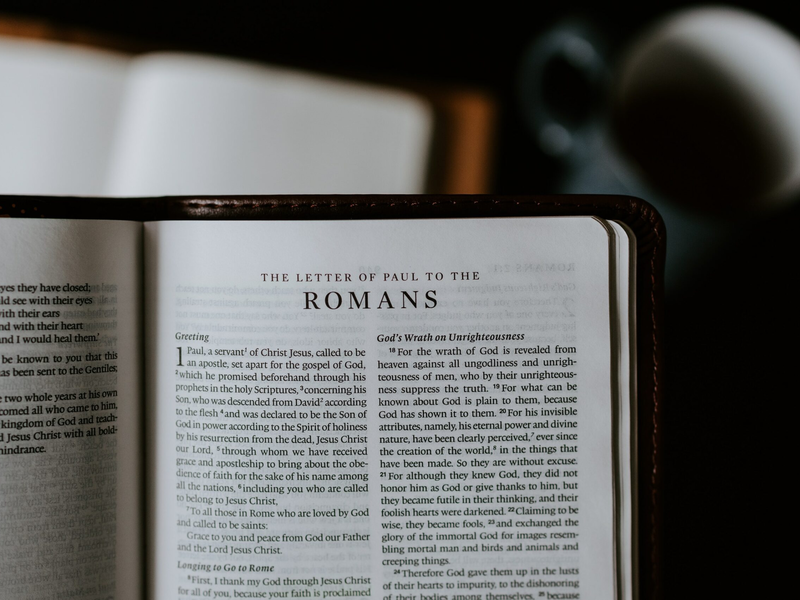
Romans

How is Wrath Revealed?

A large mistake is made in understanding Romans if one assumes that Paul is concerned with proving the fact that no one can ever live without sin—or that all attempts at obeying God’s commands are at least tainted with human sinfulness. The first problem with such an assumption is that…

by Mark HorneJune 5, 2013
chris-bair-ndczc5739ck-unsplash
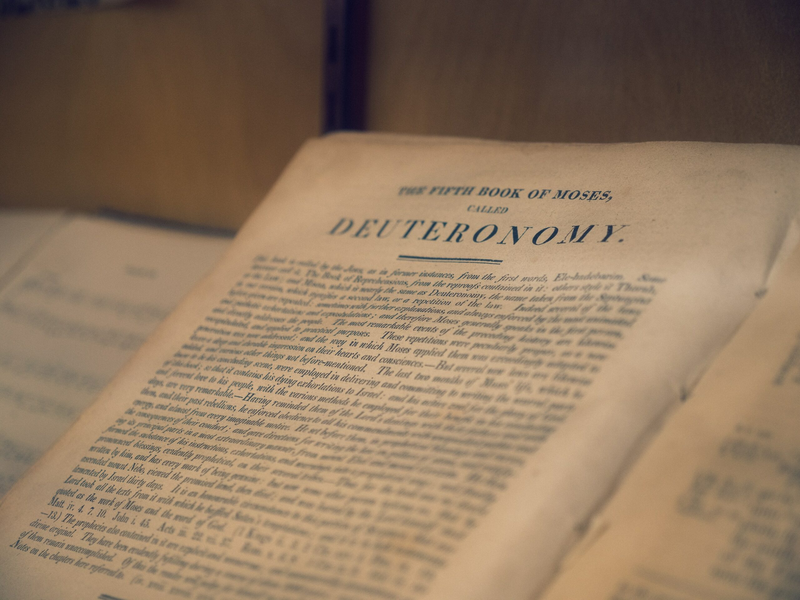
Deuteronomy

The Third Word

This is the second in a series of studies on the Third Word, and especially on the food laws of Deuteronomy 14. In the second part of this series, I argue that Moses’ reworking of the Ten Words in Deuteronomy 5 includes adding nuance to the Third Word. This prepares…

by Ralph Allan SmithJune 3, 2013
yannis-papanastasopoulos-if_29sed7ta-unsplash
Culture

Turning Babel into a Beast

Recent months have brought a lively discussion of Christian participation in the culture war. On the one hand, the pro-life movement appears to be making some slow progress on the abortion issue. The trial of abortionist and serial murderer Kermit Gosnell has the potential to awaken those who are nominally…

by Joe RigneyMay 29, 2013

Showing page 193 of 309

See all
See all

Contra Faustum, I

As is well known from Confessions , Faustus played a crucial role in Augustine’s formation. As a young Manichean Auditor and devotee of astrology, Augustine puzzled over philosophical and quasi-scientific conundrums that he wanted to pose to a Manichean master. When Bishop Faustus visited Carthage, Augustine found him affable, humble,…

May 13, 2015

Contra Faustum, II

Though Augustine had the arsenal of the contra Iudaeos tradition at hand in responding to Faustus, he had become dissatisfied with it. After his debate with Fortunatus the Manichean, Augustine had embarked on a deep study of Paul and Genesis and came to recognize the weaknesses of this tradition, whose…

May 13, 2015

Contra Faustum, III

When Augustine turns to the typology of unclean foods in his reply to Faustus, he introduces a linguistic analogy that lays a foundation for the later arguments. Paul’s claim that all things are clean (1 Timothy 4:4) does not contradict the Old Testament, since Paul is talking about the nature…

May 13, 2015

Un-Creation

Revelation 12-14 roughly follows the sequence of the first half of the week of creation. The overall movement is from heaven to sea to earth. Genesis 1 begins with light, then the separation of waters above and below, the formation of sea and land. We can be more specific. Land…

May 12, 2015

Machen and the Monkeys

In The Dome of Eden , Stephen Webb wonders what might have happened if J. Gresham Machen, Princeton theologian and founder of Westminster Theological Seminary, had been at the Scopes trial. In Webb's account, Machen's main concern was to challenge the naturalistic presumptions of Darwinism: “Machen never rejected the basic…

May 12, 2015

Liquid life

In Purity Rabbinic Judaism (46), Jacob Neusner comments on the role of liquidity in the purity system: “Dry inanimate objects or food are not susceptible to uncleanness. What is wet is susceptible. So liquids activate the system.” A dead animal on a pile of grain contaminates only the grain that…

May 12, 2015

Showing page 427 of 2212

Browse by Category

In Medias Res

Your weekly digest for all things Theopolis.

Donate

Theopolis is nearly 100% donor-supported. Consider joining us on our mission.