Theopolis Logo

Writing

Explore our collection of theological essays, biblical studies, and reflections on faith and culture.

See all
tanner-mardis-xuxghzhibn4-unsplash-1-2
Biblical Studies

Tweets-turned-Notes on the Bible’s Chronology

Summary In what follows, I will consider the “year-stamps” employed in Scripture, i.e., statements of the form, “Such-and-such an event took place in the Xth year of Y.” In the process, I will suggest some ways in which the Biblical narrative might relate to events in the extra-Biblical world, though…

by James BejonJuly 16, 2019
durer-prodigal-son-2
Luke

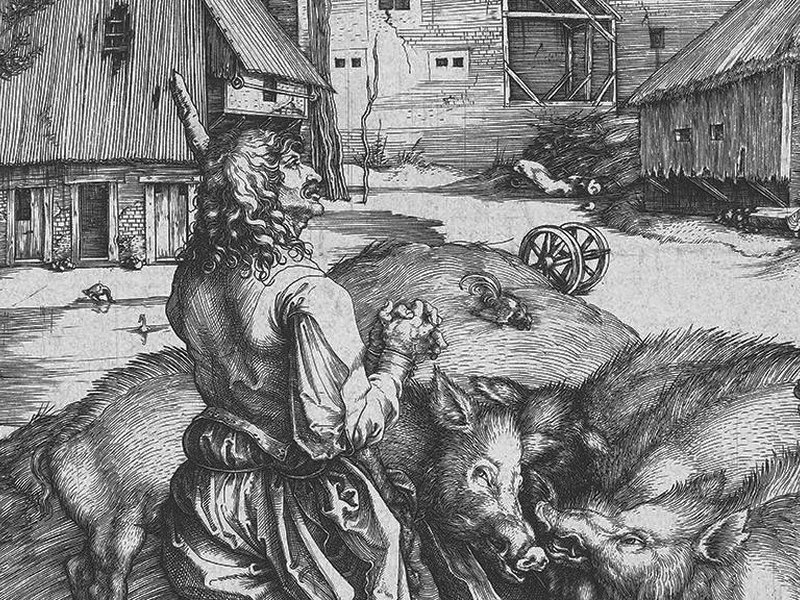
Perspectives on the Prodigal, (Part 2)

In the first essay on the parable of the Prodigal Son, I suggested that the problems commentators and others encounter in interpreting Jesus three-part parable are not accidental. These are not just problems in our ignorance of cultural background. They are intentional features of the stories —stories designed to poke…

by Ralph Allan SmithJuly 11, 2019
durer-prodigal-son-2
Luke

Perspectives on the Prodigal, (Part 1)

The story of the Prodigal Son is perhaps the most well-known story in the Bible. As others have observed, it may also be one of the most misunderstood. In two short essays, I will point out features of this story that are commonly neglected, aspects of Jesus’ parable that might…

by Ralph Allan SmithJuly 9, 2019
de-rijke-man-en-de-arme-lazarus-by-jacopo-da-ponte-16th-century
Luke

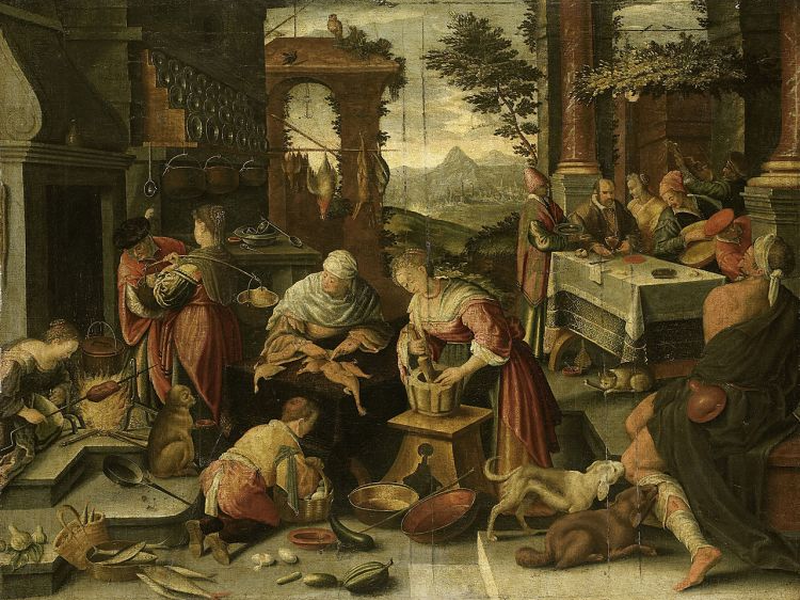
Lazarus and the Rich Man

The parable of Lazarus and the nameless rich man is not an independent story. It is part of a long context that begins in Luke 15:1, where Jesus is eating with tax collectors and sinners and the scribes and Pharisees grumble. In response to their hardheartedness, Jesus tells a three-part…

by Ralph Allan SmithJuly 4, 2019
aaron-burden-uynrnfdkjwg-unsplash
Luke

Everybody has Dropsy - Luke 14:1-24

The Bible is written so that even when a reader cannot pick up on what might be deeper or more detailed aspects of a text, there is virtually always a message to be heard. In the ancient world, where the “reader” of Scripture would likely be a church official facing…

by Ralph Allan SmithJuly 2, 2019
communion
Biblical Theology

Fruit Trees and Grain Plants

The distinction between garden (or vineyard) and field begins in Genesis 2. This relates to the ordering of the formless world. Plants of the field are contrasted with the garden planted by God in Genesis 2:5&8. Later on, under the Old Covenant the Israelites will be required to keep their…

by James B. JordanJune 27, 2019

Showing page 77 of 309

See all
See all

Commodification and Community

Commodification is a three step dance, according to John McKnight and Peter Block ( Abundant Community ). It begins by identifying a human condition; it redescribes the condition as a problem that can be fixed; and then it sells the fix (39). The fix gets reduced to elements and then…

September 27, 2018

Adam and Israel

I don't agree with Seth Postell's fundamental thesis in Adam as Israel . He states the thesis as follows: "when understood as the introduction to the Torah and the Tanakh as a whole, Genesis 1-3 intentionally foreshadows Israel's failure to keep the Sinai Covenant as well as their exile from…

September 26, 2018

Josiah's Sabbath

The Chronicler carefully lays out the chronology of Josiah's reign (2 Chronicles 34-35). 1)Becomes king at age of 8 (34:1). 2) In the eighth year of his reign, at age 16, Josiah begins to seek God (34:3). 3) In the twelfth year of his reign, at age 20, Josiah begins…

September 25, 2018

Great Awokening

Bo and Ben Winegard analyze today's "Great Awokening" as a religious movement. They deploy the categories of sacredness and purity, priestly privilege, sin, atonement, and absolution to explain "Wokeness" as a religious movement and a status system. They admit to that "many of their moral concerns are entirely legitimate," but…

September 24, 2018

A Thousand From Each Tribe

Here's a connection I missed in my commentary on Revelation. One of hundreds. In Numbers 31, the Lord instructs Moses to take vengeance on the Midianites. The vengeance is for the attack by the Balak of Moab, who joined the Midianites in attacking Israel. Initially, they tried to hire the…

September 19, 2018

The Social, Wholes, and Structuralism

In a chapter in The Social in Question , Bruno Latour summarizes the work of 19 th -century sociology Gabriel Tarde. Latour is particularly interested in the anti-structuralist import of Tarde’s social metaphysics and anthropology. Tarde writes, for instance, “In general, there is more logic in a sentence than in…

September 19, 2018

Showing page 58 of 2212

Browse by Category

In Medias Res

Your weekly digest for all things Theopolis.

Donate

Theopolis is nearly 100% donor-supported. Consider joining us on our mission.