Theopolis Logo

Writing

Explore our collection of theological essays, biblical studies, and reflections on faith and culture.

See all
tanner-mardis-xuxghzhibn4-unsplash-1-2
Biblical Studies

Tweets-turned-Notes on the Bible’s Chronology

Summary In what follows, I will consider the “year-stamps” employed in Scripture, i.e., statements of the form, “Such-and-such an event took place in the Xth year of Y.” In the process, I will suggest some ways in which the Biblical narrative might relate to events in the extra-Biblical world, though…

by James BejonJuly 16, 2019
durer-prodigal-son-2
Luke

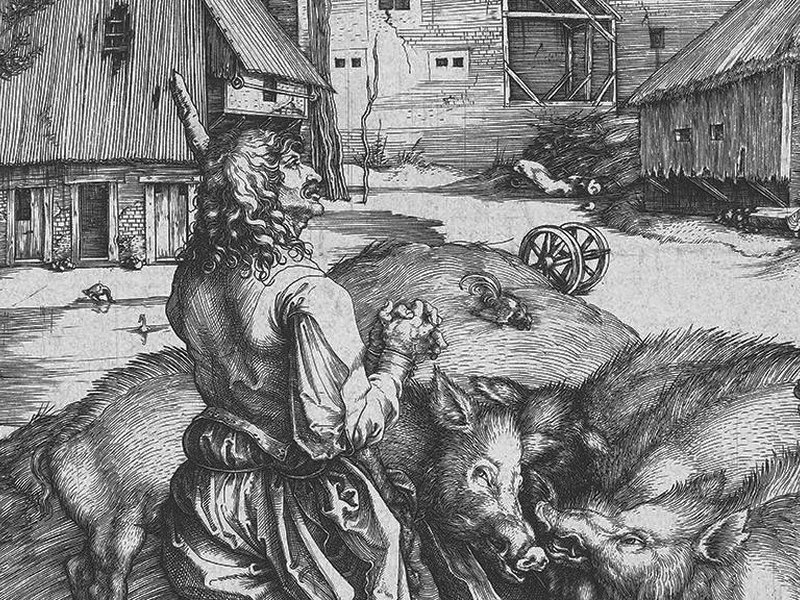
Perspectives on the Prodigal, (Part 2)

In the first essay on the parable of the Prodigal Son, I suggested that the problems commentators and others encounter in interpreting Jesus three-part parable are not accidental. These are not just problems in our ignorance of cultural background. They are intentional features of the stories —stories designed to poke…

by Ralph Allan SmithJuly 11, 2019
durer-prodigal-son-2
Luke

Perspectives on the Prodigal, (Part 1)

The story of the Prodigal Son is perhaps the most well-known story in the Bible. As others have observed, it may also be one of the most misunderstood. In two short essays, I will point out features of this story that are commonly neglected, aspects of Jesus’ parable that might…

by Ralph Allan SmithJuly 9, 2019
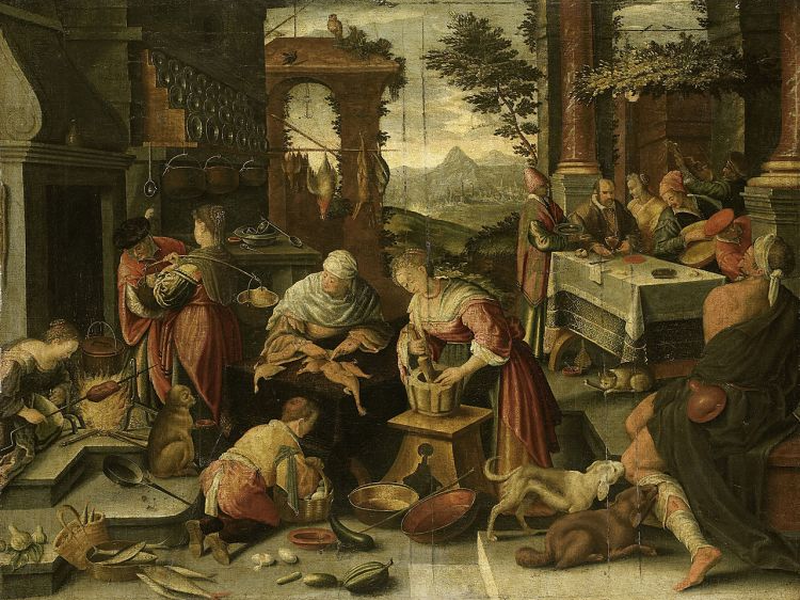
de-rijke-man-en-de-arme-lazarus-by-jacopo-da-ponte-16th-century
Luke

Lazarus and the Rich Man

The parable of Lazarus and the nameless rich man is not an independent story. It is part of a long context that begins in Luke 15:1, where Jesus is eating with tax collectors and sinners and the scribes and Pharisees grumble. In response to their hardheartedness, Jesus tells a three-part…

by Ralph Allan SmithJuly 4, 2019
aaron-burden-uynrnfdkjwg-unsplash
Luke

Everybody has Dropsy - Luke 14:1-24

The Bible is written so that even when a reader cannot pick up on what might be deeper or more detailed aspects of a text, there is virtually always a message to be heard. In the ancient world, where the “reader” of Scripture would likely be a church official facing…

by Ralph Allan SmithJuly 2, 2019
communion
Biblical Theology

Fruit Trees and Grain Plants

The distinction between garden (or vineyard) and field begins in Genesis 2. This relates to the ordering of the formless world. Plants of the field are contrasted with the garden planted by God in Genesis 2:5&8. Later on, under the Old Covenant the Israelites will be required to keep their…

by James B. JordanJune 27, 2019

Showing page 77 of 309

See all
See all

Lost World

The fifth commandment – Honor your father and your mother – is a counter-cultural demand. Many in our time live according to the 1960s maxim, Question authority. It’s apparently an authoritative command, and it applies in the family as well as everywhere else. But the counter-cultural character of this commandment…

August 7, 2018

Consecrating the Sabbath

English translations typically say that Israel remembers the Sabbath to “ keep it holy.” That implies that the day is already holy, and that Israel maintains its holiness by ceasing. That is true; Israel’s consecration of the day depends on Yahweh’s prior consecration of the day (v. 11). In some…

August 6, 2018

Memorialize the Sabbath

The Fourth Word begins with: “Memorialize the day of ceasing to sanctify it.” I’m using the verb “memorialize” or “commemorate” rather than “remember.” It’s not a command to “call to mind.” Of course, Israel isn’t to forget. But it wouldn’t be enough for Israel to call the Sabbath to mind…

August 2, 2018

Scroll and Trumpets

Reading Revelation 6-7, we might unthinkingly assume that four horsemen, the martyrs, the sealing of the 144,000 are things contained in the book. That can’t be true. This is a scroll, and you can’t read the contents of a sealed scroll until all of the seals have been opened. The…

August 1, 2018

Serving the Ground

The Lord curses Cain in Genesis 4:12: "When you serve ( avad ) the ground ( adamah ), it will not give ( natan ) its strength ( koach ) to you." Invert that, and we have a fair summary of God's blessing, and a mini theology of the natural…

July 31, 2018

Sons of Noah

In his 1876 letter in Fors Clavigera , Ruskin muses on the import of the sons of Ham. Mizraim, Phut, and Sion represent three African powers and three natural environments, the watered plain, the desert, and the sea. Each also represents a certain stage of human development: "A. Egypt is…

July 30, 2018

Showing page 63 of 2212

Browse by Category

In Medias Res

Your weekly digest for all things Theopolis.

Donate

Theopolis is nearly 100% donor-supported. Consider joining us on our mission.