Theopolis Logo

Writing

Explore our collection of theological essays, biblical studies, and reflections on faith and culture.

See all
tanner-mardis-xuxghzhibn4-unsplash-1-2
Biblical Studies

Tweets-turned-Notes on the Bible’s Chronology

Summary In what follows, I will consider the “year-stamps” employed in Scripture, i.e., statements of the form, “Such-and-such an event took place in the Xth year of Y.” In the process, I will suggest some ways in which the Biblical narrative might relate to events in the extra-Biblical world, though…

by James BejonJuly 16, 2019
durer-prodigal-son-2
Luke

Perspectives on the Prodigal, (Part 2)

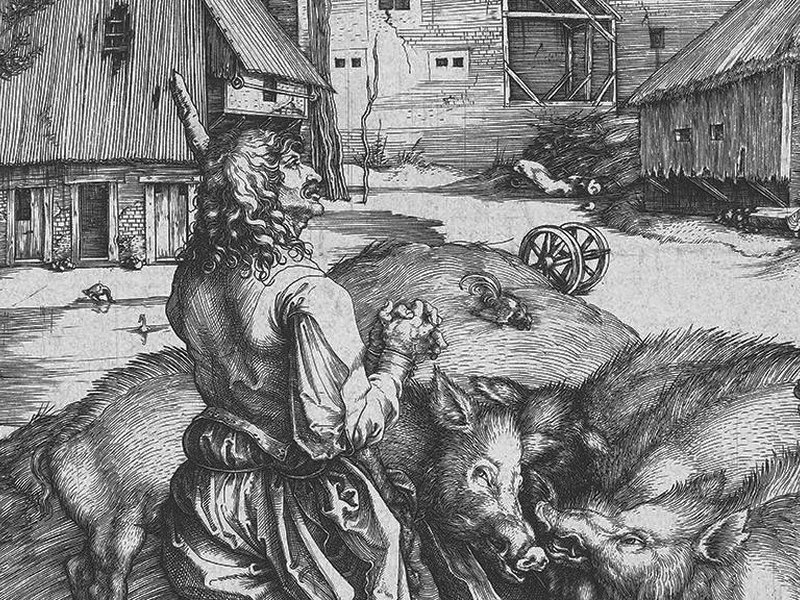
In the first essay on the parable of the Prodigal Son, I suggested that the problems commentators and others encounter in interpreting Jesus three-part parable are not accidental. These are not just problems in our ignorance of cultural background. They are intentional features of the stories —stories designed to poke…

by Ralph Allan SmithJuly 11, 2019
durer-prodigal-son-2
Luke

Perspectives on the Prodigal, (Part 1)

The story of the Prodigal Son is perhaps the most well-known story in the Bible. As others have observed, it may also be one of the most misunderstood. In two short essays, I will point out features of this story that are commonly neglected, aspects of Jesus’ parable that might…

by Ralph Allan SmithJuly 9, 2019
de-rijke-man-en-de-arme-lazarus-by-jacopo-da-ponte-16th-century
Luke

Lazarus and the Rich Man

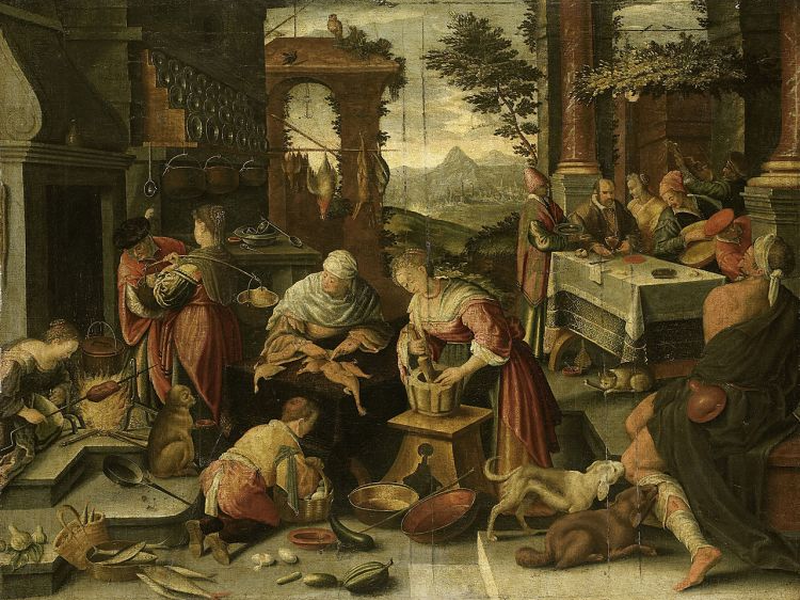
The parable of Lazarus and the nameless rich man is not an independent story. It is part of a long context that begins in Luke 15:1, where Jesus is eating with tax collectors and sinners and the scribes and Pharisees grumble. In response to their hardheartedness, Jesus tells a three-part…

by Ralph Allan SmithJuly 4, 2019
aaron-burden-uynrnfdkjwg-unsplash
Luke

Everybody has Dropsy - Luke 14:1-24

The Bible is written so that even when a reader cannot pick up on what might be deeper or more detailed aspects of a text, there is virtually always a message to be heard. In the ancient world, where the “reader” of Scripture would likely be a church official facing…

by Ralph Allan SmithJuly 2, 2019
communion
Biblical Theology

Fruit Trees and Grain Plants

The distinction between garden (or vineyard) and field begins in Genesis 2. This relates to the ordering of the formless world. Plants of the field are contrasted with the garden planted by God in Genesis 2:5&8. Later on, under the Old Covenant the Israelites will be required to keep their…

by James B. JordanJune 27, 2019

Showing page 77 of 309

See all
See all

Structure of Ezekiel 1-24

Thomas Renz ( Rhetorical Function of the Book of Ezekiel) argues that "The first twenty-four chapters of the book present a loosely structured movement in cycles with ever greater involvement of the readers." Each cycle is "marked by a narrative portion which includes either a date (1:1-3) or a notice…

June 18, 2018

Blasphemy in the Camp

Recent commentators on Leviticus have emphasized the “ mixed” character of the blasphemer in chapter 24. He's the son of an Israelite mother and an Egyptian father. While acknowledging the importance of that feature of the story, Leigh Trevaskis thinks that the emphasis should be placed on the location of…

June 15, 2018

Person v. Mode of Being

Barth and Rahner both rejected using "person" to describe the Father, Son, and Spirit, opting instead of a translation of the Cappadocian phrase tropoi hyparxeos , three "modes of being" or "manners of subsistence." William Hasker ( Metaphysics and the Tri-Personal God , 93-94)wonders what payoff they hope to gain,…

June 14, 2018

Machiavellian "Realism"

Pierre Manent offers a needed corrective to glib modern talk about Machiavelli's "realism" ( An Intellectual History of Liberalism ). He acknowledges that "in political 'reality' there are murders, conspiracies, coups d'etat." But that's not the whole story: "there are also periods and regimes without murders, or conspiracies, or coups…

June 13, 2018

Christ Our Hope

Christian hope has a Eucharistic shape, and Eucharistic hope is hope in Christ. Our hope is in Christ (1 Corinthians 15:19; Ephesians 1:12). Christ in us is the hope of glory (Colossians 1:27). Christ’s resurrection is the target of Abrahamic faith, he who hoped against hope for resurrection, for new…

June 12, 2018

Feast of Hope

The Eucharist is a feast of faith; it is a love feast. It also embodies the third theological virtue. Hope is inherent to the Eucharist. In Luke’s account of the Last Supper, Jesus calls attention to the future reality of which the Supper is a sign. He expresses his desire…

June 11, 2018

Showing page 68 of 2212

Browse by Category

In Medias Res

Your weekly digest for all things Theopolis.

Donate

Theopolis is nearly 100% donor-supported. Consider joining us on our mission.