Theopolis Logo

Writing

Explore our collection of theological essays, biblical studies, and reflections on faith and culture.

See all
cloister

Gatekeepers

1 Chronicles 9:1 seems to bring the genealogies of 1 Chronicles to an end. The Chronicler has recorded the genealogy of the human race from Adam, focusing on the descendants of Abraham through Jacob. Summing it all up, he says, “So all Israel was enrolled by genealogies; and behold, they…

by Peter LeithartJune 21, 2016
trinity-1-2
Trinity

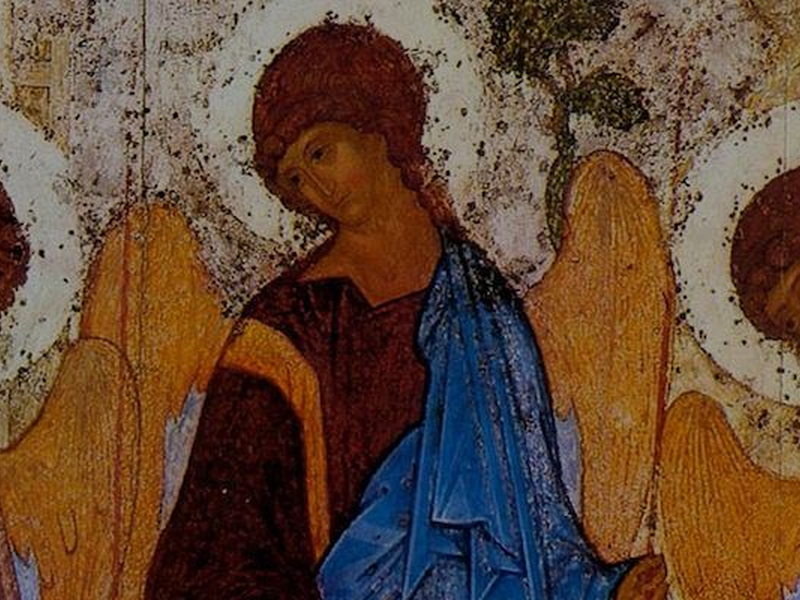
Are the Divine Persons Persons?

The “personalist” understanding of the Trinity, articulated most influentially in the work of John Zizioulas, has fallen on hard times. Recent scholars have attacked Zizioulas’s idea that Cappadocian Trinitarianism represented an ontological revolution, hammering on the distinction between divine and human personhood. Michel Barnes’s conclusion is the most drastic of…

by Peter LeithartJune 16, 2016
img_4660-2
Architecture

On Biblical Theology

Biblical Theology is often defined as the historical unfolding of God’s revelation, or of God’s revelation and of the history of his covenantal redemption and transformation of humanity and the world. In practice, Biblical Theology is usually broader than this, and also includes the study of literary structure and of…

by James B. JordanJune 14, 2016
laughing_statue_by_xxbobbiie-d5f0meh-2
Humor

Wise Laughter

We are made to be happy. Created to enter into the eternal joy of God, our whole being inclines to that end, but the fallen world has put forth barriers and by our own sin we bar ourselves from that endless delight, and death blinds us to that reality. Yet…

by Remy WilkinsJune 7, 2016
img_7664
Liturgy

Why Theopolis? Take Two

At the end of Revelation, John sees the heavenly city descending to earth. The city shines with the brilliance of God's glory, which lightens the nations, so that kings bring their glory to the city. This is not a vision of the final new heaven and new earth. It's a…

by Peter LeithartJune 2, 2016
trinity-1-2
Attributes of God

How Can We Talk About God?

“No one has ever seen God,” writes John (John 1:18). If this is the case, then how can we speak about God? Some people say we actually cannot. Or at least we cannot speak about God positively, i.e. who He is. We can only say who or what God is…

by Bogumil JarmulakMay 31, 2016

Showing page 130 of 309

See all
See all

Dante's Journey

In the course of a review of Vittorio Montemaggi's Reading Dante's Commedia as Theology , Rowan Williams offers these observations on Inferno and Purgatorio : "There is still a tendency among not very attentive readers – not to mention people who have read almost nothing of the work but have…

September 29, 2017
kelly-sikkema-ggs0_g6wi-i-unsplash
Liturgy

The World Needs the Liturgy

"God's work in history," writes Mark Searle ( Liturgy Made Simple ), "is to gather into one the scattered children of God, to overcome divisions, to provide a place for the homeless and the lonely, to give support to those whose burdens are heavy, and to create an oasis of…

September 29, 2017

Christian Historicism

John Milbank argues in his Beyond Secular Order that " historicism cannot straightforwardly be considered as something specifically modern" (8). In fact, it originates from a Christian insight: "the sense of estranged distance from the past is initially the fruit of the Christian contrast between old and new covenants and…

September 29, 2017

No Thucydides Trap

Last week, I wrote a Firstthings.com column summarizing the argument of Graham Allison's Destined for War , a study of Sino-American relations organized around the concept of the "Thucydides Trap." Allison says that the ancient Greek historian claimed that Athens and Sparta went to war because Sparta was fearful of…

September 29, 2017
Eucharist

Bodies Renewed by Christ's Body

Christine Chaillot has a fascinating summary of the liturgical traditions of the "Ancient Oriental Churches" (Egyptian, Ethiopian, Syrian, Assyrian, Indian) in The Oxford History of Christian Worship . She quotes this Eucharistic hymn from the fifth-century Saint Yazdin (p. 164): "Strengthen, O our Lord, the hands which reach out and…

September 29, 2017

Do Human Beings Create?

In ST I, 45, 5, Thomas Aquinas asks whether God alone creates. His sed contra cites Augustine’s de Trinitate (3.8), where Augustine says that angels cannot create anything. If angels cannot, Thomas reasons, neither can any other creature. He presents several arguments in favor of this conclusion. Creation is, Thomas…

September 28, 2017

Showing page 139 of 2212

Browse by Category

In Medias Res

Your weekly digest for all things Theopolis.

Donate

Theopolis is nearly 100% donor-supported. Consider joining us on our mission.