Theopolis Logo

Writing

Explore our collection of theological essays, biblical studies, and reflections on faith and culture.

See all
31-03-0213
Hermeneutics

Apocalyptic Eyes

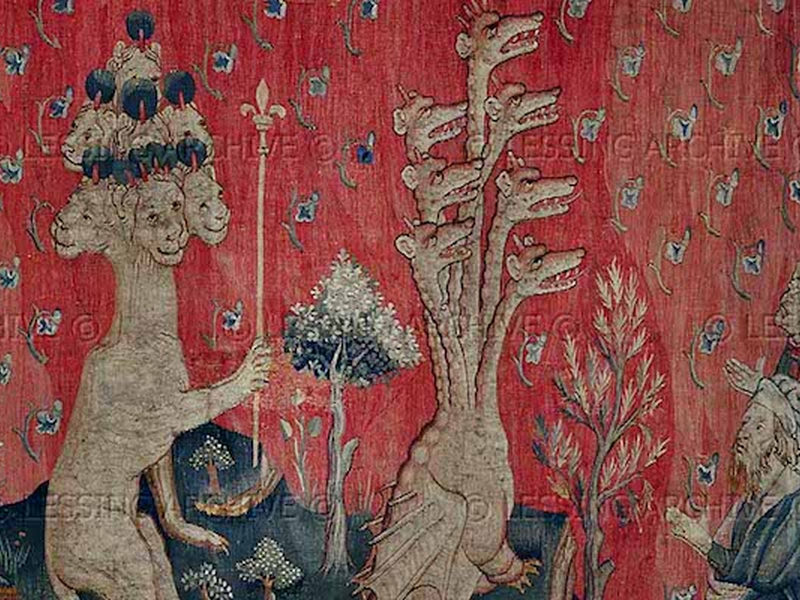
Flying scrolls. Red horses. Beasts coming out of the sea. Winged women. The list goes on. Apocalyptic literature in the Bible is like a cross between science fiction and Marvel comics. And the Bible has a fair bit of this sort of thing. Daniel sees visions in Babylon, Zechariah sees…

by Toby SumpterNovember 4, 2014

bhm-skyline-2
Theopolis News

New Name, New Look

Trinity House Institute has taken a new name, the Theopolis Institute. This striking new name expresses our unique vision and mission and captures the unified purpose behind all our specific programs and activities. We still have Bible, liturgy, and culture in our tagline. We still offer the same courses on…

by TheopolisNovember 4, 2014
istock_000012860926small
Atonement

Not Fearing the Devil

Adam Kotsko offers a socio-political variation on the Christus Victor atonement theory in his 2010 study, The Politics of Redemption: The Social Logic of Salvation . He does this by explaining "the devil" in terms of the Hegelian concept of "objective spirit," Geist . As Kotsko puts it, Geist "refers…

by Peter LeithartOctober 13, 2014
jez-timms-8muutamcwu4-unsplash
Leviticus

The Meaning of Sacrifice

Two factors keep Nahtali Meshel from discussing the meaning of sacrifice until late in his The "Grammar" of Sacrifice . The first has to do with the texts he draws from: "P says little about the meaning of its rituals" (174). The other has to do with the grammatical theory…

by Peter LeithartOctober 8, 2014
jez-timms-8muutamcwu4-unsplash
Leviticus

Praxemics

Chapter 5 of Naphtali Meshel's The "Grammar" of Sacrifice focuses on "praxemics," the physical actions of sacrificial ritual. Praxemes are constituted by six elements: an "atomact," an elementary physical act or gesture; an actor; an object that is acted up; a target for the action and often for the object…

by Peter LeithartOctober 6, 2014
markus-winkler-aid-xyrtlec-unsplash
Leviticus

Jugation and Hierarchy

Two chapters of Naphtali Meshel’s The “Grammar” of Sacrifice cover what he calls “jugation” and “hierarchies.” The first involves the addition of other materials to an animal offering. Jugates include wine, cereal, and oil that are added to the animals (zoemes) that are offered in sacrifice. Some jugates are coordinated…

by Peter LeithartOctober 1, 2014

Showing page 167 of 309

See all
See all
Gratitude

What Is Thanks? Daily Eucharist

We can fill out Paul's exhortation to give thanks for all things in all circumstances concretely by bringing it more explicitly into connection with the liturgy of the todah and the Eucharist. Giving thanks is a pattern of acknowledgement, recital, memorial, and feast. Or: we give thanks when we take,…

September 14, 2017

What Is Thanks? Eucharist in the Church

The combined sacrificial-verbal todah (thank offering) carries over directly into the Christian Supper. The main elements of the ancient Israelite rite are present, either in the New Testament or in very early post-apostolic celebrations of the Eucharist. 1) Jesus instructs his disciples to “do this” – not only to eat…

September 13, 2017

What Is Thanks? Rite and Speech Act

Most English translations introduce the terminology of “thanks” in of Leviticus, as a translation of todah (Lev 7:11-15), a noun derived from yadah . In the Levitical system, todah does not refer to emotions or verbal expressions of gratitude but to a sacrificial ritual, a specific form of the peace…

September 12, 2017

Walking In Light

The following is an excerpt from my commentary on 1-3 John, From Behind the Veil . The chapter division in our Bibles does not follow the flow of John’s argument in 1 John, which slips past the end of chapter 1 and flows into the beginning of chapter 2. The…

September 12, 2017
Gratitude

What Is Thanks? A Name

“What is thanks?” Scripture answers that thanks is neither an emotion nor a virtue. [1] It is accompanied by emotions, and as we get to the New Testament it broadens to become a tone or stance of life, something like a meta-virtue. Fundamentally, thanks is a name, a ritual, and…

September 11, 2017

Capitalism and Community

Brian Jones argues that defenses of capitalism are anthropologically thin. They "need a more humane anthropology, sensitive to man’s social and communal nature, lest they forget to ask the crucial question of what economics is for." He cites a 2002 article from the American Spectator to illustrate the reductive character…

September 8, 2017

Showing page 145 of 2212

Browse by Category

In Medias Res

Your weekly digest for all things Theopolis.

Donate

Theopolis is nearly 100% donor-supported. Consider joining us on our mission.