Theopolis Logo

Writing

Explore our collection of theological essays, biblical studies, and reflections on faith and culture.

See all
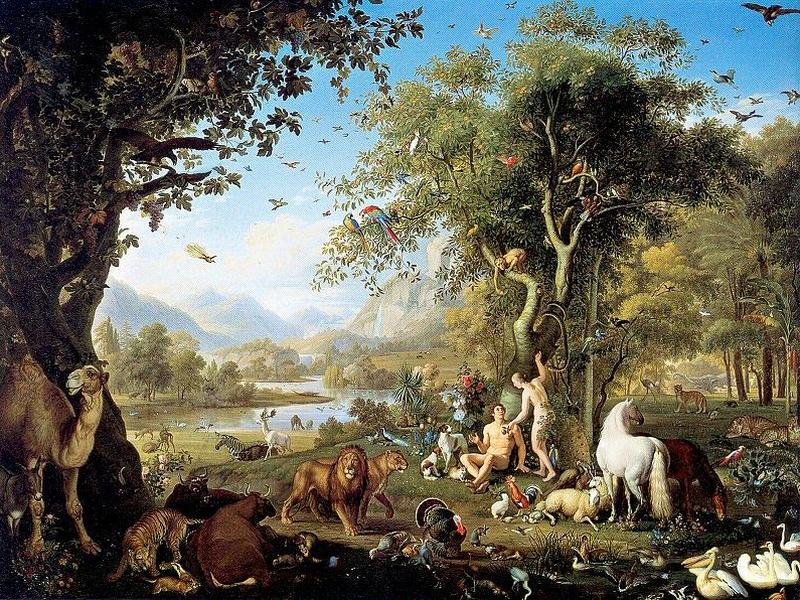
adam-and-eve-in-the-garden-of-eden-wenzel-peter
American Culture

John MacArthur, Like Adam, Blames the Woman | Part 3 |Alienation Between Man and Woman

In the previous part of this series , we showed how the serpent, through Adam’s failure to protect his bride and her subsequent deception, alienated man from woman. It’s difficult to overstate the consequences of man’s disobedience: disregarding God's commands begins to break down the order which He created. God…

by Jerry BowyerJanuary 21, 2020

adam-and-eve-in-the-garden-of-eden-wenzel-peter
Biblical Studies

John MacArthur, Like Adam, Blames the Woman | Part 2 | What Was Adam Supposed to Guard?

In the first part of this series , we showed that God declared that the division between man and woman would be “not good.” There was a division between heaven and earth, which, in contrast to the rest of the creation account, is conspicuously not described as “good,” and there…

by Jerry BowyerJanuary 16, 2020
adam-and-eve-in-the-garden-of-eden-wenzel-peter
Biblical Studies

John MacArthur, Like Adam, Blames the Woman (Part 1)

The evangelical community is caught in a controversy between one of its most influential members, pastor John MacArthur, and one of its rising stars, Beth Moore. For those who haven’t been following this fight, here’s the summary: Beth Moore is a well-known public teacher and author on the Bible. MacArthur,…

by Jerry BowyerJanuary 14, 2020
francischan_hdv
Eucharist

The Eucharist is Making Francis Chan More Reformed, Not Less

When one of the most famous personalities of the “young, restless, reformed” world starts sounding like an emissary from Vatican City, #BigEva social media takes note. That’s what happened this week when a sermon clip surfaced of Francis Chan hinting at his evolving view of the eucharist: “I didn't know…

by Dustin MesserJanuary 8, 2020
belle-hunt-f7gwmd4ceve-unsplash-3
Luke

More Than Leaves: Luke’s Take on the Fig Tree

All of the Gospels have a story about a fig tree. Not just parables, actually. There are those, too, when Jesus uses illustrations having to do with fig trees. But there are accounts of actual events having to do with fig trees in all four Gospels. Matthew has given the…

by Eric RobinsonJanuary 7, 2020
star-wars-rise-skywalker-ending-explained
Biblical Theology

Star Wars and the Typological Imagination

I. Introduction With the final installment of the sequel trilogy complete, it’s fair to say that Star Wars fans are, and evermore will be, a house divided. The sequels have split opinion since they were announced. The chief accusation has perhaps been that they amount to little more than nostalgia—not…

by Rhys LavertyDecember 24, 2019

Showing page 71 of 309

See all
See all

Exegetical progress

If the fathers have already explained the Scriptures, Andrew of St. Victor asked, why do I need to? He answered that truth dwells “deep” and “screens herself from mortal sight.” There is always more truth to dig up because truth “hides, yet so as never wholly to be hidden. Careful…

April 4, 2007
Literature

Jane Austen, Economist

England’s economy in Austen’s time was still dominated by land ownership. Land was the most settled and permanent form of wealth, and writers like Coleridge and Burke asserted that landownership formed a “natural” governing class that had a physical stake in the nation. In 1710, Parliament enacted property qualifications for…

April 4, 2007
History

Equality and fashion

In 1767, one N. Foster wrote, “In England the several ranks of men slide into each other almost imperceptibly, and a spirit of equality runs through every part of their constitution. Hence arises a strong emulation in all the several stations and conditions to vie with each other; and the…

April 3, 2007
History

Consumer revolution

In the 1982 symposium, The Birh of a Consumer Society , Neil McKendrick identifies some of the chief features of the demand-side of the social and economic of the 18th century. What did it mean for England to become a “consumer society”? 1. More people than ever could acquire material…

April 3, 2007
History

Mimetic adverts

Samuel Johnson recognized the character of avertising quite early. he noted in 1761 that “advertisements are now so numerous that they are very negligently perused, and it is therefore become necessary to gain attention by magnificence of promises and by eloquence sometimes sublime and sometimes pathetic.” And he saw that…

April 3, 2007
History

Early advertising

Seen in the advertising section of many 18th-century English newspapers: “a fine young breast of milk willing to enter a gentleman’s household.” Presumably attached to a wet nurse. And an advertisement for a bed that “at the head . . . in the full centre front, appears sparkling with electrical…

April 3, 2007

Showing page 1697 of 2212

Browse by Category

In Medias Res

Your weekly digest for all things Theopolis.

Donate

Theopolis is nearly 100% donor-supported. Consider joining us on our mission.