Theopolis Logo

Writing

Explore our collection of theological essays, biblical studies, and reflections on faith and culture.

See all
tanner-mardis-xuxghzhibn4-unsplash-1-2
Biblical Studies

Tweets-turned-Notes on the Bible’s Chronology

Summary In what follows, I will consider the “year-stamps” employed in Scripture, i.e., statements of the form, “Such-and-such an event took place in the Xth year of Y.” In the process, I will suggest some ways in which the Biblical narrative might relate to events in the extra-Biblical world, though…

by James BejonJuly 16, 2019
durer-prodigal-son-2
Luke

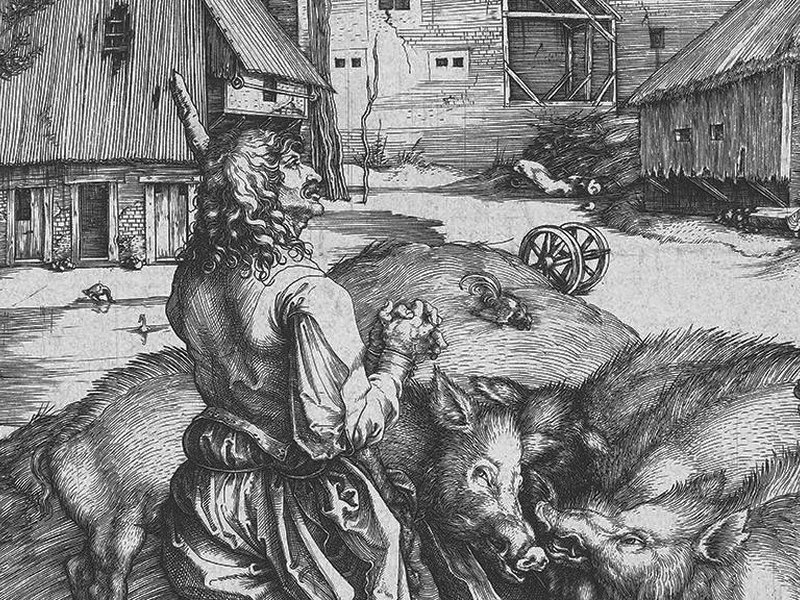
Perspectives on the Prodigal, (Part 2)

In the first essay on the parable of the Prodigal Son, I suggested that the problems commentators and others encounter in interpreting Jesus three-part parable are not accidental. These are not just problems in our ignorance of cultural background. They are intentional features of the stories —stories designed to poke…

by Ralph Allan SmithJuly 11, 2019
durer-prodigal-son-2
Luke

Perspectives on the Prodigal, (Part 1)

The story of the Prodigal Son is perhaps the most well-known story in the Bible. As others have observed, it may also be one of the most misunderstood. In two short essays, I will point out features of this story that are commonly neglected, aspects of Jesus’ parable that might…

by Ralph Allan SmithJuly 9, 2019
de-rijke-man-en-de-arme-lazarus-by-jacopo-da-ponte-16th-century
Luke

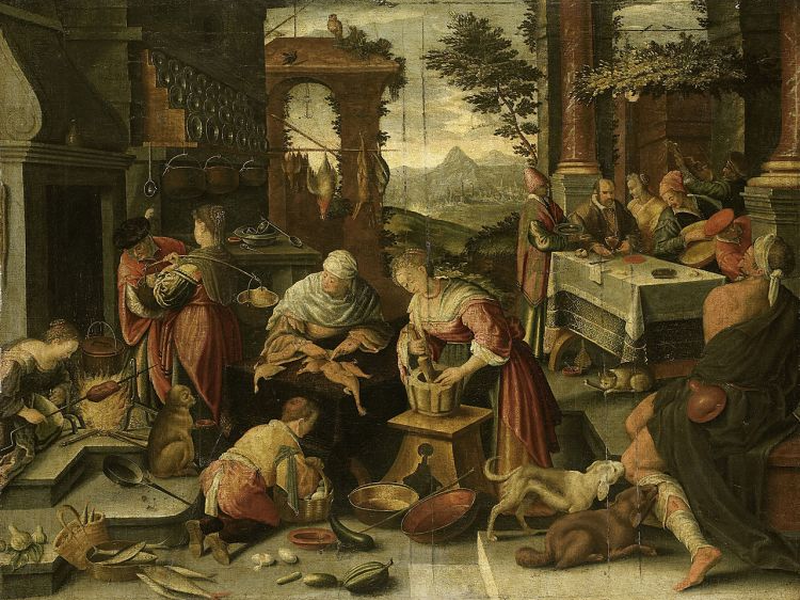
Lazarus and the Rich Man

The parable of Lazarus and the nameless rich man is not an independent story. It is part of a long context that begins in Luke 15:1, where Jesus is eating with tax collectors and sinners and the scribes and Pharisees grumble. In response to their hardheartedness, Jesus tells a three-part…

by Ralph Allan SmithJuly 4, 2019
aaron-burden-uynrnfdkjwg-unsplash
Luke

Everybody has Dropsy - Luke 14:1-24

The Bible is written so that even when a reader cannot pick up on what might be deeper or more detailed aspects of a text, there is virtually always a message to be heard. In the ancient world, where the “reader” of Scripture would likely be a church official facing…

by Ralph Allan SmithJuly 2, 2019
communion
Biblical Theology

Fruit Trees and Grain Plants

The distinction between garden (or vineyard) and field begins in Genesis 2. This relates to the ordering of the formless world. Plants of the field are contrasted with the garden planted by God in Genesis 2:5&8. Later on, under the Old Covenant the Israelites will be required to keep their…

by James B. JordanJune 27, 2019

Showing page 77 of 309

See all
See all
Creation

Universal Harmony

I n the course of a discussion of the “harmony” of the economy of grace, the great English Puritan John Owen remarks on the incomprehensible universal harmony of creation ( Doctrine of Justification by Faith , 55) : There is a harmony, a suitableness of one thing unto another, in…

June 23, 2017
Jane Austen

Dear Jane

W e may think that Jane Austen has only recently entered pop culture consciousness. We'd be wrong. Devoney Looser's The Making of Jane Austen traces Austen's fortunes between 1833, when her novels were republished, and 1975, the bicentenary of her birth. Looser examines book illustrations, dramatizations of the plays, political…

June 23, 2017

Beatitude

A s the title suggests, Jonathan Pennington's The Sermon on the Mount and Human Flourishing sees the Sermon on the Mount as Jesus' instruction in a way of virtue and wisdom that leads to flourishing. As Pennington puts it, “Jesus provides in the Sermon a Christocentric, flourishing-oriented, kingdom-awaiting, eschatological wisdom…

June 23, 2017

Genealogy of Rights

I n The Sacredness of the Person , Hans Joas offers an “affirmative genealogy” of the notion of human rights. He traces the historical origins of the concept not, in Nietzchean fashion, to debunk, but to validate. Isolating the origins of a set of cultural values or practices need not,…

June 23, 2017

Ally of Convenience

D avid Goldman argues that Trump sent “a clear message to America’s Muslim clients in Saudi Arabia: No more double games with non-state actors will be tolerated.” The double games have been going on a long time: “Saudi royal family members are funding every radical madrassa in Asia, including those…

June 22, 2017

Sources of “Justification”

I n Paul's letters, the verb “justify” (Gr. dikaioo ) means “acquit, judge favorably,” with overtones of forgiveness and reconciliation. It has an invariably positive meaning. Paul didn't learn to use “justify” that way from ancient or contemporary Greek. As James Prothro explains in a 2016 article, outside the Septuagint…

June 21, 2017

Showing page 170 of 2212

Browse by Category

In Medias Res

Your weekly digest for all things Theopolis.

Donate

Theopolis is nearly 100% donor-supported. Consider joining us on our mission.