Theopolis Logo

Writing

Explore our collection of theological essays, biblical studies, and reflections on faith and culture.

See all
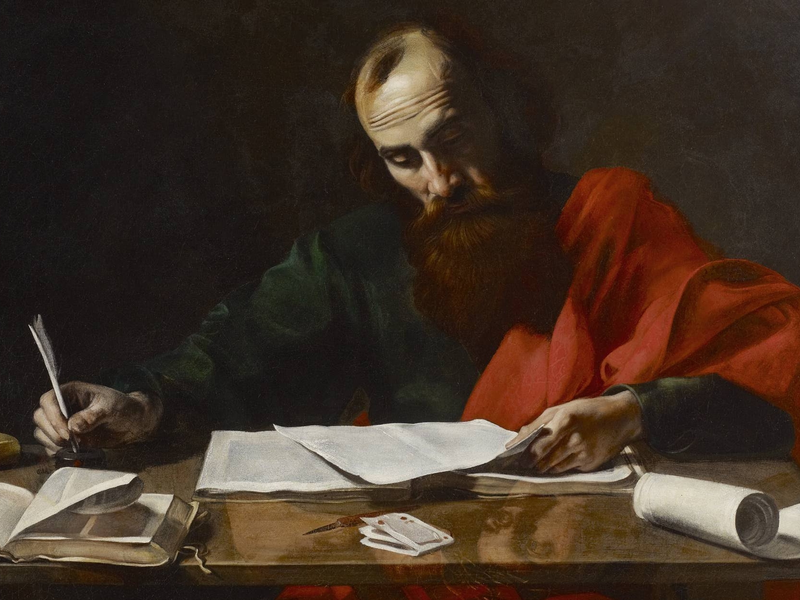
13071-probablyvalentindeboulogne-saintpaulwritinghi-1
1 Corinthians

The Great Exchange: Understanding Second Corinthians 5.21

He made Him who knew no sin to be sin on our behalf, that we might become the righteousness of God in Him. My argument is simple: What Paul means in writing the quotation above in context is the same as what he was telling the Ephesians when he wrote,…

by Mark HorneJune 7, 2004

ben-white-w8qqn1pmqh0-unsplash
Biblical Theology

What is Biblical Theology (Part 3) : The Art of Biblical Theology

THE ART OF BIBLICAL THEOLOGY IN PRACTICE: INTERTEXTUALITY AND TWO PAULINE CASE STUDIES The Art of Biblical Theology: Intertextuality Biblical Theology is really an art. Like other skills of this sort, it is not a matter of following rules (though there are certainly guidelines and techniques). Rather, it’s matter of…

by Rich LuskJune 6, 2004
malcolm-lightbody-tc2f02iq8le-unsplash
Biblical Theology

What is Biblical Theology: (Part 2) The Christotelic Spiral

Click HERE for Part 1 Reading Christotelically Jesus Christ is the heart of God’s plan for creation and history. There is no “hidden plan” or “hidden God” lurking behind Christ; rather, in and through Christ God has revealed himself and his intentions towards the world. In Christ, the Father has…

by Rich LuskJune 6, 2004
aaron-burden-qjdzyt_k8xg-unsplash
Biblical Studies

What is Biblical Theology? (Part 1)

STORY THEOLOGY AND A THEOLOGY OF STORY Defining Biblical Theology What is Biblical Theology? How does it compare to other ways of doing theology, such as Systematic Theology? Geerhardus Vos suggested that whereas Biblical Theology draws a line, Systematic Theology draws a circle. That is to say, Biblical Theology is…

by Rich LuskJune 6, 2004
screenshot-2023-09-21-at-3-59-23-pm
Hebrews

Living by His Faith: Some Rough Thoughts on the Faithfulness of Christ

The gospels strongly imply Jesus lived by faith in the promise of his heavenly Father. How else can his prayer life understood? How else could he have wrestled through the Gethsemane experience? How else could he have committed himself into his Father’s care at death? How could Jesus have presented…

by Rich LuskJune 6, 2004
sixteen-miles-out-al48tflf4e8-unsplash
John

John 3:16

John 3:16 is probably best-known, or at least, best-liked Bible passage in North America: “For God so loved the world, that he gave his only Son, that whoever believes in him should not perish but have eternal life.” This declaration of God’s love of the whole world is greatly comforting…

by Mark HorneJune 6, 2004

Showing page 223 of 309

See all
See all

By the Spirit

Paul says that one can only say “Jesus is Lord” by the Spirit (1 Corinthians 12:3). He adds later in the same chapter that we are incorporated into the body, the one-and-many body of the visible church, by “one Spirit” (12:13). Surely Paul exaggerates. Anybody can say Jesus is Lord.…

February 22, 2007

Righteousness by faith

ERH sees faith not as a “religious” issue but as one of the driving forces of history. All revolutions begin in faith, and the faith that drives historical change is a faith that is reckoned as justice: “Faith is a belief in things unseen; it goes against hope, it defies…

February 22, 2007
History

American Revolution

Was the American Revolution a Revolution? ERH concludes it was a “half-revolution” rather than a total revolution on the scale of the Russian, French, Puritan, Reformation, and Papal revolutions. Evaluating the revolutionary character of the American Revolution rests partly on the question of what “revolution” meant to the participants. ERH…

February 22, 2007

Liturgical uniformity

To outsiders, the Roman Catholic church appears to have a uniform liturgical tradition, of long standing. Rosenstock-Huessy points out that the uniformity of the Mass is a rather late development. During the 19th century, “the movement of Solesmes united all the churches of the Catholic world by introducing the Roman…

February 22, 2007

Receiving brothers

Within two verses, John accuses Diotrephes of refusing to “receive us” and refusing to “receive the brethren” (3 John 9-10). The first refers to an acknowledgement of authority; receiving “us,” the elder and his co-workers, would mean listening and obeying. The second refers to hospitality; receiving the brothers means welcoming…

February 22, 2007

In manner of God

John commends Gaius not only for receiving traveling brothers but for sending them on their way “in a manner worthy of God” (3 John 6). What does this mean? Stott is certainly right to say that they are to be treated as servants of God. But John’s language is more…

February 22, 2007

Showing page 1713 of 2212

Browse by Category

In Medias Res

Your weekly digest for all things Theopolis.

Donate

Theopolis is nearly 100% donor-supported. Consider joining us on our mission.