Theopolis Logo

Writing

Explore our collection of theological essays, biblical studies, and reflections on faith and culture.

See all
e99a9334
Advent

Stretching Christmas

For many people Christmas comes on December 25 and is over December 26. The tree is taken down along with the lights and the other decorations, and everyone begins setting the house in order for the new year. No more Christmas hymns. No more celebrations (well, until New Year’s Eve).…

by Steve WilkinsDecember 24, 2016
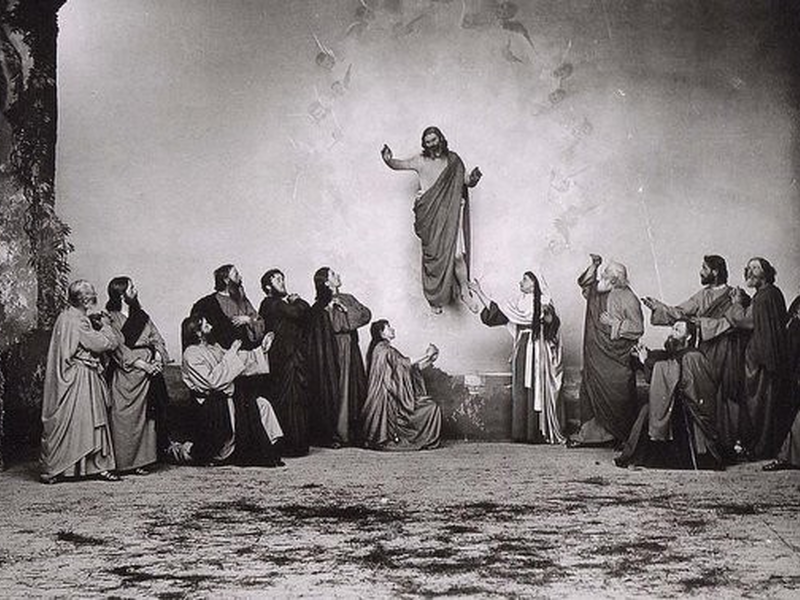
ascension
Advent

Ascension and Incarnation

The Ascension and the Incarnation should not be disconnected in our Christmas thinking or celebrations. As N.T. Wright notes, the ascension is "a central and vital feature without which all sorts of other things start to go demonstrably wrong. . . . where the ascension has been ignored or misunderstood,…

by Roy AtwoodDecember 23, 2016
nativity-rembrandt
Advent

Christmas Light

“In the Word was life, and the life was the light of men. And the light shines in the darkness.” Thus John describes the incarnation of the Son. He comes as the living and life-giving light of the world. That’s good news. In the beginning, God spoke and light shone…

by Peter LeithartDecember 23, 2016
nativity-chagall
Advent

The Spirit of Christmas

Christmas is all about Jesus. The angels announce Jesus’ birth, shepherds and wise men come to see Jesus, Herod wants to kill Jesus. We occasionally think of the Father who sent the Son, but we keep returning to the Son made flesh in Bethlehem’s manger. Meanwhile, as always, the Spirit…

by Peter LeithartDecember 22, 2016
nativity
Advent

The Humility of God

Christmas is about many things, but one of the chief things revealed in the gospel of Christmas is the humility of God. We don't often think of humility as an attribute of God. If God is glorious and exalted, we think, He must be haughty and proud and self-centered. We…

by Peter LeithartDecember 21, 2016
screenshot-2025-12-15-at-8-35-45-am
Advent

Advent of Unity

John famously begins his Gospel with a piece of theology: “In the beginning was the Word, and the Word was with God, and the Word was God.” Matthew starts with a genealogy. John celebrates Advent with a hymn, Matthew with a list. For John, Jesus is the Word of creation…

by Peter LeithartDecember 20, 2016

Showing page 120 of 309

See all
See all
History

Foucault’s eschatology

Berman offers this very sharp summary of Foucault’s work, whom he says is “about the only writer of the past decade who has had anything substantial to say about modernity” (Berman is writing in 1982). Then: “what he has to say is an endless, excruciating series of variations on the…

November 5, 2006
History

Flattened modernity

In the introduction to his All That Is Solid Melts Into Air , Marshall Berman argues that nineteenth century critics of modernity had a much richer grasp of the costs and promise of modernity than do twentieth century observers. Modern life is, Rousseau said, a whirlwind ( le tourbillon social…

November 5, 2006
History

Religious Liberty and the Whig Interpretation

The following is a portion of a lecture at the NSA disputatio. WHIGGISH HISTORY The Whigs were of course a loose British political alliance, the predecessor of today’s Liberal Democrats. The term was first applied, interestingly, to the Scottish Covenanters who marched on Edinburgh in 1648, and then to the…

November 3, 2006
American Religion

Innocent abroad

In a recent issue of TNR , Alan Wolfe reviewed David Kuo’s book telling the story of his service in the current Bush administration. Kuo worked in the office of faith-based initiatives, and though he left the administration he still praises Bush because of his Christian testimony. What strikes Wolfe…

November 3, 2006
History

World Cities again

Thinking again about Mike Featherstone’s comments on the fact that multiculturalism developed first in Southern Hemisphere cities (quoted in a post from September 2006), it strikes me that one of the dynamics of the current global situation is a reversal of colonialism. That’s true in the sense that Featherstone notes…

November 2, 2006
History

Mass culture

The point of theories of “mass culture” is not so much the “mass” as the “culture.” Goods and services may be distributed to a large number of people in economies where what is called “mass culture” doesn’t exist. When theorists use the phrase, they want to emphasize the fact that…

November 2, 2006

Showing page 1771 of 2212

Browse by Category

In Medias Res

Your weekly digest for all things Theopolis.

Donate

Theopolis is nearly 100% donor-supported. Consider joining us on our mission.