Theopolis Logo

Writing

Explore our collection of theological essays, biblical studies, and reflections on faith and culture.

See all
rembrandt-main
Art

The Second Word V: On Images and Art, Part 3

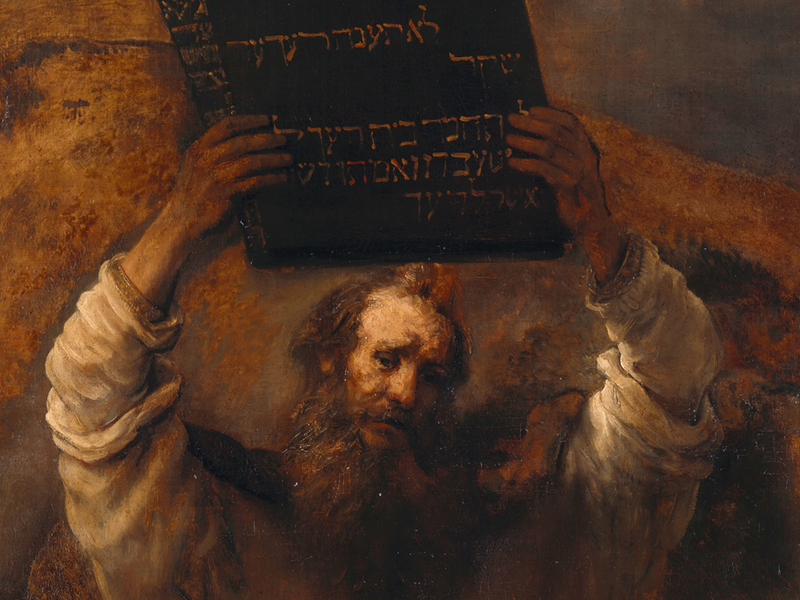
The Failure of the Church Yet a third factor played an important role in this historical development, in addition to the imperial adoption of icons and the rise of the icons of the holy man. Brown writes: "The great Christian basilicas of the previous centuries tended to stand empty, except…

by James B. JordanSeptember 4, 1998

screenshot-2023-09-11-at-11-34-45-am
Biblical Horizons

Patriarchal Dominion

The three large patriarchal narratives of Genesis concern the three aspects of the cosmos: matter, space, and time. Over these three is man given dominion. Lucifer was originally appointed to train man in this dominion, but he chose to lead man into rebellion instead. Thus, the Angel of Yahweh replaced…

by James B. JordanAugust 4, 1998
trnava-university-beeyeib-am8-unsplash
Biblical Horizons

The Case Against Western Civilization, Part 6

Part 6: Living in a Dying World (continued) The "Trivium" (continued) The five stages of education are simply the five stages of the covenant as God administers it in human life and history, and in the liturgy of covenant renewal: First, God announces Himself. "I am Yahweh Your God." He…

by James B. JordanAugust 4, 1998
screen-shot-2022-05-12-at-12-07-23-pm
Biblical Studies

Re-creation in the Ascension Offering

The following essay is tentative and exploratory, offered for your consideration. It seems to me that the ritual of the Ascension Offering (incorrectly translated as Burnt Offering) of Leviticus 1 is a symbolic recapitulation of Genesis 1, which thereby portrays the sacrificial ritual as way of moving from a fallen…

by James B. JordanJuly 4, 1998
Biblical Horizons

The Framework Hypothesis: A Gnostic Heresy

Just as the vast majority of evangelical Christians in America today are Arminian and Baptist, so the vast majority do not believe in a creation around 4000 BC. I don’t expect any of these three situations to change anytime soon. Powerful presuppositions are at work in all three instances, along…

by James B. JordanJuly 4, 1998
picture-mosaic-cathedral-jesus-christ-cefalu-italy-copy
Art

The Second Word V: On Images and Art, Part 2

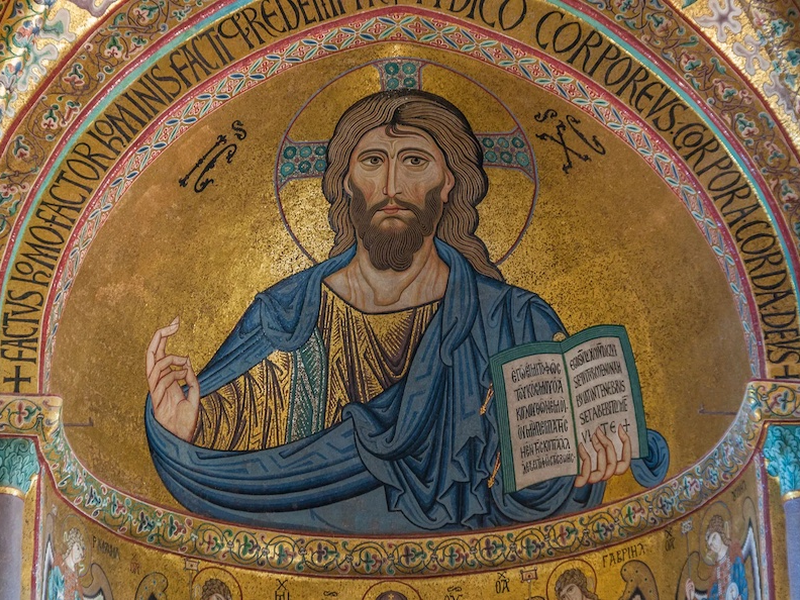
The Iconoclastic Controversy Continuing Pagan Influence How did images creep in? To begin with, there was in the post-Constantinian Church a concerted effort on the part of the semi-pagans to interpret Christianity in essentially pantheistic terms. The heretics put God and man on a continuum of "being," so that God…

by James B. JordanJuly 4, 1998

Showing page 248 of 309

See all
See all
Philosophy

Continental v. analytic

Continuing through Simon Critchley’s book on Continental philosophy, the following analogy seems to capture some aspects of the contrast of Continental and analytic: Continental is Catholic: conscious of tradition, respectful of saints, aware of historical contextualization. Philosophy is the history of philosophy. Analytic is Protestant: deals with de-contextualized philosophical problems,…

September 14, 2006
History

Modernist postmoderns

Postmodern critics of modernity sometimes treat the latter not only as the pursuit and ambition for totality; they treat it as a totality, as an undifferentiated whole. But if postmoderns are right, even modernity was fragmented and frayed at the edges, and the appearance of totality is a modernist ruse.…

September 13, 2006
History

Modernity and dirt

A subsidiary thesis: Modernity is motivated by a desire for purity, by dirt-avoidance - dirt being, as Mary Douglas says, “matter out of place.” Counter-modernity is dirt’s revenge, celebration of dirt.

September 13, 2006
History

Modernity as court culture

Featherstone once again. He points out that sometime in the 18th century, upper class culture divided from lower class culture: “in 1500 the educated strata despised the common people although they shared their culture. Yet by 1800 their descendants had ceased to join spontaneously in popular culture and were rediscovering…

September 13, 2006
History

Romantic ethic and Consumption

In his 1987 book, The Romantic Ethic and the Spirit of Modern Consumerism , C. Campbell attempts to explain the origins of contemporary obsession with novelty, pleasure in the new, self-expression through consumption of goods. He traces it to romanticism’s focus on “imagination, fantasy, mysticism, creativity and emotional exploration” (Featherstone’s…

September 13, 2006
History

Consumption, Body, and the Sacred

A couple of further notes from Featherstone’s very stimulating book. First, citing Pierre Bourdieu, he notes the limits of seeing consumption as an isolated marker of status. The signs “that betray a person’s origins and trajectory through life are manifest in body shape, size, weight, stance, walk, demeanour, tone of…

September 13, 2006

Showing page 1794 of 2212

Browse by Category

In Medias Res

Your weekly digest for all things Theopolis.

Donate

Theopolis is nearly 100% donor-supported. Consider joining us on our mission.