Theopolis Logo

Writing

Explore our collection of theological essays, biblical studies, and reflections on faith and culture.

See all
cain-killing-abel-unknown-19th-century
Biblical Horizons

The Servant of the Ground

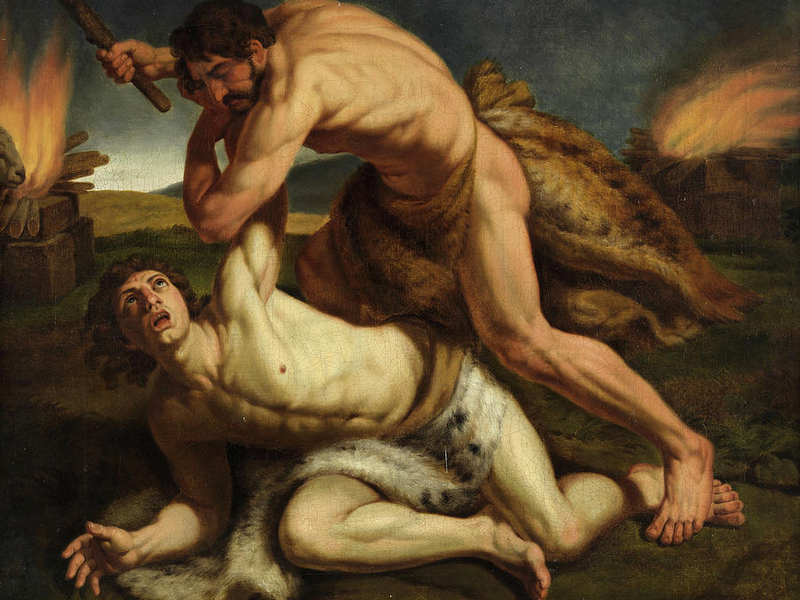
Why was Abel’s offering approved and Cain’s rejected? This question has been debated for many centuries. Some have argued that Cain’s offering was rejected because it was not a bloody offering; others that Cain’s offering was rejected because it was not from the firstfruits; others that Cain’s offering was rejected…

by Peter LeithartSeptember 19, 1990

timothy-eberly-djj49s6ud2o-unsplash
Luke

The Unjust Steward Revisited

Last year I had occasion to work through the book of Luke as I did some work for one of my editorial clients, and this year my pastor has been preaching through Luke. Thus, I have twice been reminded of the Parable of the Unjust Steward (Luke 16:1-13), a parable…

by James B. JordanSeptember 2, 1990
alfons-morales-ylswjsy7stw-unsplash-1
Biblical Chronology

The Mysterious Numbers of Edwin R. Thiele

We come now to what some have called the "Gordian Knot" of Biblical chronology: the period of the kings of Israel and Judah. We do not have a summary figure that tells exactly how long this period of time was. The book of Kings provides the years each king reigned,…

by James B. JordanSeptember 2, 1990
screen-shot-2022-02-22-at-11-59-32-am
Matthew

Additional Reflections on the Dew of Hermon

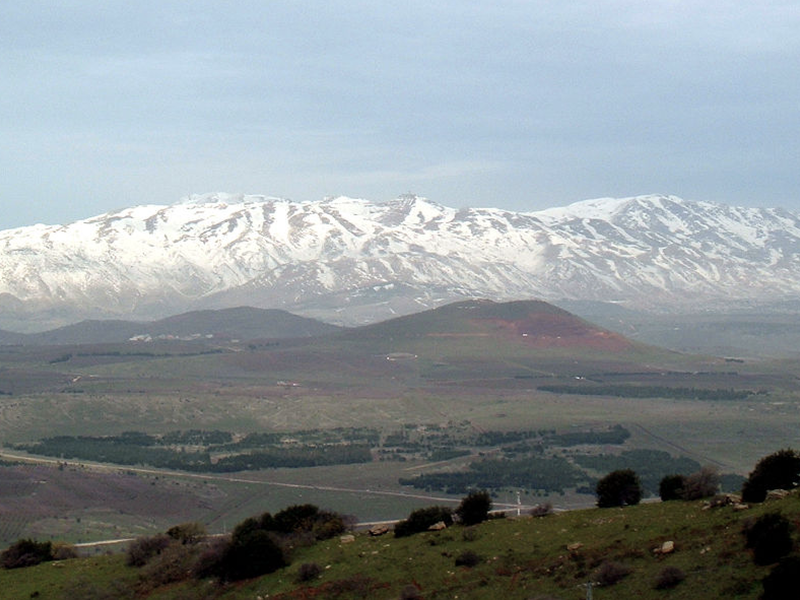
In an earlier article , while examining the biblical symbolism of dew, I noted the parallel in Psalm 133 between the dew upon Mount Hermon and the oil poured upon the head of Aaron. Both the dew of Hermon and the oil of ordination are compared to the pleasantness of…

by Peter LeithartAugust 19, 1990
screen-shot-2021-07-15-at-9-01-42-am
Biblical Horizons

Cornelius van der Waal, "The Covenantal Gospel"

The Covenantal Gospel was the last book written by the remarkable South African theologian and exegete Cornelius van der Waal. Two other works of van der Waal’s have been translated: Hal Lindsey and Biblical Prophecy , and Search the Scriptures . Because this book was written in 1979, it does…

by James B. JordanAugust 2, 1990
biljana-martinic-igj_21drt3g-unsplash
Beer

The Evangelical Cocaine Lobby

A year or so ago, my wife and I were invited to a Christian school in order to preview a film on drug abuse that was going to be shown to our children. One of the children in this film turned out, of course, to be using drugs. This child’s…

by James B. JordanAugust 2, 1990

Showing page 302 of 309

See all
See all
Philosophy

Continental v. analytic

Continuing through Simon Critchley’s book on Continental philosophy, the following analogy seems to capture some aspects of the contrast of Continental and analytic: Continental is Catholic: conscious of tradition, respectful of saints, aware of historical contextualization. Philosophy is the history of philosophy. Analytic is Protestant: deals with de-contextualized philosophical problems,…

September 14, 2006
History

Modernist postmoderns

Postmodern critics of modernity sometimes treat the latter not only as the pursuit and ambition for totality; they treat it as a totality, as an undifferentiated whole. But if postmoderns are right, even modernity was fragmented and frayed at the edges, and the appearance of totality is a modernist ruse.…

September 13, 2006
History

Modernity and dirt

A subsidiary thesis: Modernity is motivated by a desire for purity, by dirt-avoidance - dirt being, as Mary Douglas says, “matter out of place.” Counter-modernity is dirt’s revenge, celebration of dirt.

September 13, 2006
History

Modernity as court culture

Featherstone once again. He points out that sometime in the 18th century, upper class culture divided from lower class culture: “in 1500 the educated strata despised the common people although they shared their culture. Yet by 1800 their descendants had ceased to join spontaneously in popular culture and were rediscovering…

September 13, 2006
History

Romantic ethic and Consumption

In his 1987 book, The Romantic Ethic and the Spirit of Modern Consumerism , C. Campbell attempts to explain the origins of contemporary obsession with novelty, pleasure in the new, self-expression through consumption of goods. He traces it to romanticism’s focus on “imagination, fantasy, mysticism, creativity and emotional exploration” (Featherstone’s…

September 13, 2006
History

Consumption, Body, and the Sacred

A couple of further notes from Featherstone’s very stimulating book. First, citing Pierre Bourdieu, he notes the limits of seeing consumption as an isolated marker of status. The signs “that betray a person’s origins and trajectory through life are manifest in body shape, size, weight, stance, walk, demeanour, tone of…

September 13, 2006

Showing page 1794 of 2212

Browse by Category

In Medias Res

Your weekly digest for all things Theopolis.

Donate

Theopolis is nearly 100% donor-supported. Consider joining us on our mission.