Theopolis Logo

Writing

Explore our collection of theological essays, biblical studies, and reflections on faith and culture.

See all
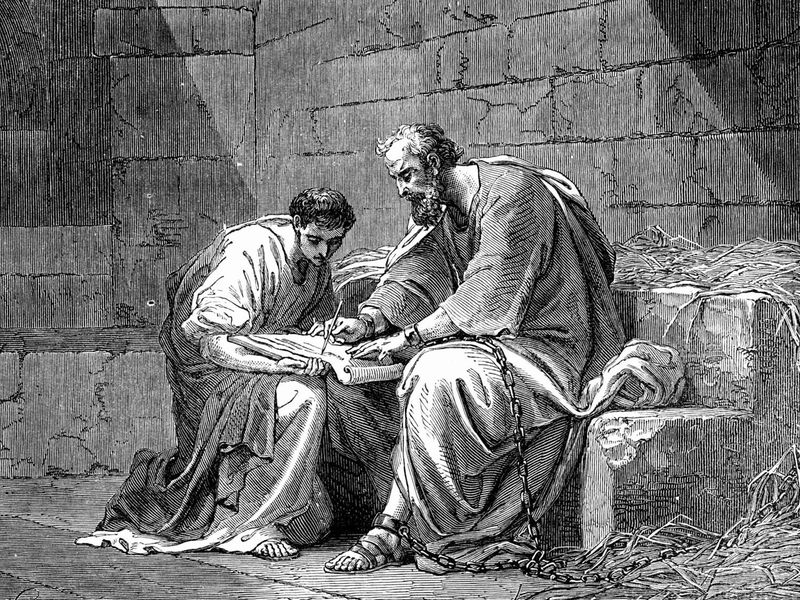
paul-the-apostle-epistle-prison-ephesians-2
Apostle Paul

Paul in Prison: Ephesus or Rome?

In the books of 1 and 2 Corinthians, Paul refers to hardships in his ministry in Asia, specifically Ephesus (1 Corinthians 4:9-13; 15:32; 2 Corinthians 1:8; 4:8-12; 6:4-5; 11:23-25). However, the multiple imprisonments Paul mentions are not fully reflected in Luke’s account of Paul’s ministry — Luke only records a…

by Ralph Allan SmithFebruary 15, 2022

steve-johnson-zby6td_nvna-unsplash
Epistemology

Vertical Living

After all these months pondering integration, I have come to the point of believing that the dynamic of integration just is the real at its heart. Everything that is real or comes to be real is a dynamo of integrative coherence. I also believe it is true that the real…

by Esther Lightcap MeekFebruary 1, 2022
i-had-sucked-every-book-009
Books

Tom Holland and the Liberating Power of Christianity

Have you heard of Tom Holland? Not the young Tom Holland of Spiderman fame. No doubt you’ve heard of him. I’m referring to the middle age Oxford-trained historian who recently wrote Dominion: The Making of the Western Mind . (Both Hollands are British, so you’ll be forgiven for confusing them.)…

by Gerald HiestandJanuary 25, 2022
e99a2225
Biblical Horizons

"Do This!"

This article was originally published in 1990. (The essay that follows concerns a rather touchy subject: how the Lord’s Supper is to be done. I am not writing to insult or offend, but to challenge. To that end I have not "held back" but have "gone ahead" and said what…

by James B. JordanJanuary 19, 2022
adam-and-eve-in-the-garden-of-eden-wenzel-peter
American Culture

The Dominion Trap

This article was originally published in 1990. In Genesis One, God told Adam and Eve to "be fruitful and multiply, and fill the earth, and subdue it; and rule over the fish of the sea and over the birds of the heavens, and over every living thing that moves on…

by James B. JordanJanuary 13, 2022
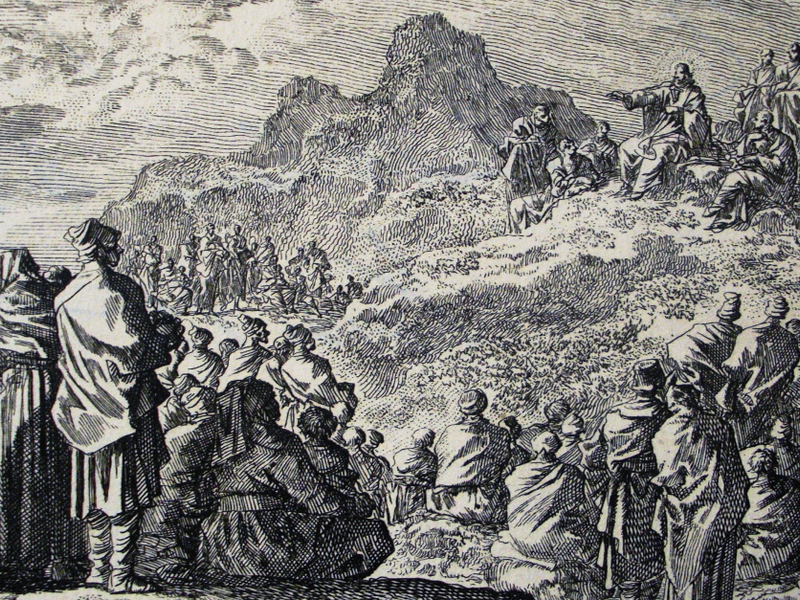
8226-sermon-on-the-mount-painting
Biblical Studies

Will Few Be Saved?

On several occasions the gospels record Jesus teaching that only a few will be saved (Matthew 7:14, Matthew 22:14, and Luke 13:23). Careful readers of Scripture should begin to wrestle with how these passages found in the gospels fit together with other passages that teach that many will be saved…

by Manny LucasJanuary 11, 2022

Showing page 47 of 309

See all
See all
Philosophy

Hermeneutics v. Semiology

According to Michel Foucault, what Marx, Nietzsche, and Freud introduce is an age of interpretation. He develops one of the implications of this by suggesting there is a “fierce war” between semiology and hermeneutics, between treating words as signs and treating them as interpretations. Nietzsche in particular, Foucault claims, develops…

August 26, 2006
Literature

Shakespeare and Bible

Steven Marx’s Shakespeare and the Bible (Oxford, 2000), purports to be the “first book to explore the pattern and significance” of Shakespeare’s biblical allusions. Perhaps. The results are mixed. Each chapter of Marx’s book attempts to show structural, plot, and thematic parallels between a section of Scripture and a play…

August 26, 2006
Literature

Ubiquitous Shakespeare

Exploring Lake Superior in 1840, one Charles W Penny wrote, “We read the Bible I dare say much more than we would have done had we been in Detroit. Shakespeare was duly honoured, as he is every day when we travel. When on the water, some one of the party…

August 26, 2006

Divine Love

The Persons of the Trinity live out an eternal round of self-sacrificing love. If a proof text is needed, John 15 supplies it. 1) Jesus says, “as the Father loved Me, I have also loved you” (v. 9). Jesus’ love for the disciples is modeled on the Father’s for Him.…

August 26, 2006

Queen of the Sciences

John Stuart Mill declared at the beginning of his book on logic that “Logic is the common judge and arbiter of all particulars investigations. It does not undertake to find evidence, but to determine whether it has been found. Logic neither observes, nor invents, nor discovers; it judges.”

August 24, 2006
History

New

Hans Jonas writes in an essay on technological and scientific advance that one of the key cultural shifts in the sixteenth and seventeenth centuries was a, well, new understanding of “new,” and a corresponding revision of traditional ways of thinking about history: “A sign of this spreading mood is the…

August 24, 2006

Showing page 1804 of 2212

Browse by Category

In Medias Res

Your weekly digest for all things Theopolis.

Donate

Theopolis is nearly 100% donor-supported. Consider joining us on our mission.