Theopolis Logo

Writing

Explore our collection of theological essays, biblical studies, and reflections on faith and culture.

See all
banner
Theopolis News

Theopolis Fellows Program Postponed

Since Theopolis began in 2013, we have been aiming for the fall of 2016 as the launch date for our year-long Fellows Program. As it turned out, we had only a handful of applicants, most withdrew for one reason or another (none for lack of interest), and we are left…

by Peter LeithartJuly 6, 2016
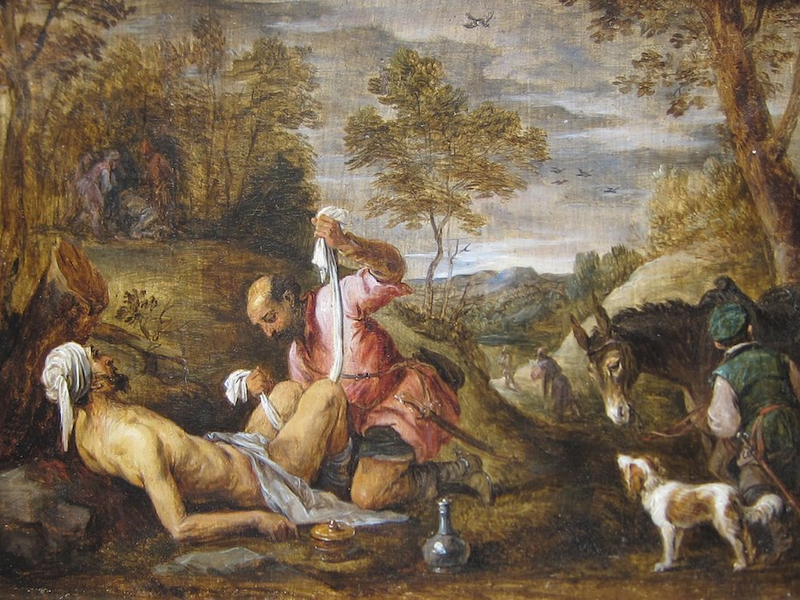
good-samaritan-2
Justice

Aiming at Shalom, (Part 1)

Charles Spurgeon once quipped, “If you give a man the gospel, wrap it in a sandwich. And if you give a man a sandwich, wrap it in the gospel.” With those words, the great Baptist preacher captured the essence of the church’s mission in the world. The church’s mission is…

by Rich LuskJuly 5, 2016
city-heaven
Contentment

Learning Contentment, (Part 2)

This is a continuation of a previous essay by Lindsey Tollefson . 6. We own everything . Sometimes the biggest thing that is keeping us discontent is because we are not happy with what we have been given in material possessions. Especially in the United States it is so easy…

by Lindsey TollefsonJune 30, 2016
medievalilluminatedmanuscript

Do Not Forget

Proverbs 3:1-12 form a section marked off by the reference to the father-son relationship at the beginning and end (vv. 1, 12). Within this section, Solomon gives a series of six commands to his son (vv. 1, 3, 5, 7, 9, 11), the first and the last (vv. 1, 11)…

by Peter LeithartJune 28, 2016
e99a1883
Theopolis News

Year-End Letter

A letter from Theopolis President Peter Leithart as our fiscal year draws to an end . Dear Friend of Theopolis: It was one of those moments when you realize that other people understand you better than you understand yourself. I was having lunch with a pastor friend at a BJ’s…

by TheopolisJune 27, 2016
sky-from-bridge
Contentment

Learning Contentment, (Part 1)

Learning to be content and completely satisfied in Christ is certainly a life-long process and a lesson that we are always learning, and always being tested on. As I am learning and wrestling against discontent, I am always looking for practical and tangible ways to set my course towards joy…

by Lindsey TollefsonJune 23, 2016

Showing page 129 of 309

See all
See all
Philosophy

Descartes’s Double Self

In his history of modern Western views of the self ( The Idea of the Self , Cambridge 2005), Jerrold Seigel offers what he believes is a fresh interpretation of the implications Descartes’s cogito . He asks, Who is the subject, the “I,” implied by the cogito and the sum…

August 12, 2006
History

Reaching back

Bruce Holsinger shows that “postmodern” theory reaches back beyond the modern period to find resources for anti-modern critique in the medieval world. Early modern thinkers made a similar move: Stephen McKnight notes (in a Mars Hill Audio interview) that early modern scientists like Francis Bacons claimed to be recovering an…

August 12, 2006
History

Descartes’s ambitions

Descartes’s original title for Discourse on Method was “Project for a Science that Can Raise our Nature to its Highest Degree of Perfection.” And for a number of years he worked on a treatise in which he “resolved to explain all the phenomena of nature, that is all of physics”…

August 12, 2006
Theology

Not Quite Postmodern

In his very fine, lucid book, Who’s Afraid of Postmodernism? (Baker 2006), James KA Smith notes that many postmodern theologies, especially influenced by Derrida’s apophaticism, are anti-dogmatic: “postmodern religious faith eschews knowledge and therefore also eschews the particularity of dogma and doctrine. In other words, according to this line of…

August 11, 2006

Showing page 1813 of 2212

Browse by Category

In Medias Res

Your weekly digest for all things Theopolis.

Donate

Theopolis is nearly 100% donor-supported. Consider joining us on our mission.