Theopolis Logo

Writing

Explore our collection of theological essays, biblical studies, and reflections on faith and culture.

See all
evangelists
Matthew

Dating Matthew, (Part 1)

When might the Gospel according to Matthew have been written? Of course, any answer can only be speculation, but that does not mean we are reduced to groundless opinion. In this series of articles I point the way to an approach different from the general consensus among scholars today which…

by Ralph Allan SmithNovember 22, 2016

hebrew-manuscript-3
Hermeneutics

Synopticity, (Part 2)

In my first essay on “synopticity” I offered a rather rough definition of the phenomenon and important, though not exhaustive examples. In this essay, I want to introduce broader aspects of the phenomenon of “synopticity.” The first example that I have in mind is conventional stories, stories of different historical…

by Ralph Allan SmithNovember 17, 2016
screen-shot-2016-03-31-at-9-32-11-am
Ascension

Brexit and the Binding of Satan, Part 4

Since the judgment of Babel was followed by the initiation of the circumcision, the impending end of the circumcision in AD70 explains the significance of the first century miracle of foreign tongues. Except for a few Aramaic “teasers” in the book of Daniel, the Word of God was monolingual and…

by Mike BullNovember 15, 2016
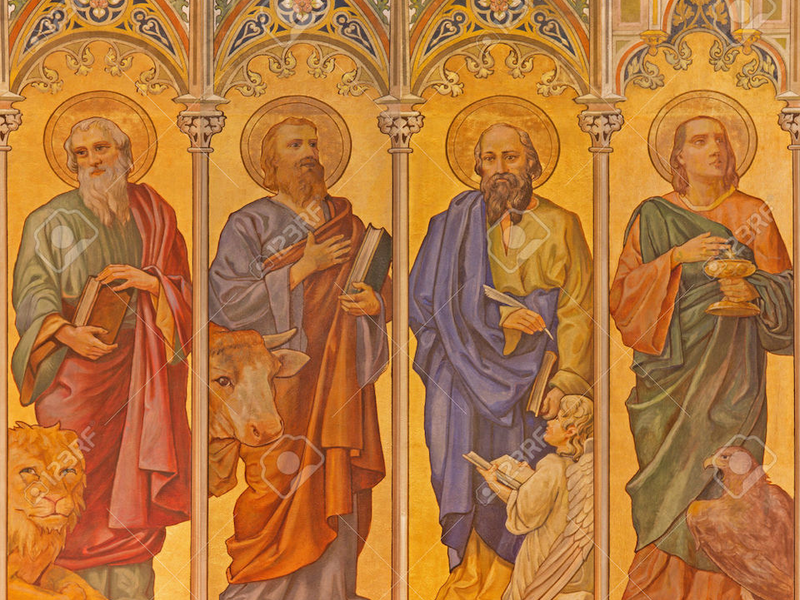
four-evangelists
Hermeneutics

Synopticity, (Part 1)

To the best of my knowledge “synopticity” is not a word used in theology or Biblical studies, but it seems an appropriate word to describe the kind of phenomena associated with the Synoptic Gospels, Matthew, Mark, and Luke. These three Gospels tell essentially the same story with significant — sometimes…

by Ralph Allan SmithNovember 10, 2016
laughing_statue_by_xxbobbiie-d5f0meh-2
Humor

Learning to Laugh

Humor is a funny thing. It is altogether familiar yet also mysterious. What makes us laugh? Why do we find things funny? There are academic fields of study dedicated to discovering what makes things humorous. These academicians even have a journal entitled International Journal of Humor Research . No joke.…

by Bill SmithNovember 8, 2016
chaucer
Literature

Flawed Means of Grace: Liturgy in The Pardoner's Tale

Out of all the characters in Geoffrey Chaucer’s The Canterbury Tales , the Pardoner has been called the “one lost soul.” The pious Parson, who closes out the collection of tales with a sermon on the seven deadly sins and how a sinner can absolve himself of them, connects the…

by Christian LeithartNovember 3, 2016

Showing page 122 of 309

See all
See all

Putting right

At least since the Reformation, the choices on the meaning of justification have been two: Either justification is a declaration of right standing or it’s a making-righteous (as in Bonaventure’s claim that the grace of justification purifies, illuminates, and perfects the soul). But are these the only alternatives? McGrath says…

April 20, 2006

Entry language

NT Wright’s denial that justification is “entry language” is usually taken as a criticism of evangelical Protestant treatments of justification. But his denial cuts deeper: From the high middle ages, Roman Catholic theologians taught that justification was a motus from sin to grace. From Wright’s viewpoint, the Reformers agreed with…

April 20, 2006
Philosophy

Notes on Derrida, Gift of Death

Some of the summaries below were previously posted on my site, and are reproduced to help my students. 1) Derrida begins the book with a discussion of Jan Patocka’s treatment of the distinction between “enthusiasm” or the “demonic” and “responsibility.” The former “confuses the limits among the animal, the human,…

April 19, 2006

Divine Energies and Orthodox Soteriology

In his new Being with God , Aristotle Papanikolaou points to differences between Vladimir Lossky and John Zizioulas on the issue of divine energies. For Lossky, the doctrine of divine energies is designed to “protect the real character of communion with God” in theosis while also insisting that union with…

April 19, 2006

Schmemann on Eucharist

Thanks to my student Brent McLean for the following quotation from Schmemann’s Journals: “I reflect, while writing my Eucharist, about Communion, on the strange, mysterious alienation from it in the Church (on Mt. Athos - they didn’t regularly take Communion; in our churches, those who seek frequent Communion are held…

April 19, 2006
History

Passion

Stephen Jaeger’s wonderful Ennobling Love (1999) sets up some bizarre juxtapositions. On the one hand, here is Anselm of Bec writing to two novices about the join the monastic community: “My eyes eagerly long to see your face, most beloved; my arms stretch out to your embraces. My lips long…

April 18, 2006

Showing page 1855 of 2212

Browse by Category

In Medias Res

Your weekly digest for all things Theopolis.

Donate

Theopolis is nearly 100% donor-supported. Consider joining us on our mission.