Theopolis Logo

Writing

Explore our collection of theological essays, biblical studies, and reflections on faith and culture.

See all
temp_bg
Biblical Studies

Biblical Allusion and the Meaning of Othello

Understanding Shakespeare’s Biblical references is vital for the interpretation of many, if not all, of Shakespeare’s plays. For Othello , it is especially important, not only because the interpretation of the play is contested among various approaches — feminist, homosexual, post-colonial, Marxist, Freudian, new historical, and others — but also…

by Ralph Allan SmithJune 16, 2017

e99a9492-2
Ecclesiology

Attaining Unity: A Reply to Mike Allen

Mike Allen of Reformed Theological Seminary, Orlando, scores some points in his review of The End of Protestantism . He lodges the fair complaint that my rhetoric sometimes outruns my evidence. He argues that more stress on the present reality of the church’s unity deepens the tragedy of division; divisions…

by Peter LeithartJune 13, 2017
trinity-1-2
Eschatology

Comic Trinity

I begin with two observations. First, on any millennial view, the Christian account of history is progressive, moving from the garden to the city. It is eschatological not only in that there is an end, but that the end is a glorified beginning, not merely a return to origins. To…

by Peter LeithartJune 8, 2017
e99a2225
Ecclesiology

Political Church

The church is a new form of polity that erupts into the world as much as the Son of God comes into the world. It’s a real-world political alternative to the polities of the ancient world. It resolves many of the political dilemmas of the ancient world, though not simply…

by Peter LeithartJune 6, 2017
img_1456
Baptism

Baptism Impasse: Baptists vs. Presbyterians, (Part 2)

In my last post , I explained how Baptists really have a “one-ordinance-one sacrament” ecclesiology. I said this: “what Baptists really believe, in modern parlance, is that there is one ordinance (baptism which is a sign or symbol only) and one sacrament (the Lord’s Supper in which feeding upon Jesus…

by Mani MarprelateMay 30, 2017
medieval-knights
Political Theology

Obedience of Rulers

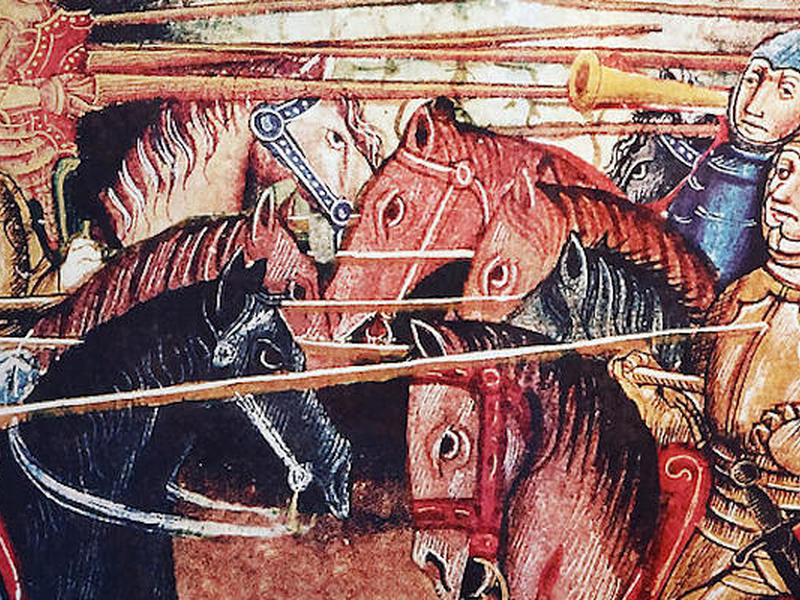
One of the most extensive and penetrating responses to the Yoder-Hauerwas attack on Constantiniansm is found in Oliver O’Donovan’s Desire of Nations , in a chapter entitled “The Obedience of Rulers.” O’Donovan defines the word “Christendom” as “a historical idea,” specifically “the idea of a professedly Christian secular political order,…

by Peter LeithartMay 30, 2017

Showing page 111 of 309

See all
See all
Theology

Grace and nature

According to Fergus Kerr, it was Bonaventure, not Thomas, who first employed the axiom “grace does not destroy nature, but perfects it,” in his commentary on Peter Lombard’s Sentences.

March 31, 2006
Politics

Neutral public space

Markus wants to distinguish between the fact that people who act in the public realm always act with ultimate ends in view, and that their actions are either moral or immoral from the notion that there is a neutral public space. The public sphere, he claims, shouldn’t be thought of…

March 30, 2006
History

Constantinianism and Protest

RA Markus (Christianity and the Secular) argues that as the church celebrated the triumph of Christianity in the fourth century, they also wanted to maintain their continuity with the church that gave them birth - the persecuted church of the martyrs: “The great need felt by Christians of the post-Constantinian…

March 30, 2006
Politics

Two Modes of Secularism

Charles Taylor has suggested that secularism was an “exit strategy” from religious conflict. There were two exit strategies. In the summary by RA Markus, “The first, ‘the common ground strategy,’ assumes a certain range of beliefs shared by all Christians (or all theists) and minimises or eliminates confessional differences that…

March 30, 2006
Politics

Locke on religion

John Locke drew up the basic contours of the modern conception of religion as internal and private in his “Letter Concerning Toleration.” He made a sharp distinction between religious and civil realms: “The end of a religious society, as has already been said, is the public worship of God, and,…

March 30, 2006
Theology

Aquinas on Gratitude

Comments primarily on Aquinas on Gratitude/Ingratitude (primarily ST, II-II, qs 106-7). Aquinas describes gratitude as a virtue “annexed” to justice, and so to understand his discussion of gratitude, we must get some handle on what he means by justice. In ST II-II, q. 58, he describes justice as a virtue.…

March 30, 2006

Showing page 1864 of 2212

Browse by Category

In Medias Res

Your weekly digest for all things Theopolis.

Donate

Theopolis is nearly 100% donor-supported. Consider joining us on our mission.